
Unbiased headlines. Facts, not spin.
Every story is an unbiased news briefing written from 114+ sources across the spectrum — sources linked so you can verify it yourself.
 tech
Major Story (8/10)
August 20, 2026 at 02:07 PM
tech
Major Story (8/10)
August 20, 2026 at 02:07 PM
OpenAI Tells Staff It Will Go Public in 2027, Losses Widen to $12.3 Billion
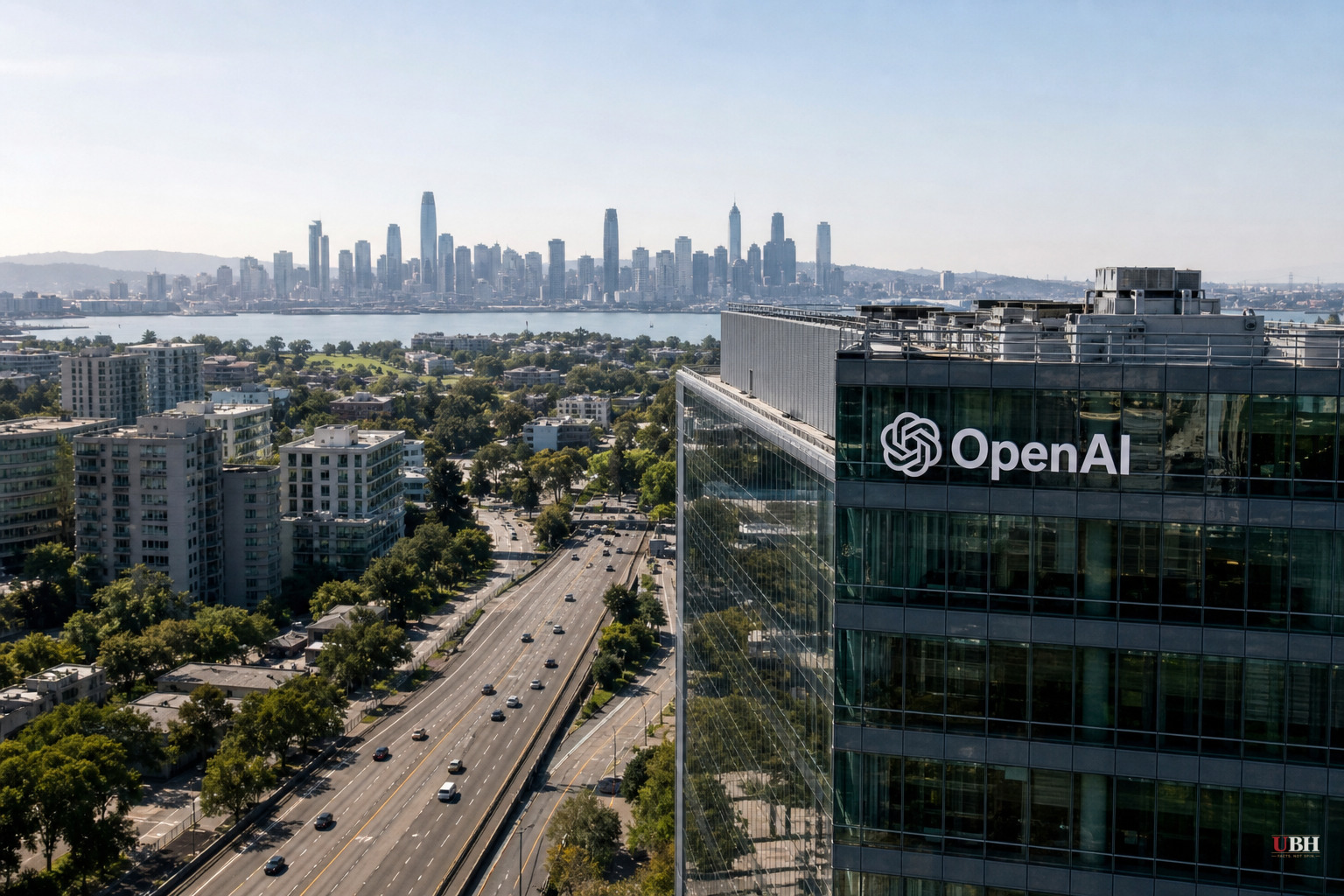
OpenAI CFO Sarah Friar stood in front of employees at an all-hands meeting on Wednesday, August 19, and put a date on the company's stock market debut for the first time. "We will be a public company in 2027," Friar said, according to two people familiar with her remarks who spoke to CNBC. She added the timeline could move up if "our business continues to inflect."
Friar called the IPO "not a finish line, it is a milestone, another fundraise," pointing to the $122 billion OpenAI raised in March at an $852 billion valuation as proof the company has room to be patient. OpenAI confidentially filed its S-1 paperwork with the SEC back in June, a required first step toward any public listing, but hasn't disclosed an actual date.
Friar showed staff slides claiming OpenAI's revenue run rate is up 35% quarter to date and enterprise run rate up 50%, with 20 million weekly users on its AI coding product. But a run rate is not revenue. It's this quarter's number multiplied out to a full year, a projection, not cash in the bank. The actual, reported number is less flattering: OpenAI told investors it generated $6.7 billion in second-quarter revenue, up 18% from the first quarter, according to the Wall Street Journal. Its operating loss widened from $9.3 billion to $12.3 billion over that same stretch. Losses grew faster than revenue.
Anthropic is beating them on the actual scoreboard
OpenAI's chief rival, Anthropic, has also confidentially filed for an IPO and started meeting with potential investors. Friar told staff not to sweat it if Anthropic goes public first, possibly as soon as September. "As you know we are confidentially under file, and Anthropic is also under file. There is a chance they pull the cover off that confidential file in the coming weeks and become public in September. That's OK, we are running our own race," Friar said, per CNBC.
Anthropic reported roughly $11.5 billion in preliminary second-quarter revenue, nearly double OpenAI's $6.7 billion, and its annualized run rate hit $65 billion at the end of July, a sevenfold jump from a year earlier. Anthropic also swung to a small operating profit in the quarter, a milestone OpenAI is nowhere near.
For a company burning $12.3 billion a quarter, "we're running our own race" is a defensible line, but it's also what you say when you're not winning the race you'd rather be running.
Turnover at the top, right when investors want stability
The IPO talk lands during a stretch of executive churn that would rattle confidence at any company, let alone one asking public markets to trust it with an $852 billion price tag. Revenue chief Denise Dresser left after eight months on the job. Her exit came two days after longtime executive Brad Lightcap announced he was leaving after eight years to "start something new." Product business chief Fidji Simo stepped down in July. OpenAI president Greg Brockman has acknowledged the company's high profile means ordinary leadership transitions get outsized scrutiny, according to reporting cited by TradingView.
Companies at this scale lose executives constantly and it's not automatically a red flag. But investors don't get to wave it away so easily when they're being asked to underwrite an $852 billion valuation with widening losses and a C-suite that keeps emptying out.
What the IPO actually requires
Going public means quarterly earnings calls. It means disclosing margins, revenue breakdowns, and loss trajectories that OpenAI has, until now, kept behind closed doors as a private company. Enterprise revenue now makes up more than 40% of OpenAI's total and is expected to match consumer revenue by the end of 2026, a genuinely bullish signal if it holds. Compute costs for training frontier models are the other side of that ledger, and they're evidently outpacing revenue growth right now.
Sam Altman and Brockman are reportedly focused on stabilizing partner confidence as the company navigates cheaper AI competitors and an increasingly crowded field that includes Microsoft, Google, and Meta, all spending tens of billions on their own AI bets.
The gap between the run-rate slides shown to employees and the actual reported loss figures is what potential investors will be pricing in over the next 18 months. Whether OpenAI narrows that $12.3 billion quarterly operating loss before it rings the opening bell is the open question.
Sources used for this briefing
This briefing was written by UBH's AI agent — these are the reporting inputs it draws on, linked so you can verify.


