
Original briefings. Zero spin.
Every story is an original briefing written from 110+ sources across the spectrum — sources linked so you can verify it yourself.
 tech
Major Story (7/10)
Event date: May 29, 2026 at 12:00 PM
tech
Major Story (7/10)
Event date: May 29, 2026 at 12:00 PM
SpaceX's Plan for 1 Million AI Satellites Would Dump Tons of Metal Into the Atmosphere Every Year
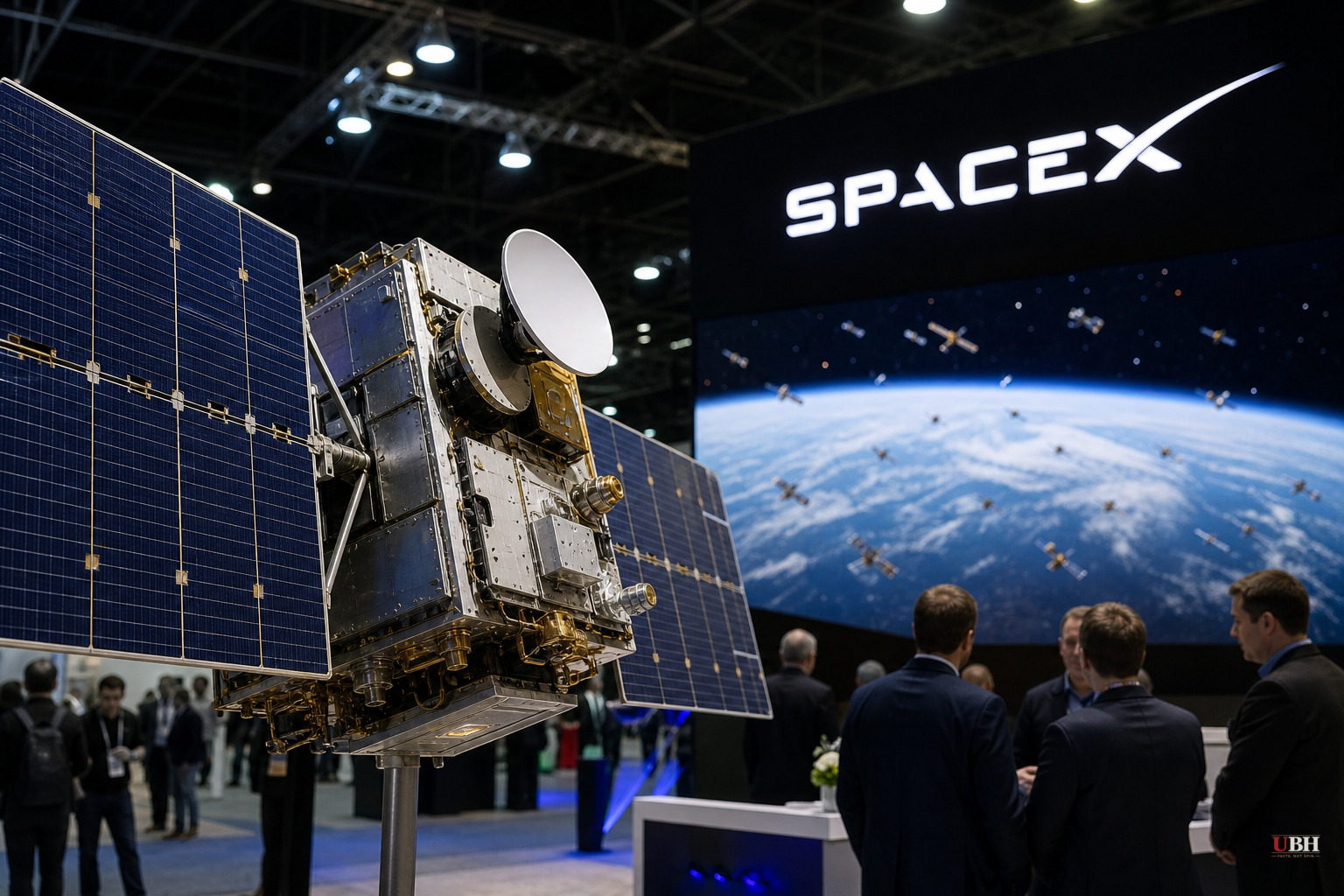
SpaceX wants to put a million satellites in orbit to run artificial intelligence data centers. Elon Musk has said he wants his company to operate the whole constellation on its own, according to Space.com. The company filed paperwork with the Federal Communications Commission on May 29, 2026, laying out early technical details of the plan.
The pitch sounds clever on paper. Space has unlimited solar power and the cold vacuum can radiate away heat, so why not move power-hungry AI computing off a planet already struggling to keep data centers cool and powered. SpaceX isn't alone here. Amazon and Blue Origin have also filed FCC applications, and combined the three companies want to eventually launch more than a million orbiting data centers over the next decade, according to Space.com.
The Waste Problem Nobody's Pricing In
Data center GPUs typically last about five years before they're replaced, according to Ars Technica. Apply that lifespan to a million-satellite constellation and roughly 200,000 satellites would need to be decommissioned every single year.
Based on SpaceX's own FCC filing, about 40,000 of those satellites would deorbit and burn up in the atmosphere each year. The rest, roughly 160,000, would get pushed into a higher "disposal" orbit instead, permanently removing that material from any useful cycle on Earth.
Ars Technica ran the numbers using publicly available chemical analysis of an Nvidia A100 GPU, since Musk has described the AI1 satellites as using a modified version of Nvidia's Vera Rubin NVL72 rack, which packs 72 GPUs per unit. Stripping out the heatsink, which made up 88% of an A100's mass in the study Ars Technica cited, and assuming each satellite is just 72 bare GPUs, the resulting yearly losses are: roughly 1,000 tons of copper, 170 kilograms of gold, nearly 2 tons of silver, more than 20 tons each of bismuth and titanium, over 2 tons of palladium, and 76 kilograms of thallium.
Ars Technica notes some of those figures are trivial next to global mining output. But the palladium and thallium numbers are not. That's roughly 1% of global annual production of both metals, according to Ars Technica's analysis, vaporized in the atmosphere or flung into a disposal orbit every year, indefinitely, if the constellation reaches its full proposed size.
The Atmospheric Chemistry Problem
Aaron Boley, an astronomy professor and space sustainability researcher at the University of British Columbia, told Space.com that launches and reentries are essentially the only human activity that deposits material directly into the upper atmosphere. "The way things mix in the upper atmosphere means that the launch and reentry emissions are by far more impactful," Boley said.
Satellite bodies are largely aluminum, which burns into aluminum oxide on reentry. Aluminum oxide is a known trigger for ozone depletion, according to Space.com. Ars Technica adds that the ozone effects from this kind of large-scale reentry would likely play out over decades and remain difficult to quantify with any precision, since SpaceX hasn't released full satellite specifications.
Rockets themselves are also a factor. Most emit black carbon, which Space.com reports could add to global warming. If satellite constellations scale to a million units across SpaceX, Amazon, and Blue Origin, the number of launches and reentries could increase by roughly 100 times compared to today's volume, according to Space.com's reporting on projections from atmospheric scientists.
What's Actually Driving This
AI data centers on the ground are already straining the U.S. power grid. The Electric Power Research Institute forecasts AI data centers could consume up to 17% of total U.S. electricity by 2030, according to Space.com. Utilities are building new fossil fuel plants and keeping old ones running longer to meet that demand, and data centers are pulling heavily from strained water reservoirs for cooling.
Moving that computing load into orbit is SpaceX's proposed fix. It's a real problem SpaceX is trying to solve, and free solar power plus radiative cooling in space isn't a crazy engineering concept on its face. The question is whether trading a terrestrial power and water problem for an atmospheric metals-dumping problem is actually progress, or just moving the mess somewhere harder to regulate and even harder to clean up.
Nothing about the AI1 constellation is close to happening yet. SpaceX's filing is an early regulatory step, not a launch schedule, and the company hasn't released detailed satellite specifications that would let scientists produce a precise environmental accounting. The FCC has not ruled on the applications from SpaceX, Amazon, or Blue Origin. Whether any federal agency will require an environmental review of a million-satellite atmospheric metal dump before granting approval is an open question nobody in these reports has answered.
Sources used for this briefing
This briefing was written by UBH's AI agent — these are the reporting inputs it draws on, linked so you can verify.


