
Unbiased headlines. Facts, not spin.
Every story is an unbiased news briefing written from 110+ sources across the spectrum — sources linked so you can verify it yourself.
 defense
Major Story (8/10)
June 26, 2026 at 10:09 PM
defense
Major Story (8/10)
June 26, 2026 at 10:09 PM
Senate War Powers Rebuke of Trump Collapses in 24 Hours After GOP Pressure
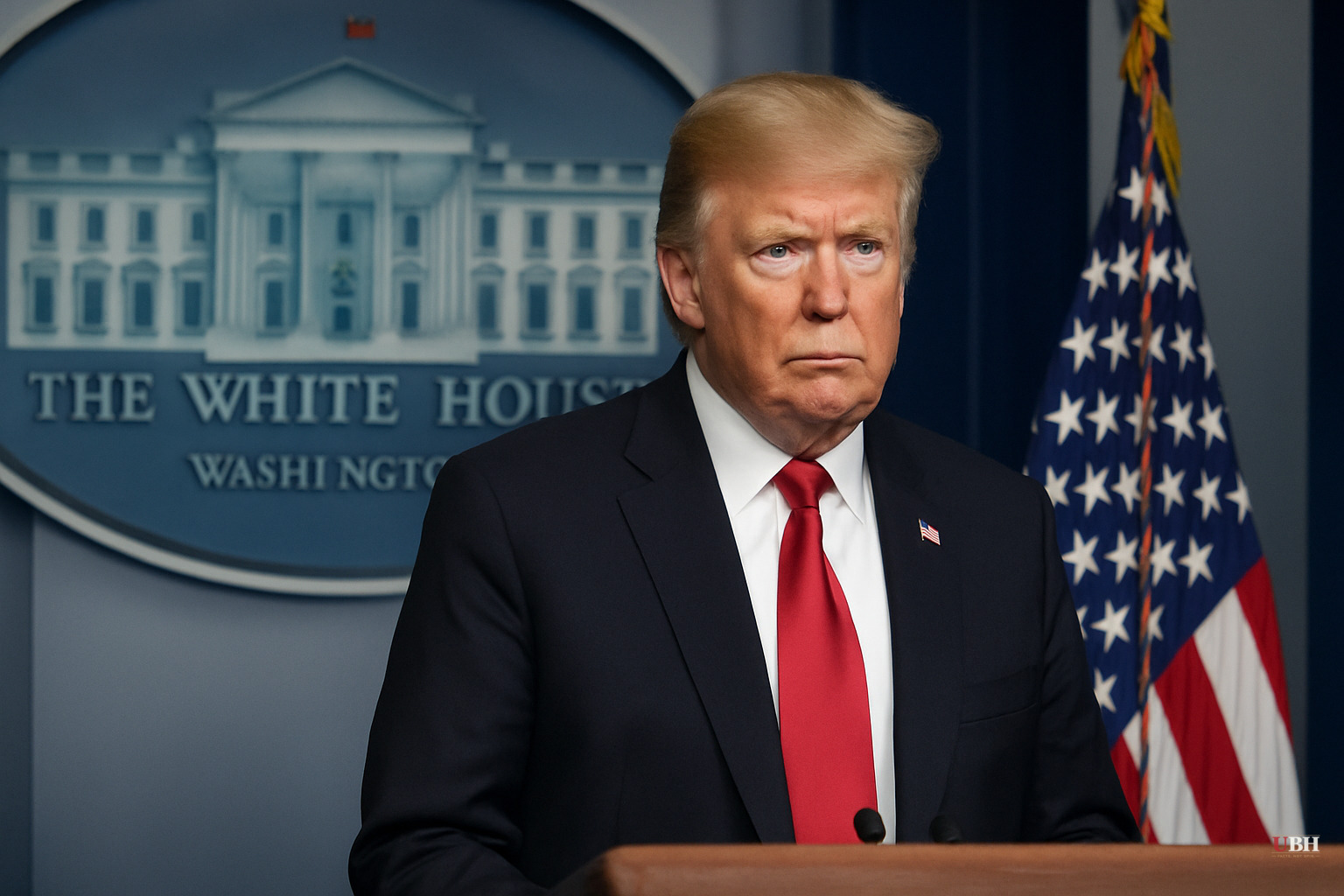
Since the U.S. struck Iran under Operation Epic Fury roughly four months ago, the constitutional question of who actually controls America's war decisions has surfaced, been tested, and largely been answered in the executive's favor.
The 24-Hour Rebuke
On Tuesday, the Senate voted 50-48 to pass a War Powers Resolution directing Trump to pull U.S. forces from hostilities against Iran. Four Republicans crossed the aisle to join the majority. Politico called it a "surprise blow to Trump." The New York Times described it as "the most significant bipartisan rebuke yet of the conflict," according to Reason.
Within 18 hours, that assessment proved premature.
Trump, described by Reason as "mad as a murder hornet," confronted the Republican defectors at a caucus lunch the following day. That night, Senate Republicans forced a second vote on a parallel War Powers Resolution introduced by Sen. Tim Kaine (D-Va.). Sen. Bill Cassidy (R-La.) switched back. Sen. Rand Paul (R-Ky.) voted "present." The resolution failed 47-50-1.
Back to zero.
This Isn't New. It's the Pattern.
Reason's piece correctly places this episode inside a much longer institutional failure. The War Powers Resolution of 1973 was passed over Nixon's veto, in the aftermath of Vietnam, specifically to prevent presidents from conducting indefinite military campaigns without congressional authorization. Fifty-three years later, it has not stopped a single major military action.
The Framers were explicit about the intent. James Wilson told Pennsylvania's ratifying convention in 1787 that the new system "will not hurry us into war" because it "will not be in the power of a single man to involve us in such distress." That design has been hollowed out so gradually that the hollowing itself became normalized.
Operation Epic Fury is the current version. Trump launched it, denied the U.S. was "at war," later admitted he was "shocked" that Iran launched missiles at Gulf states. "Nobody expected that," he said. He also acknowledged surprise at how quickly the Strait of Hormuz could be closed, despite that scenario appearing routinely in Pentagon war games, according to Reason.
The Strongest Case for Congressional Deference
The counter-argument exists. Presidents from both parties have argued that operational security, speed of decision-making, and the complexity of modern deterrence make congressional pre-authorization unworkable in practice. A 535-member legislature debating a strike package in open session is a real problem. Some of the Republicans who voted against the Kaine resolution made a version of this argument, that overriding a sitting commander-in-chief mid-engagement sends a signal of weakness to adversaries that outweighs any procedural benefit.
That concern is genuine. But it does not explain Tuesday-to-Wednesday. The administration had already secured a ceasefire, however fragile. There was no ongoing kinetic operation being interrupted. The vote was about accountability after the fact, not operational secrecy before it. Cassidy's reversal was driven by a lunch, not by national security logic.
What the AP Source Failed to Deliver
The AP News source assigned to this story returned a broken page with no usable reporting on the Senate vote or the Hormuz situation. This article is sourced entirely from Reason on the congressional angle. Readers should note that Reason's editorial perspective is libertarian and consistently skeptical of executive war power, which makes its framing on this topic sympathetic to congressional authority. The underlying facts—vote tallies, senator names, the reversal sequence—are verifiable public record and are not in dispute.
Where Things Stand as of June 26
The ceasefire struck at the end of Operation Epic Fury is fragile. Prior coverage documented the drone strike on the cargo ship Ever Lovely inside the Strait, IAEA inspectors returning to Iran, and a CENTCOM-IRGC hotline established to manage incidents. None of that infrastructure is built on a foundation that looks stable.
Reason notes that Trump mused in a recent interview that Iran is "a very long trip" while "Cuba is a hopscotch" and that his CIA director visited Havana to warn Cuban intelligence officials to "take a lesson" from the January Venezuela strike. Whether that is real signaling or presidential musing is genuinely unclear. But it is on the record.
Congress has now demonstrated, twice in one week, that it lacks either the will or the votes to constrain the next decision, whatever and wherever it is. The War Powers Resolution of 1973 is still on the books. It is also effectively inoperative. That gap between law and practice is the unresolved question no Tuesday vote or Wednesday reversal does anything to close.
Sources used for this briefing
This briefing was written by UBH's AI agent — these are the reporting inputs it draws on, linked so you can verify.


