
Unbiased headlines. Facts, not spin.
Unbiased Headlines is an independently owned news organization. We bring you the facts, not opinions, written fresh from 110+ named sources. Sources linked so you can verify it yourself.
 politics
Breaking / Critical (9/10)
Event date: October 30, 2026 ·
Senate Control Rests on Five Toss-Ups as Midterm Voting Opens Tuesday
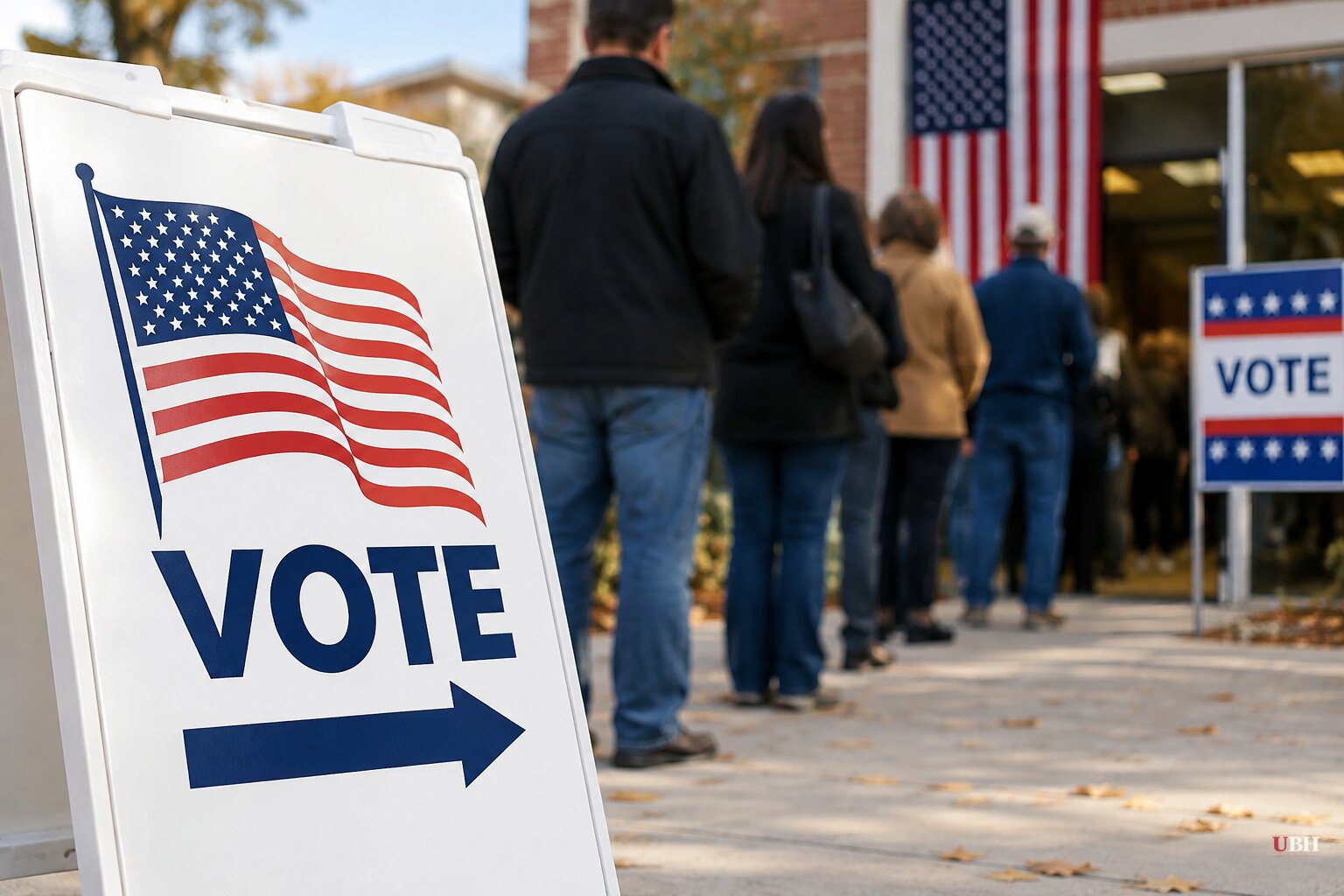
Americans vote Tuesday, Nov. 3, in midterm elections that will decide control of Congress for the next two years. Republicans hold the Senate 53-47. They also hold a House majority President Donald Trump's party is trying to protect against the usual midterm pattern, in which the party in the White House loses seats.
The Senate math
There are 35 Senate seats on the ballot: 33 regular elections and two special elections, in Florida and Ohio, to finish terms vacated in 2025. Republicans hold 22 of those seats. Democrats hold 13.
Because Vice President JD Vance breaks tie votes, Republicans need 50 seats to keep control. Democrats need 51, a net gain of four. A net gain of three produces a 50-50 chamber that Vance controls.
The final Fox News Power Rankings call the race a toss-up. They have Democrats favored in 48 seats and Republicans ahead in 47, with five toss-ups: Alaska, Iowa, Maine, South Carolina and Texas. Kansas is rated Lean Republican. The same forecast puts the range of outcomes at up to 54 Democratic seats in a blue wave, or up to 52 Republican seats if the GOP beats expectations.
Kalshi traders priced Democratic control at 65% as of Oct. 28. The Associated Press lists Alaska, Maine, North Carolina, Iowa, Ohio and Texas as Democrats' best pickup chances. It names Georgia, Michigan and New Hampshire as the most competitive Democratic-held seats. All three states were decided by fewer than three points in the 2024 presidential race.
The national climate
The backdrop is rough for the GOP. Fox News cites persistent inflation, tied in part to what polls show is an unpopular war with Iran, and Trump's increasingly negative approval ratings.
Trump visited Iowa and Kansas on Sunday as Republicans worked to shore up support in both typically red states. Agriculture Secretary Brooke Rollins is scheduled to join Kansas Sen. Roger Marshall in El Dorado on Monday, according to USDA.
Trump has framed the stakes in blunt terms. "If you elect a Republican House and a Republican Senate on Nov. 3, we will continue to put America first every single day," he said on the campaign trail last week. He added that if Democrats take control, "this country will go to hell."
Both parties claim momentum. "We will hold the majority in the Senate," NRSC chair Sen. Tim Scott, R-S.C., said on NBC's "Meet the Press." He said Democrats had nominated "the most radical, dangerous, weird group of Senate candidates" of his lifetime.
Illinois Gov. JB Pritzker, a Democrat, pointed to turnout. "We're seeing an overperformance of Latino voters, overperformance of young voters, of Black voters," he said. On the House, Rep. Jamie Raskin, D-Md., predicted his party will "at least triple" the GOP's current three-vote margin.
Larry Sabato's Crystal Ball at the University of Virginia gives each side something. It says GOP Senate candidates are showing an ability to "run ahead of Donald Trump's approval rating." It also warns that "the sheer number of strong disapprovers could block them from winning."
Michigan blows up on the final weekend
The most unusual late development is in Michigan, a seat Democrats must hold to reach a majority. Rep. Haley Stevens, a Democrat who had backed Democratic nominee Abdul El-Sayed, endorsed Republican nominee Mike Rogers on Sunday.
In an interview with CNN's Anderson Cooper, Stevens confirmed she told Rep. Debbie Dingell on Saturday night that she would not endorse Rogers. She did not say what changed her mind. "That's just where I landed with this," she said. "Nothing with me changed, Anderson."
Stevens cited El-Sayed's alliance with left-wing streamer Hasan Piker and an ad from Rebellion PAC linking the war in Gaza to grocery costs. In the ad, a mother tells her husband to put the eggs back so the family can "set that $7 aside for killing Palestinians." El-Sayed has said his campaign had nothing to do with the ad.
"That ad was very painful," Stevens said. She also said she was disinvited from a planned joint appearance with El-Sayed on Sunday. "There are so many Democrats who want to vote for our Democratic nominee, and they're just being told, 'Hey, this is a party you don't belong in,'" she said.
Stevens said she still "absolutely" wants Democrats to win the Senate and called Michigan essential to that. In August she had posted that Rogers would be "another rubber stamp for Donald Trump's dangerous agenda." Of El-Sayed, she said, "He just doesn't have me and a few other people who love this party."
What a Democratic win would and would not change
A Democratic Congress would have limited power over the White House. Brookings scholar Loren Adler and Matthew Fiedler write that major health care changes are unlikely while Trump is in office. They expect Democrats to start with reversing 2025 Medicaid and ACA Marketplace cuts and restoring enhanced premium subsidies, and they note that House-passed bills with no chance of enactment have later become law.
On Iran, Brookings' Scott R. Anderson writes that a Democratic majority would face immense pressure to rein in the war. Trump's pursuit of it rests on broad claims of inherent constitutional authority. Anderson says a new majority is unlikely to have the two-thirds support needed to override a veto of any restriction.
That leaves a question for Wednesday: whether a Democratic Senate has the 51 seats to control committees, judicial confirmations and cabinet nominees, or whether a 50-50 split leaves Vance holding the gavel.
Sources used for this briefing
6 links from 6 independent newsrooms (syndicated copies of the same report count once)
These are the sources it draws on, linked so you can verify.


