
Unbiased headlines. Facts, not spin.
Unbiased Headlines is an independently owned news organization. We bring you the facts, not opinions, written fresh from 110+ named sources. Sources linked so you can verify it yourself.
 politics
Major Story (7/10)
Trump Says He'll Be 'Mr. Veto' if Democrats Win Congress, One Day Before Midterms
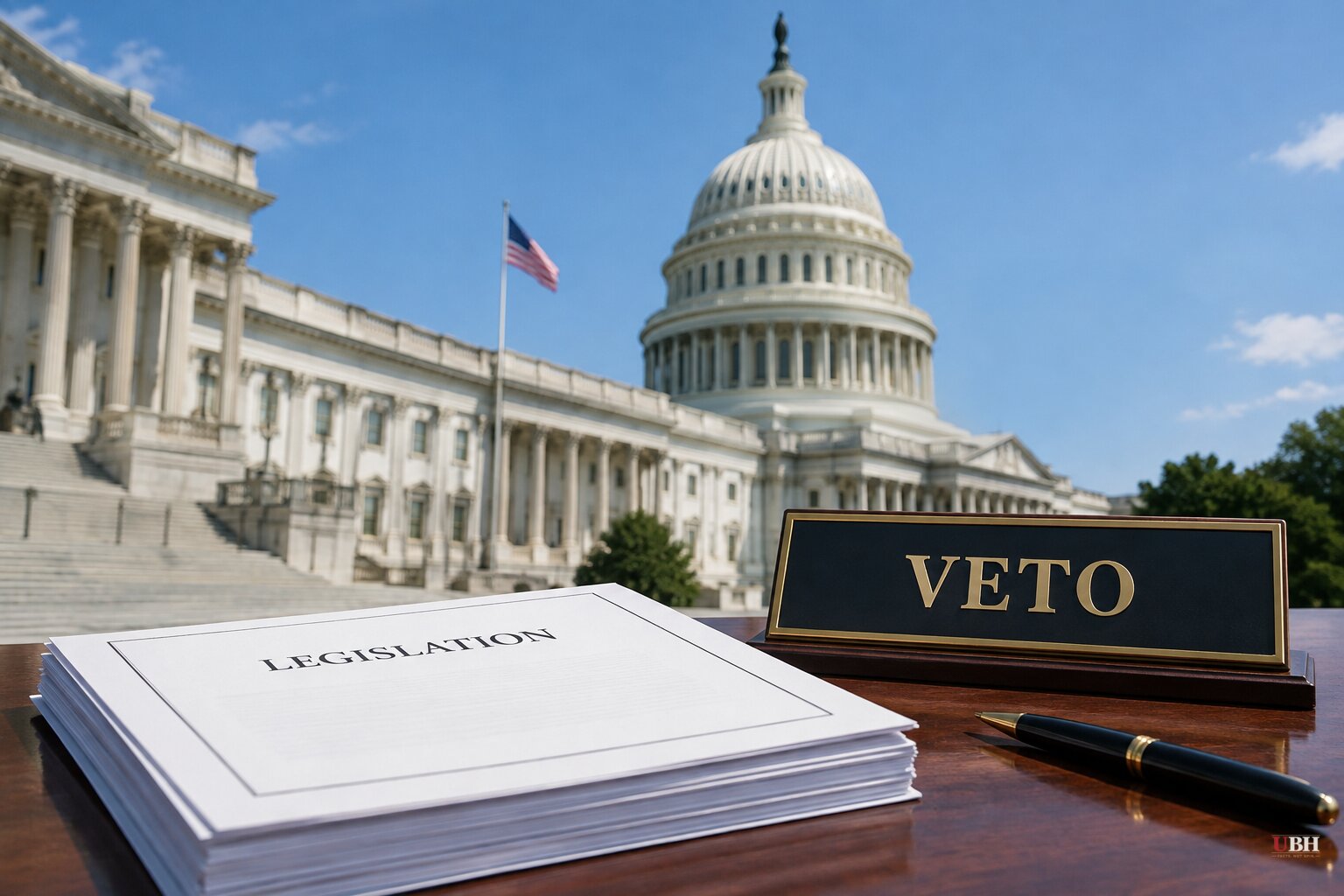
President Donald Trump has a plan for losing Congress: say no, repeatedly, and wait.
In an interview with Miranda Devine of the New York Post for her "Pod Force One" podcast, Trump said he would become "Mr. Veto" if Democrats win the House and Senate in Tuesday's midterm elections, Nov. 3.
"I guess I'll become Mr. Veto," Trump said. "I'm not going to let them ruin it."
He laid out the sequence. "They'll be sending stuff up. You veto it, and eventually, after a month or two of getting all vetoed, they come over and make a deal." He added that it "wouldn't be the first time" a president has faced a Congress controlled by the other party. He also said: "Hopefully we don't have to worry about that."
What the veto can and cannot do
Trump has issued two vetoes in his second term. He issued 10 in his first.
A veto is not a wall. Congress can override one with two-thirds majorities in both chambers. Nothing in the forecasts cited here suggests Democrats will come close to that in the Senate. So the strategy depends on Democrats not having the votes to override, and on a president willing to sign nothing he dislikes.
There is precedent. After Republicans lost the House in 2019, Trump vetoed a congressional resolution seeking to block his emergency declaration for a southern border wall. Democrats held the House for the last two years of his first term while Republicans kept the Senate, which made it harder for Democratic-backed bills to reach his desk.
The odds
Decision Desk HQ's model gives Democrats an 83% chance of winning the House and a 63% chance of taking the Senate. Democrats need a net gain of three seats to flip the House.
The Senate is tighter. NPR's Ron Elving wrote that most observers expect Republicans to lose their slim House majority, while the Senate is considered too close to call. Republicans could hold it with Vice President JD Vance's tie-breaking vote. Seven Senate races are within narrow margins, though Republican strategists say their own data shows several contests as toss-ups or within reach.
Trump rejects the polling outright. "I think they're rigged," he told Devine. "I don't know anybody that's ever been polled." He said his confidence rests on crowd size. "The rallies are as big as they've ever been."
He held 26 rallies in the past month, at 80 years old, and says he sometimes gets home at 4 a.m. For the final weekend he went to Iowa and Kansas, while doing remote "tele-rallies" in 19 other states. The Iowa and Kansas stops were briefly cancelled late last week, then reinstated, according to NPR. Kansas has not elected a Democrat to the Senate since 1932. That Trump is spending a closing weekend defending it is notable.
Trump also claimed his praise of Ohio Senate candidate Jon Husted lifted him 12 points in the polls. The New York Post noted that official polling figures do not show that.
Stakes as Trump frames them
Trump told Devine that if Republicans lose, "this country is finished." He cited the "Decoy Dan" candidacy in Alaska, a candidate sharing a name with Republican Sen. Dan Sullivan, as evidence that Democrats cheat. He did not offer proof in the portion of the interview released so far.
He also said he would like to run again but acknowledged that the 22nd Amendment's language is "very exacting." He said there is still a lot of time left in his term: "We have more than two years left. That's a long time."
Democrats have said they intend to scrutinize the president and his allies if they win. Senior Democrats have discussed investigations into government contracts, executive decisions and the conduct of senior officials.
Reuters has reported that White House officials, including deputy chief of staff Stephen Miller and budget director Russell Vought, have prepared for possible congressional investigations and for restrictions on the president's legislative program. According to that reporting, officials have examined executive measures on immigration, tariffs and housing.
What comes next
Polls close Tuesday. A Democratic House alone would give Democrats subpoena power and control over the spending bills that fund the government. A Democratic Senate would also give them confirmation power over Trump's nominees. If Republicans keep the Senate by one seat on a Vance tiebreaker, as NPR's analysis allows, the veto threat matters less than the question of how many Republican senators will break with the White House on a Democratic House's bills.
The full Devine interview is scheduled to be released today, Nov. 2.
Sources used for this briefing
7 links from 7 independent newsrooms (syndicated copies of the same report count once)
These are the sources it draws on, linked so you can verify.


