
Unbiased headlines. Facts, not spin.
Unbiased Headlines is an independently owned news organization. We bring you the facts, not opinions, written fresh from 110+ named sources. Sources linked so you can verify it yourself.
 politics
Major Story (8/10)
Trump Says He Would Pardon Staff and Allies Preemptively if Democrats Pursue Them
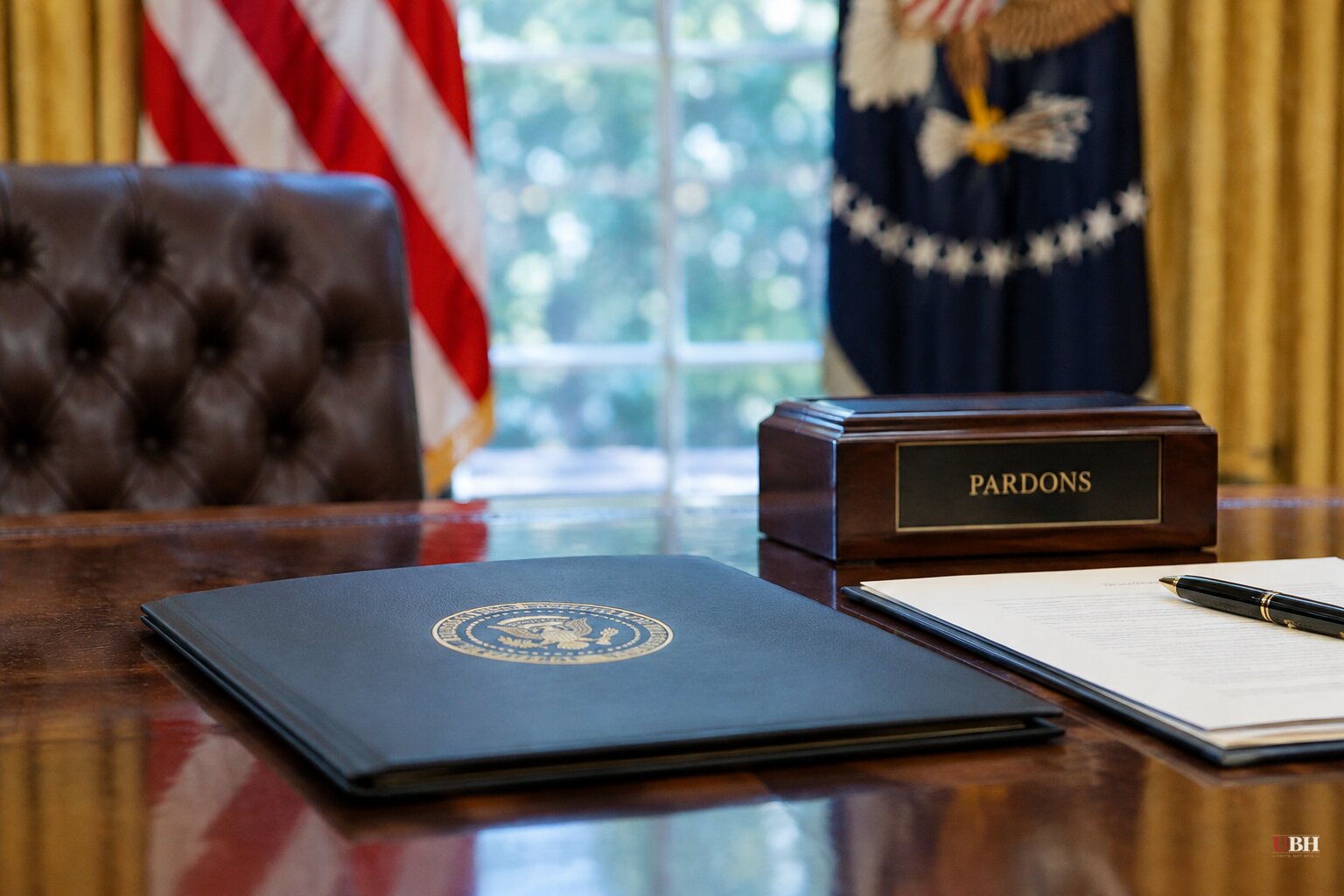
President Donald Trump said he is willing to issue preemptive pardons to people who worked for him if Democrats go after them. The comments came in an interview with the New York Post's Miranda Devine for the "Pod Force One" podcast, published early today, Nov. 2.
"I would if I needed to. Sure," Trump said. Asked whether that would cover everyone who had worked for him, he answered: "I'd do it. I did it for J6."
On his first day back in office in 2025, Trump pardoned roughly 1,500 people charged or convicted over the Jan. 6, 2021 Capitol attack.
What Trump said, and what prompted it
Trump pointed to his predecessor. Joe Biden used his final hours in office to pardon Dr. Anthony Fauci, Gen. Mark Milley, members and staff of the House Jan. 6 committee, and several relatives, including Hunter Biden. "That's what Biden did. He gave everybody a pardon," Trump said.
He called the Jan. 6 panel "the unselect committee" and "a corrupt committee."
Devine also raised talk on the left about investigating Elon Musk, including the idea of arresting him. Trump waved it off. "It won't happen. It's talk," he said. "But if it is talk, we'll have to protect them."
Asked whether Democrats might come after him personally, Trump was less sure. "Well, I don't know about me," he said. He called the polls showing Democrats favored to flip the House "rigged" and said, "We'll know on Tuesday night."
The interview also touched on a third term. Trump said he would love to run but "the language is very exacting." He added: "We have more than two years left. That's a long time."
The Democratic threats behind it
The pardon talk follows remarks by Sen. Elissa Slotkin, D-Mich., at an event last month at the University of Chicago's Institute of Politics. She said she wanted Democrats to focus "not just on the president, but on the people who enabled him." She also said a Democratic majority should bring "signature cases" and that "I want that deterrence message sent" to young people weighing jobs in the Trump administration.
According to the Post, undercover footage recorded by Townhall last Thursday, Oct. 29, shows Slotkin saying each committee would pursue its own cases to "hold people accountable" starting in January. Slotkin's office did not respond to Fox News Digital's request for comment.
Rep. Jamie Raskin, D-Md., the likely next Judiciary Committee chairman if Democrats take the House, has promised to ferret out what he calls the administration's "systemic corruption." Former Labor Secretary Robert Reich has urged Democrats to lay "groundwork" for nationalizing SpaceX.
The conservative objection
Rachel Bovard, vice president of programs at the Conservative Partnership Institute, argues the threats are not idle. Her group was subpoenaed in special counsel Jack Smith's 2020 election investigation.
Bovard says CPI was "never credibly accused of any crime" but still spent millions of dollars complying. She says the subpoenas also pulled in details such as the group's health coverage and benefits.
"Jack Smith was a test run in how to do this," she told Fox News Digital. Her fear is that Democrats in Congress will follow the same playbook, with young staffers facing legal bills and reputational damage.
The Heritage Foundation's Zack Smith, a former Justice Department prosecutor, has raised similar concerns about the staffers who could be caught up.
What a pardon can and cannot do
A pardon reaches only federal offenses. It would not stop state prosecutions, civil lawsuits or impeachment, and it would have to be issued while Trump is still in office.
Janai Nelson, president of the NAACP Legal Defense Fund, has written that pardons "do not provide absolute immunity." Recipients can still face state and local prosecution, civil suits and professional sanctions.
Some legal experts say a pardon covering entire categories of staff would stretch how the power has traditionally been used. Biden's pardons of Fauci, Milley and the Jan. 6 committee members and staff were also issued for people who had not been charged.
Rep. Mike Levin, D-Calif., has called for a constitutional amendment to limit pardon powers and bar self-pardons, regardless of which party holds the White House. He introduced it last January and it sits in the House Judiciary Committee. It needs two-thirds of both chambers, and a Southern Methodist University professor has said it has "virtually no chance."
Not the first time
The idea has surfaced before. The Wall Street Journal reported April 10 that Trump had repeatedly raised pardons for top aides, quoting him as saying, "I'll pardon everyone who has come within 200 feet of the Oval." Some officials told the paper Trump often jokes about things he later pursues.
The White House has not announced any pardons for staff, and no congressional investigation of any current or former administration staffer exists yet. On Oct. 20, Trump separately told the Daily Wire he would use the pardon power "very openly, very gladly" to protect journalists like YouTuber Nick Shirley from what he called Democratic "weaponization."
What comes next
Voters decide control of the House and Senate tomorrow, Tuesday, Nov. 3. If Democrats win a majority, Slotkin has said committees would begin pursuing cases in January, which would leave Trump two years of his term to decide whether to follow through on the pardons he described.
Sources used for this briefing
7 links from 7 independent newsrooms (syndicated copies of the same report count once)
These are the sources it draws on, linked so you can verify.


