
Unbiased headlines. Facts, not spin.
Unbiased Headlines is an independently owned news organization. We bring you the facts, not opinions, written fresh from 110+ named sources. Sources linked so you can verify it yourself.
 politics
Major Story (8/10)
Event date: October 28, 2026 ·
Spain Train Crash: Four Americans Among 69 Dead, All but Three Victims Identified
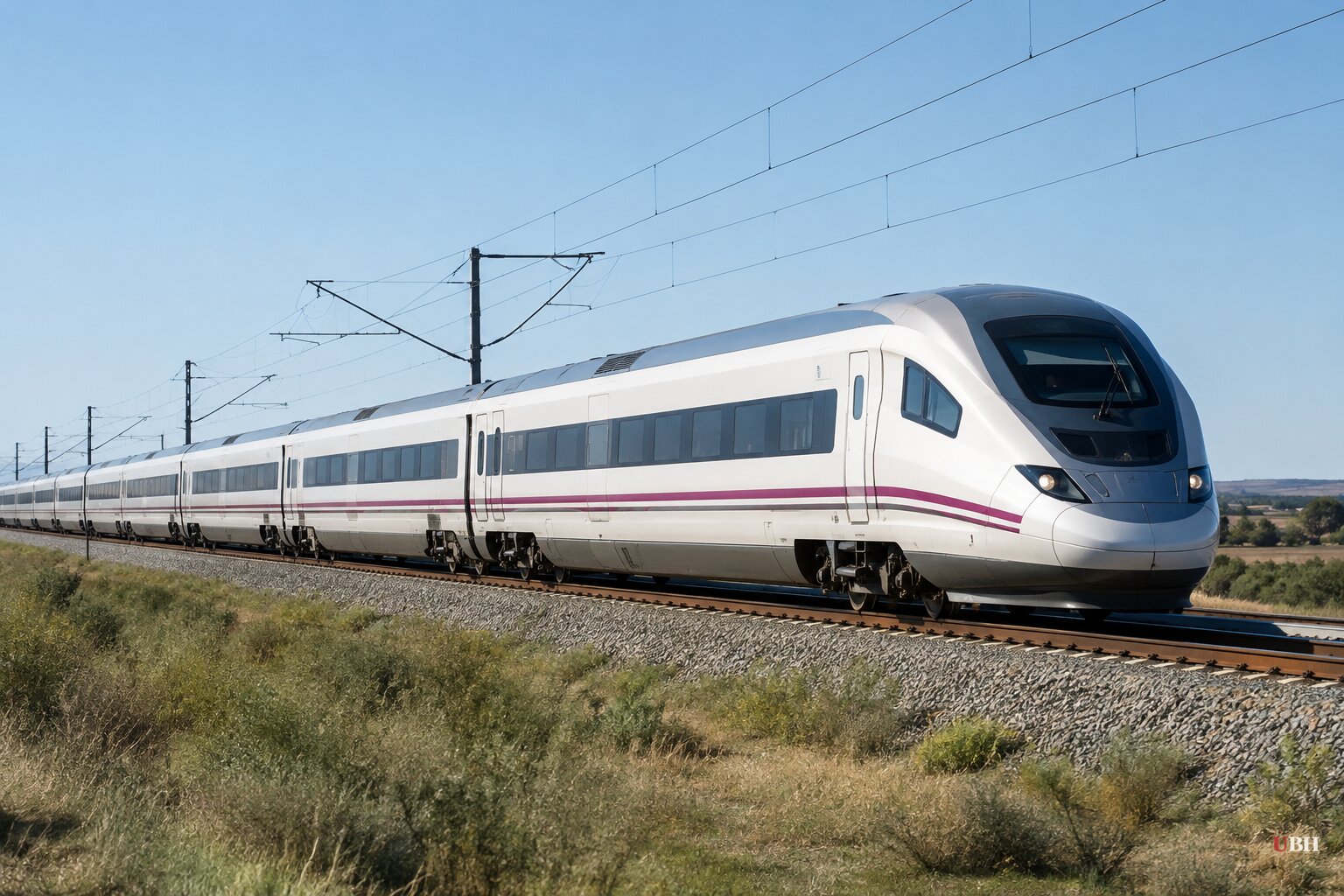
Since the Oct. 28 collision near Urda in Toledo province, the main change is on the identification front: Spain's legal body for mass-casualty victim identification says all but three of the 69 dead now have names.
The Center for Integrated Data, made up of police and forensics experts, issued the update late Sunday, Nov. 1. It confirmed 10 more foreign victims: four U.S. citizens, and one each from Canada, Japan, Argentina, Mexico, Tunisia and the Czech Republic.
The center had already announced one French citizen, one Portuguese citizen and 54 Spaniards. The nationalities announced so far add up to 66 of the 69 dead.
Three missing-person reports remain active, the authorities said. They concern two Australians and one Japanese citizen.
Waiting on families
Some families have asked to travel to Spain to identify their relatives in person. "As the contacted families have expressed their wish to travel to Spain to carry out in-person identification, we are awaiting their arrival in the country," the center said in its statement.
The wait has been brutal. Forensics teams have in some cases identified victims from individual body parts, according to AFP.
The crash also injured 58 people, according to officials cited by CBS and AP. Castilla-La Mancha's regional government had said 397 passengers were on the Renfe train and 147 on the Iryo train.
What the investigation has established
A Renfe high-speed train struck the rear of a stationary Iryo train outside Urda, about 130 km (80 miles) south of Madrid. Both were heading from Madrid to Seville. Two cars of the Iryo train derailed.
The independent investigators' initial findings put the Renfe train's speed at 100 to 125 mph on impact. The full inquiry has not finished.
An automatic safety system failed and halted all trains on a 63 km stretch of track. A control center then authorized the Renfe service to resume while the Iryo train was still standing.
Transport Minister Óscar Puente said a computer malfunction knocked out the safety system around 8:30 a.m. Just over 20 minutes later, the Renfe train hit the stopped Iryo train. Puente called the control center's decision "inexplicable" and said the train should never have been cleared while a stop signal remained active. At minimum, he said, it should have been told to proceed at reduced speed. He said the train's engineers were not responsible.
Who is responsible
Puente has blamed a traffic controller's poor judgment for much of what went wrong. Railway unions dispute that framing. They cite deteriorating working conditions and say too few controllers are handling growing workloads, making it harder to keep millions of passengers safe.
Those are competing explanations, and the investigators' final report will have to sort them out. The inquiry could take weeks or months.
The politics are already live. Santiago Abascal, an opponent of Prime Minister Pedro Sánchez, said after the crash: "Tragedy again. Rage again over the neglect, the ruin, and the betrayal suffered by the Spanish people." Sánchez, the Socialist leader, faces a general election on Nov. 29 and is trying to overcome unfavorable polls to extend his eight-year premiership.
A second disaster on the same line
This was the second major crash on the Madrid-Seville corridor this year. In January, a train derailed near Adamuz in Andalusia and struck another traveling the opposite way, killing 46 people. That investigation is still open.
Before this year, Spain's high-speed network, the world's second-largest after China's, had recorded no fatal crashes since it opened more than three decades ago. Spain had one of the lowest rail fatality rates in the European Union, and more than 90% of the network carries the highest level of safety control systems available, according to the European railway agency.
Two fatal crashes in ten months, on the same line and involving the same two operators, are now a campaign issue.
The next concrete steps are the arrival of relatives to identify the last three victims and the release of the full investigation. Neither the January nor the October inquiry has delivered a final finding on cause.
Sources used for this briefing
8 links from 8 independent newsrooms (syndicated copies of the same report count once)
These are the sources it draws on, linked so you can verify.


