
Unbiased headlines. Facts, not spin.
Unbiased Headlines is an independently owned news organization. We bring you the facts, not opinions, written fresh from 110+ named sources. Sources linked so you can verify it yourself.
 politics
Major Story (8/10)
DOJ Asks Judge to Weigh Contempt Over Group's Analysis of Its California Noncitizen Voter List
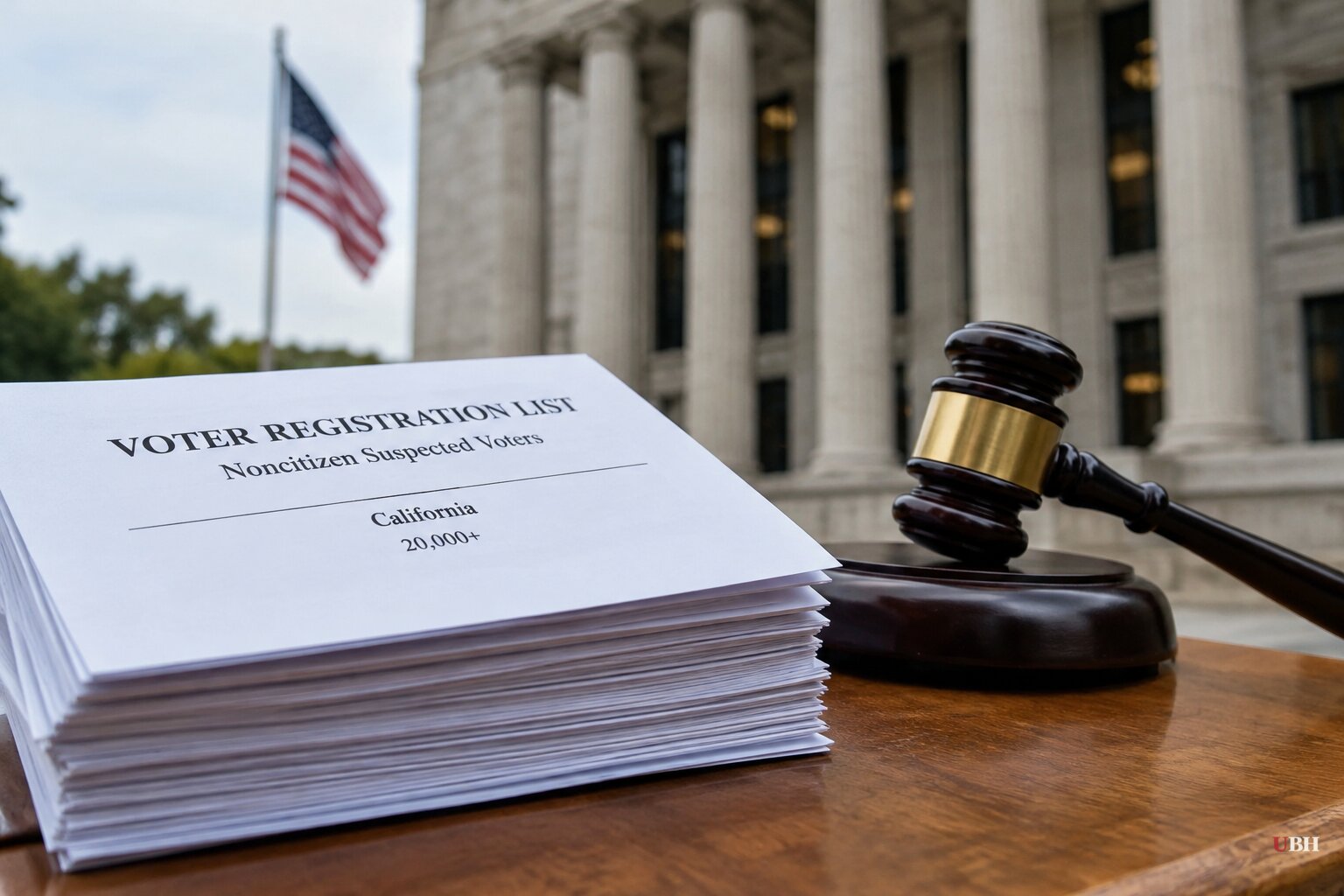
The Justice Department on Sunday, Nov. 1, defended the accuracy of its list of more than 20,000 suspected noncitizens registered to vote in California. It also suggested that a federal judge consider contempt charges against an immigrant rights group and its lawyers for publishing an analysis of the names.
The filing lands two days before the Nov. 3 midterm elections.
What the judge ordered, and what the group filed
On Friday, Oct. 30, U.S. District Court Chief Judge James Boasberg gave the Coalition for Humane Immigrant Rights, known as CHIRLA, access to federal data on 20,000 people the Trump administration alleges are noncitizen voters in California. His order barred the plaintiffs from disclosing any names. It also limited their use of the data to arguments about why they have legal standing to challenge the government's use of the list.
On Saturday, CHIRLA's attorneys filed court papers with the results of their analysis. They reported that more than 40% of the people on the list do not appear in California's voter file. They identified 22 people on the list who were likely naturalized U.S. citizens. They also said thousands more U.S. citizens appeared to be on it.
Those numbers are the plaintiffs' findings. The government has not conceded them.
DOJ's objection
In its Sunday filing, the Justice Department said the analysis had nothing to do with standing and therefore violated Boasberg's order. It called the report's claims of inaccuracies affecting California voters generally, and its comparison of the government's list to the full state voter file, "political grandstanding." Per the filing, those points have "no relevance to whether the particular plaintiffs in this case have standing."
The department also suggested Boasberg refer the matter to the Justice Department for investigation of possible criminal contempt.
The UCLA Voting Rights Project filed the case and did the data analysis for CHIRLA. Its spokesman, Alberto Lammers, said in an emailed statement: "Plaintiffs' counsel and their experts fully complied with the Court's orders."
No contempt finding has been made. Boasberg has not publicly ruled on whether the analysis fell inside or outside his order.
The dispute comes down to the order's wording. The judge restricted use of the data to standing arguments. The plaintiffs say they stayed within the order, and DOJ says they went well beyond it.
The second case: Judge Thompson's order
In a separate case, the Justice Department appealed a ruling Judge Trina L. Thompson issued Friday night in San Francisco. Thompson barred the department from demanding that election offices remove possible noncitizens from voter rolls, separate their ballots or threaten legal action.
The department has noted that Thompson ruled before the government could file its initial arguments. Thompson scheduled a hearing on the appeal for today, Nov. 2.
A string of courtroom losses for the list
The administration has lost repeatedly in its fight over these lists. A federal judge in California rejected the department's demand that election officials separate ballots cast by the flagged voters. The judge wrote that such last-minute orders could "wreak havoc" on the state's election. Two appellate judges agreed.
At an Oct. 27 hearing, U.S. District Judge David O. Carter said the department's request to sequester ballots until citizenship could be verified was a "monumental change" to election procedures while voting was already underway. DOJ attorney Bilal Essayli said the request was aimed at ensuring electoral integrity.
Carter pointed to the traditional remedy for illegal voting. "You've got a remedy, for goodness sake," he said. "Go out and indict." He said unlawfully cast ballots can be removed in the weeks after Election Day, before results are certified.
The Justice Department had told Carter that California missed a deadline to finish its own review of the suspected noncitizens and that some of them had mailed in ballots.
California's attorney, Anne Bellows, said the state already has strong safeguards against noncitizen voting. She said the department's claims relied on "mysterious database methods" and that complying risked disenfranchising eligible voters.
In a concurring opinion in the appeals ruling, Ninth Circuit Judge Gabriel Sanchez wrote that granting the request could be read as endorsing the government's "currently unsubstantiated allegation that roughly 20,000 noncitizens are on California's voter rolls." He said that could discourage people from voting out of fear of being wrongly labeled.
The privacy fight over voter files
A separate lawsuit in federal court in Washington adds another front. The League of Women Voters, the Electronic Privacy Information Center and the League of United Latin American Citizens allege that the Department of Homeland Security has obtained voter files from at least 47 states. They say it handled the data in violation of federal law, including a policy to combine it with commercial datasets. The suit also notes that officials in 30 states had previously refused federal demands for voter information.
The plaintiffs ask the court to declare the collection illegal, block the DHS policy and order the agency to delete the data. These are allegations. The government has not had a ruling against it on them.
What the facts leave open
Keeping noncitizens off voter rolls is a legitimate government interest. Federal law bars them from voting, and citizenship checks are a mainstream integrity measure. A list of 20,000 names is a serious claim, and the government is entitled to defend it.
But a claim that size needs a record that holds up. The only analysis of the names in court so far comes from the plaintiffs. It says more than 40% of the entries cannot be found in the state's voter file. The Justice Department has defended the list's accuracy but has not, in the filings described, answered that finding with its own numbers.
Boasberg now has two questions. One is whether the plaintiffs' analysis violated his order. The other is whether to refer anything for criminal contempt. Thompson's hearing today, Nov. 2, will decide whether her order against the department stays in place as California votes tomorrow.
Sources used for this briefing
8 links from 8 independent newsrooms (syndicated copies of the same report count once)
These are the sources it draws on, linked so you can verify.


