
Unbiased headlines. Facts, not spin.
Unbiased Headlines is an independently owned news organization. We bring you the facts, not opinions, written fresh from 110+ named sources. Sources linked so you can verify it yourself.
 politics
Major Story (7/10)
US and 30 Western States Warn of Sudan Famine Risk as WFP Cuts Food Aid to 900,000 Displaced People
The warnings on Sudan are getting louder. The food is getting thinner.
In a joint statement released October 27, the US and 30 other Western states, including EU members, the UK, Canada, Switzerland and Norway, described an "alarming deterioration" in Sudan's food security. They called for urgent action on the risk of famine in the coming months.
The numbers
The statement estimates that 19.5 million people, or 41% of Sudan's population, face high levels of acute food insecurity. Five million of them are at emergency levels of hunger.
It also warns that the number of children with severe acute malnutrition "could exceed the projected 825,000" without immediate action.
A May assessment by the Integrated Food Security Phase Classification (IPC), the global food crisis monitor, found 135,000 people in Phase 5, its most severe category. That is defined by extreme food shortages, starvation and deaths from disease or acute malnutrition.
In its latest alert, the IPC reported a "deteriorating humanitarian situation" across greater Darfur and Kordofan, including areas already flagged as at risk of famine.
Drought on top of war
The signatories say conflict is the main driver of the hunger crisis, because it damages infrastructure and disrupts food production. They also describe what they call systematic obstruction of aid. The statement says the warring parties "bear primary responsibility for alleviating the suffering of the Sudanese people."
The IPC adds a second pressure: severe drought linked to El Niño that affects more than half the country. It has caused localized crop failures and cut household food and income.
Poor crop growth has hit 64% of croplands in North Darfur and about half of those in South Darfur, West Kordofan and South Kordofan. Western Kordofan is having one of its worst droughts since 2004, the IPC said, citing rainfall levels.
In Nyala, the share of children admitted to nutrition services for severe acute malnutrition roughly doubled from about 5% to 11% between January and August. Two displacement camps in South Darfur recorded global acute malnutrition above famine thresholds.
Aid is shrinking
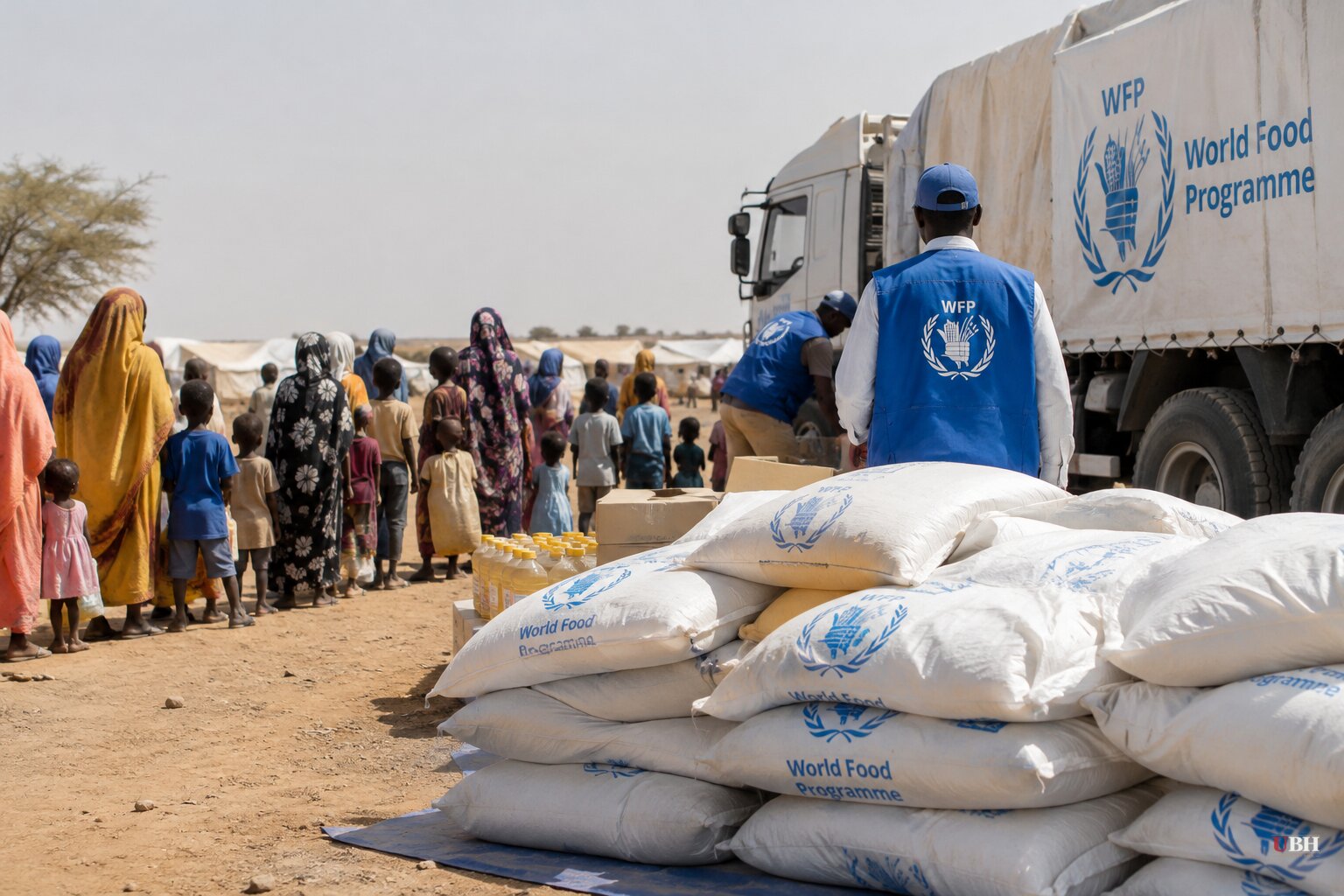
The World Food Programme said on October 22 that it had reduced monthly food assistance for about 900,000 displaced people because of a funding shortfall.
Yusuf Roble, regional director for Islamic Relief East Africa, said only 40% of Sudan's 2026 humanitarian needs plan had been funded as of September. He said community kitchens that feed people lack long-term support because of funding cuts.
The effect shows up in individual camps. Aisha Adam, 50, fled Khartoum's al-Kalakla neighborhood days after the war began on April 15, 2023. She now lives in a displacement camp on the outskirts of Port Sudan with her orphaned grandson and nephew.
"The aid we receive has decreased significantly, so I had to try to find work to avoid starving to death," she said.
Adam sells fried pastries, tea and coffee at a nearby market. Some days she turns a profit. Her family lives mostly on rice and lentils.
Another displaced woman told Al Jazeera she had received aid only three times in six months: cash worth 550,000 Sudanese pounds (about $59), 12 kg of flour, and hygiene supplies.
In El Obeid, Esraa Mohammed, head of the Al-Surayha 8 camp, said 450 displaced people are registered, with 40 more recently arrived. Of 100 children, 30 have severe acute malnutrition. Aid groups hand out oil, peas, lentils, flour and salt, she said, but the rations do not last a month. Some residents go to bed without eating.
A war with no agreed death toll
The war between the Sudanese Armed Forces and the Rapid Support Forces has displaced about 13 million people. The BBC puts the figure at 14 million. The World Health Organization has called it the world's worst humanitarian crisis.
The death toll is disputed. The conflict monitor ACLED counts at least 59,000 dead, while aid workers say as many as 200,000 have been killed. Aid groups say the true toll is likely higher than any documented count.
Violence continues. An airstrike killed at least 72 civilian miners in a border area between Sudan and Egypt where small-scale gold mining takes place.
Humanitarian organizations have repeatedly said that ending the fighting and securing safe, sustained access are essential. Repeated peace efforts have not stopped the war.
What comes next
The IPC's stated outlook is blunt. Without a quick and significant increase in assistance, it says, "food insecurity, acute malnutrition, and excess mortality will likely intensify."
It is unclear whether the 31 governments that signed the statement will back it with money, and whether the SAF and RSF will lift the access restrictions the statement describes. As of today, Nov. 2, the funding gap is the one reported cause of aid cuts, with 60% of the 2026 plan unfunded as of September.
Sources used for this briefing
7 links from 7 independent newsrooms (syndicated copies of the same report count once)
These are the sources it draws on, linked so you can verify.


