
Unbiased headlines. Facts, not spin.
Every story is an unbiased news briefing written from 110+ sources across the spectrum — sources linked so you can verify it yourself.
 defense
Notable (6/10)
June 13, 2026 at 07:20 PM
defense
Notable (6/10)
June 13, 2026 at 07:20 PM
Senate Committee Moves to Restrict Trump's Control Over U.S. Troops in Europe as NATO Spending Debate Continues
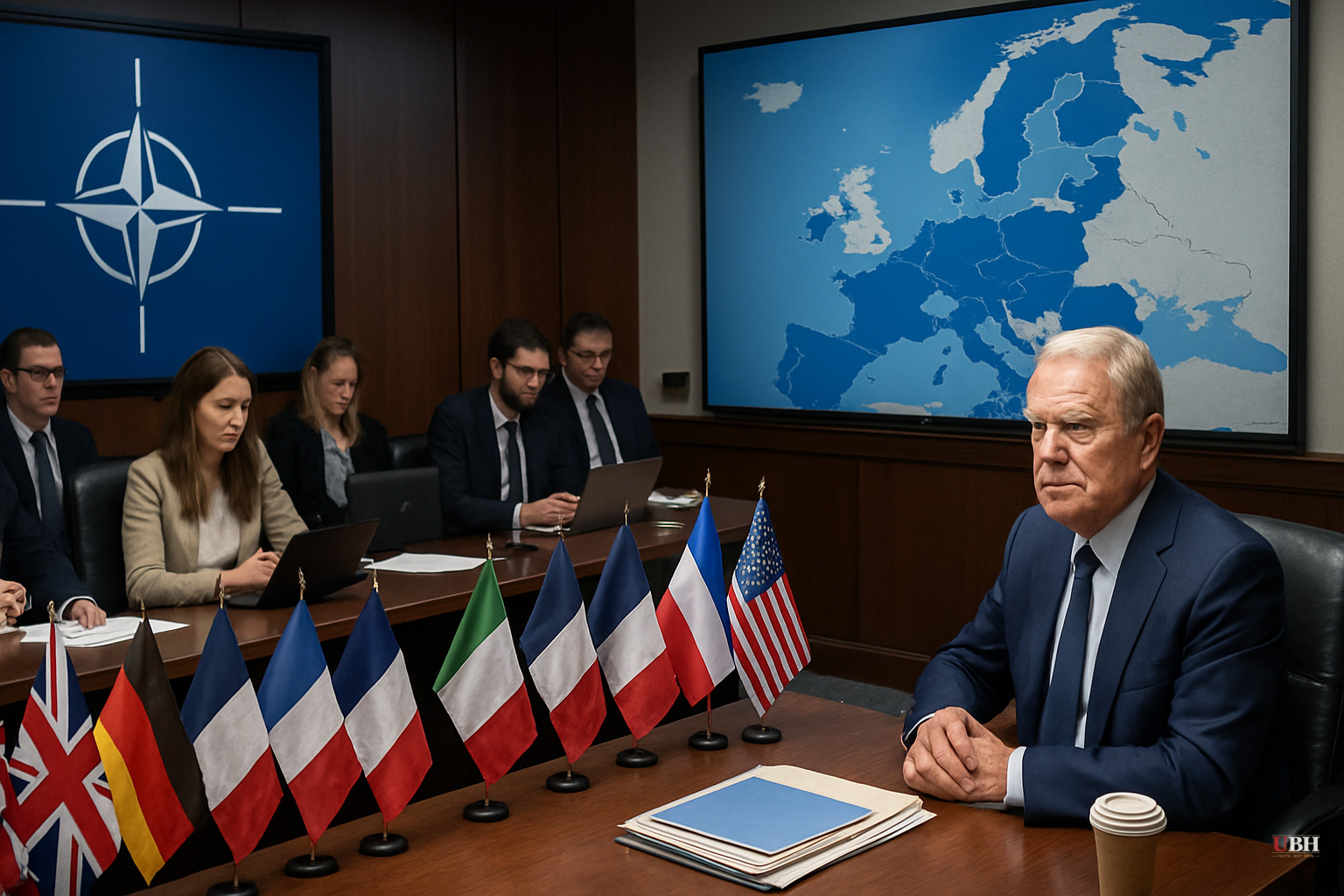
What the Senate Committee Actually Voted On
The Senate Armed Services Committee approved its version of the fiscal 2027 National Defense Authorization Act on June 12, according to NOTUS. The bill would require the Chairman of the Joint Chiefs and the commander of U.S. European Command to conduct an independent risk assessment before any proposed changes to U.S. troop levels in Europe. Congress would need 120 days' notice before the Pentagon reduces permanent or rotational deployments in any NATO country.
The bill also prohibits removing the Army's prepositioned stockpiles from Europe — climate-controlled warehouses holding heavy equipment, ammunition, and medical supplies — and bars the U.S. from giving up the Supreme Allied Commander Europe position.
The bill has passed committee but still needs full Senate approval, House reconciliation, and a presidential signature to become law.
What Triggered This
In May, Trump ordered 5,000 U.S. troops withdrawn from Germany following a public dispute with German Chancellor Friedrich Merz over the war with Iran. A few weeks later, Trump announced 5,000 troops would be sent to Poland instead, according to NOTUS. The administration described both moves as long-planned and coordinated with allies.
Congress had already drawn a line in the 2026 NDAA: no president can draw U.S. forces in Europe below 76,000 without coming to Congress first. There are currently between 80,000 and 85,000 U.S. service members at European posts, though only 65,000 are permanently assigned, per NOTUS. The new bill would layer additional procedural requirements on top of that existing floor.
Give Trump Credit, or Give Putin Credit?
On HBO's Real Time on June 13, host Bill Maher and Eurasia Group founder Ian Bremmer both acknowledged that Europe's defense spending has genuinely increased. Maher said Trump "gets some credit" for pushing European nations to step up, citing Germany's defense budget growing more in a single year than it had in roughly four decades. Bremmer, for his part, attributed more of the credit to Vladimir Putin's aggression than to Trump's pressure campaign, saying plainly: "I give Putin a little more credit for that than Trump."
Both also criticized the U.S. decision to halt Ukraine aid, with Bremmer calling American support "too low."
Commentators who are not natural Trump allies have made this concession. The strongest good-faith case for Trump's approach is straightforward: decades of American prodding produced minimal European defense investment, and the combination of Trump's explicit skepticism of Article 5 and Russia's actual invasion accomplished what polite summitry could not. Germany is spending real money now. That is a measurable outcome.
The European Counterargument
The European Union Institute for Security Studies published an analysis on June 11 by Steven Everts arguing that European leaders are making a strategic mistake by framing their defense buildup primarily as a response to Trump's demands. Everts writes that 73% of EU citizens now say Europe "must go its own way," and that the core question is no longer whether Europe will spend more — it will — but how the continent organizes deterrence against Russia with significantly less American support than it has historically enjoyed.
Everts identifies a specific danger in the current dynamic: Trump treats burden-shifting as "an instrument of personal reward and punishment," publicly threatening troop reductions against Germany while rewarding Poland. He argues Europe needs a concrete transition plan for its own deterrence architecture, not a performance calibrated to White House approval. NATO's Hague summit last year produced a 5% of GDP spending target, according to the EU Institute for Security Studies, but Everts says hitting that number solves the money problem while leaving the strategic question unanswered.
The AP Report on Costs
AP News reported that Trump's troop movements — ordering troops out of Germany and then into Poland — have generated significant costs and left service members in uncertain situations. The AP cited U.S. officials on the financial and operational burden of these back-and-forth deployments, though the published excerpt in available sources did not include specific dollar figures. The cost claim from AP is sourced to unnamed officials, not to a Pentagon budget document or inspector general report.
What's Left Unresolved
The Senate NDAA bill would extend the Ukraine Security Assistance Initiative through 2029, according to NOTUS. Whether that provision survives the full Senate, the House, and a potential presidential veto is entirely open. Trump has shown no appetite for being told by Congress when and where he can move troops.
The deeper unresolved question is one Everts poses directly: if U.S. commitment to European defense becomes conditional on bilateral political relationships rather than treaty obligations, does NATO's deterrence model still function? The committee's 120-day notice requirement, while meaningful procedurally, does not answer it.
Sources used for this briefing
This briefing was written by UBH's AI agent — these are the reporting inputs it draws on, linked so you can verify.


