
Unbiased headlines. Facts, not spin.
Unbiased Headlines is an independently owned news organization. We bring you the facts, not opinions, written fresh from 110+ named sources. Sources linked so you can verify it yourself.
 energy
Major Story (7/10)
Event date: September 30, 2026 ·
Senate Blocks Data Center Ratepayer Bill 57-43 as Gas Averages $4.33 Heading Into Midterms
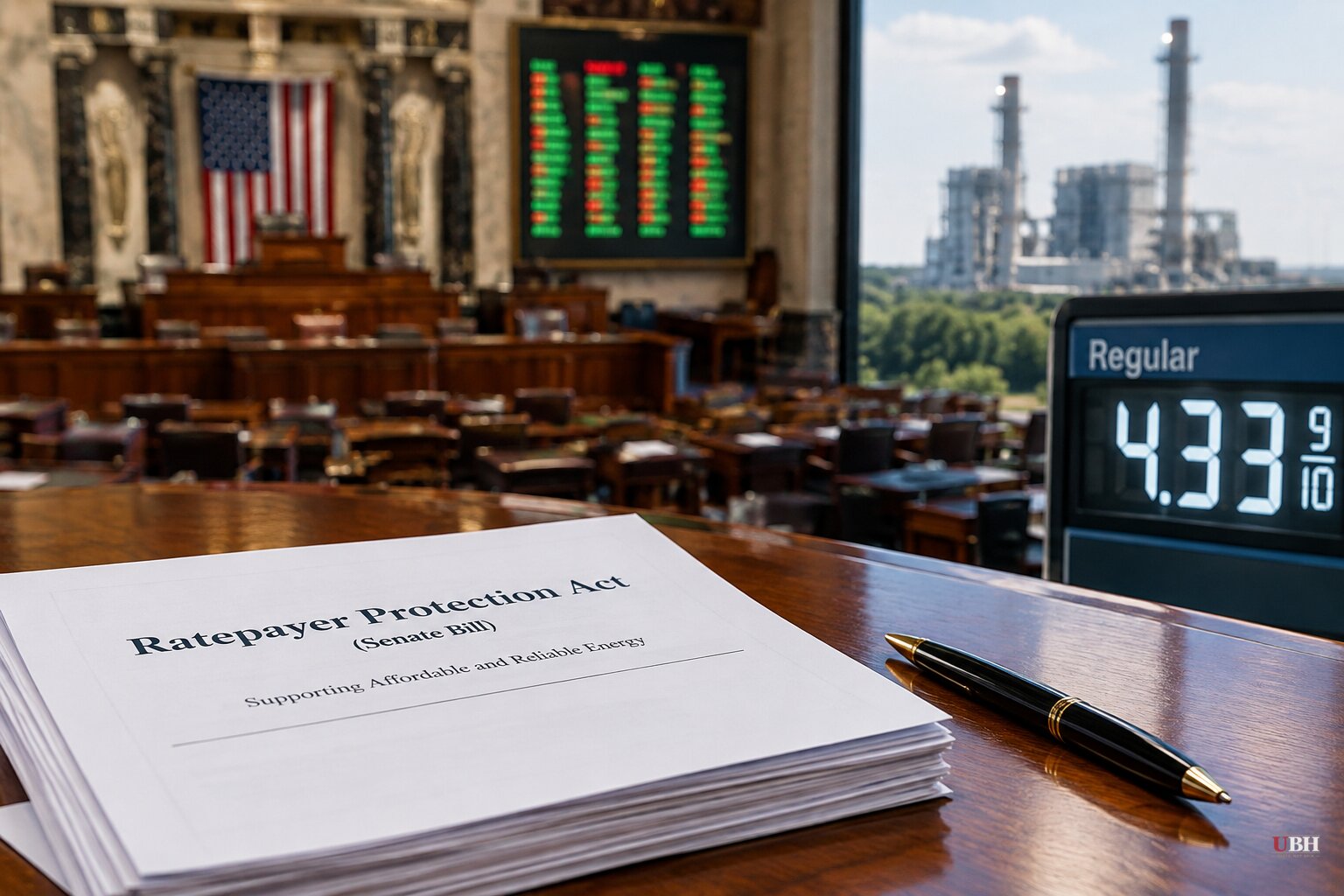
The Senate killed the Ratepayer Protection Act on a 57-43 vote, with only four Democrats joining Republicans. Senators are expected to leave Washington soon and not return until after the Nov. 3 midterms.
The bill was Ohio Republican Sen. Jon Husted's answer to a fast-growing complaint: that AI data centers are pushing power costs onto ordinary customers. It passed the House earlier this month with wide bipartisan support.
What the bill did and didn't do
The measure did not mandate lower prices. It told state regulators to "consider" adopting a proposed federal standard requiring data center companies to cover their own costs to the energy grid instead of passing them to other customers.
That was the sticking point. Senate Minority Leader Chuck Schumer went after it on the floor the day before the vote.
"Here we need some real action on data centers and what does the Republican senator from Ohio come up with? Something that is optional," Schumer said. Democrats said the language was weak and had no enforcement mechanism, and vowed to push more robust measures.
Husted argued the opposite: that a flawed bill beats no bill. "This is the bill that gives us a chance to prove to the American people that we're for lower electricity prices and holding data centers accountable," he said. "This bill is the only game in town."
Some Democrats made a point about the title. "If ratepayers read this (bill) and see that it's a name that says ratepayer protection and provides no relief in rates, they'll rightly be angry," one said. Republicans respond that Democrats just voted down the only data center cost measure that had cleared the House.
Husted is in one of the most competitive Senate races in the country. Trafalgar Group's September polling has Democrats leading in Ohio, North Carolina and Texas, all seats Republicans hold.
Data centers have split the GOP
The politics here cut across party lines. Cleanview Research, which tracks data center development, says 75% of data centers under construction and 80% in the planning stage are in predominantly Republican states.
President Trump is one of the buildout's loudest backers. At a recent Ohio rally he said of data centers, "You can't just turn them off. They'll go to China." He has also posted that communities that oppose them risk ending up "backwards and poor."
Voters are not following him. Polls show opposition to data centers outweighing support by 30 points, and a majority of Republicans oppose construction near them, according to CBS News' summary of the polling. Texas Gov. Greg Abbott, a Republican seeking a fourth term, has paused environmental permits and grid connections for new data centers.
On the other side, Michigan shows how local this is. State regulators let DTE Energy raise electric rates in March, adding about $5 a month to a typical residential bill. In May, Consumers Energy customers absorbed the largest electric rate increase Michigan has approved since 2004.
Rep. Debbie Dingell's district hosts a proposed $7 billion campus in Saline Township and a one-gigawatt Google project in Van Buren Township. She has said she wants to set requirements for those projects.
The gas pump is the bigger number
Data centers are only part of the affordability problem. AAA put the national average for regular gasoline at $4.33 on Oct. 14, up from $3.07 a year earlier. Diesel was $6.29, up from $3.65.
Michigan drivers are paying $4.62 for gas and $6.48 for diesel, with the Iran war cited as the driver, according to WDET.
Pollster Robert Cahaly of Trafalgar Group, who has been predicting a Republican rout if the election were held on his September numbers, called fuel and related costs "the only real factor that's having an impact." He described voters as saying, "I might agree with the Republican versus the Democrat, but I don't like what's going on at the gas pump and I want to punish somebody."
A KFF/AP survey of more than 2,000 rural voters found 67% were very or somewhat concerned about paying for gasoline and transportation. That was a higher share than for health care, food, rent or utilities.
Climate Power, an advocacy group focused on clean energy, blames Trump and congressional Republicans. It claims their tariffs, the Iran war and cancelled clean energy projects have cost the average family at least $2,000 since Trump took office. Republicans have not accepted that framing, and Husted's bill is their own response on electricity costs.
What the map looks like
Democrats need a net gain of four seats to win the Senate. Trafalgar's September polling shows close races in Alaska, Iowa, Kansas, Maine and South Carolina, all seats Republicans now hold. One Democratic win among them would likely be enough.
In Maine, Republican Sen. Susan Collins faces Democrat Troy Jackson. Colby College political scientists Nick Jacobs and Daniel Shea say heating oil prices, tariffs and cost-of-living worries are weighing on voters there.
The Ratepayer Protection Act is now dead for this session, with no vote scheduled before Election Day. Democrats want Congress back in session on Nov. 3 and say they would pursue stronger data center rules. Whether any such measure would bind states or utilities is unresolved.
Ohio voters will decide Husted's race on that same date.
Sources used for this briefing
6 links from 6 independent newsrooms (syndicated copies of the same report count once)
These are the sources it draws on, linked so you can verify.


