
Unbiased headlines. Facts, not spin.
Unbiased Headlines is an independently owned news organization. We bring you the facts, not opinions, written fresh from 110+ named sources. Sources linked so you can verify it yourself.
 energy
Notable (6/10)
Minns Government to Legislate 32% Coal Output Increase at Mount Pleasant Mine, 12 Days After High Court Ruling
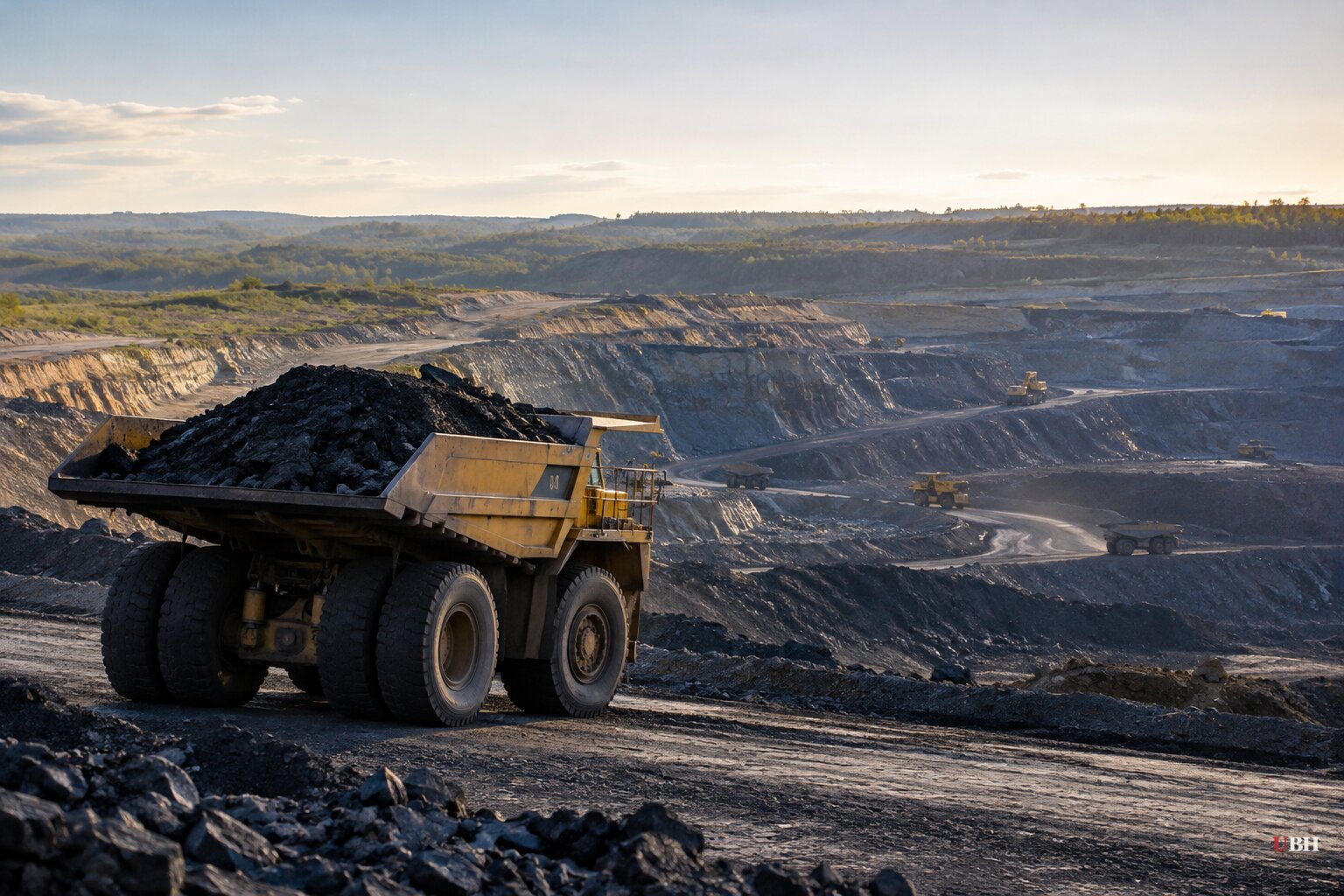
Twelve days after the High Court of Australia invalidated the approval for a major expansion at the Mount Pleasant coal mine, the New South Wales government said it will legislate its own answer.
Premier Chris Minns announced Monday, Oct. 19, that a special bill will authorise MACH Energy to lift annual output at the Hunter Valley mine from 12.5 million tonnes to 16.5 million tonnes, a 32% increase, until 2032. The bill is to be introduced in the next sitting fortnight.
What the court decided
On Oct. 7, a 3-2 majority of the High Court ruled that the NSW Independent Planning Commission failed its legal duty when it approved the expansion in 2022. The commission did not consider imposing conditions to minimise "scope 3" emissions, the greenhouse gases released when exported coal is burned overseas.
The case was brought by the Denman Aberdeen Muswellbrook Scone Healthy Environment Group, known as DAMSHEG. The invalidated approval would have allowed output of 21 million tonnes a year until 2048, or about 444 million tonnes in total.
In a Oct. 13 commentary, Grattan Institute energy expert Tony Wood wrote that the immediate step is for the case to go back to the commission to meet the obligation as the court clarified it. He added that it is "far from certain" that conditions the commission imposed on another Hunter Valley mine on Sept. 30 would satisfy the ruling.
What the bill would do
Mount Pleasant already has a separate approval, granted in August, that runs to 2032 and allows up to 12.5 million tonnes a year. That approval raised the extraction rate by 2 million tonnes. The new bill would add 4 million tonnes on top of the 12.5 million.
Minns said the bill would also impose scope 3 restrictions similar to those in the recent approval for Hunter Valley Operations, the state's largest coal project. The ABC reported Minns said MACH would be limited to selling coal to signatories of the Paris Agreement.
The government said the bill addresses "unique legal uncertainty arising from the high court's judgment on 7 October 2026."
The jobs argument
Minns said MACH Energy told the government it would cut about 400 jobs, roughly half its workforce, before Christmas without an expanded approval. "After discussions with the company, it's become apparent that there are 400 jobs on the line that will go before Christmas without this intervention," he said.
According to The Age, the company had scaled up its workforce in preparation for the 21 million tonne limit the commission previously approved. Minns had initially played down the need for legal change, the paper reported, and called the final call "a difficult decision to make."
In exchange, MACH has agreed to a "jobs guarantee" that would legally oblige it to keep its permanent workforce until 2032, if the bill passes. Minns described the new limit as "consistent with the current workforce profile and current coal extraction on the site."
Mining and Energy Union president Grahame Kelly backed the move. "Without urgent intervention, hundreds of mineworkers could have been out of a job by Christmas," he said, praising the government for acting "with the urgency required."
The opposition
The objections come from the plaintiffs, environmental groups and the Greens, and they go to both the jobs claim and the process.
Georgina Woods of the Lock the Gate Alliance disputed the premise. "There is no threat to jobs at Mount Pleasant, which already has approval to stay open for another six years," she said, accusing Minns of "manufacturing a crisis to give special treatment to a coal company."
Elaine Johnson, the lawyer who represented DAMSHEG in court, called the plan "legislative overreach." She said it makes it look as though "laws are being written for individual mine owners and not in the public interest."
DAMSHEG president Wendy Wales said the group has "never wanted anyone in the Hunter to lose their livelihood." She called a law written for one company, days after the High Court ruled against it, "an inappropriate use of the NSW legislative process." The group has asked Minns to release more detail on the bill.
NSW Greens climate spokesperson Sue Higginson, an environmental lawyer, said the bill bypasses the planning process and the court's ruling and will "cause significant unassessed climate pollution."
The politics
The High Court ruled on how existing NSW planning law must be applied. A state parliament can amend its own statutes, and that is the route Minns has chosen.
The Age reported the government faces pressure from One Nation in the Hunter. The Coalition and One Nation had both called for Labor to pass laws overruling the court after the Oct. 7 decision.
The larger question is unchanged: the commission still has to reconsider the original 21 million tonne application under the court's reading of the law. Whether the bill's scope 3 conditions satisfy that standard has not been tested in court. The bill's text has not been released, and it has to pass parliament before MACH can lift output to 16.5 million tonnes.
Sources used for this briefing
7 links from 7 independent newsrooms (syndicated copies of the same report count once)
These are the sources it draws on, linked so you can verify.


