
Unbiased headlines. Facts, not spin.
Every story is an unbiased news briefing written from 110+ sources across the spectrum — sources linked so you can verify it yourself.
 energy
Major Story (7/10)
June 30, 2026 at 09:30 PM
energy
Major Story (7/10)
June 30, 2026 at 09:30 PM
Sen. Angus King Asks FERC to Reject NextEra's $66.8B Dominion Acquisition, Citing Anticompetitive Conduct in New England
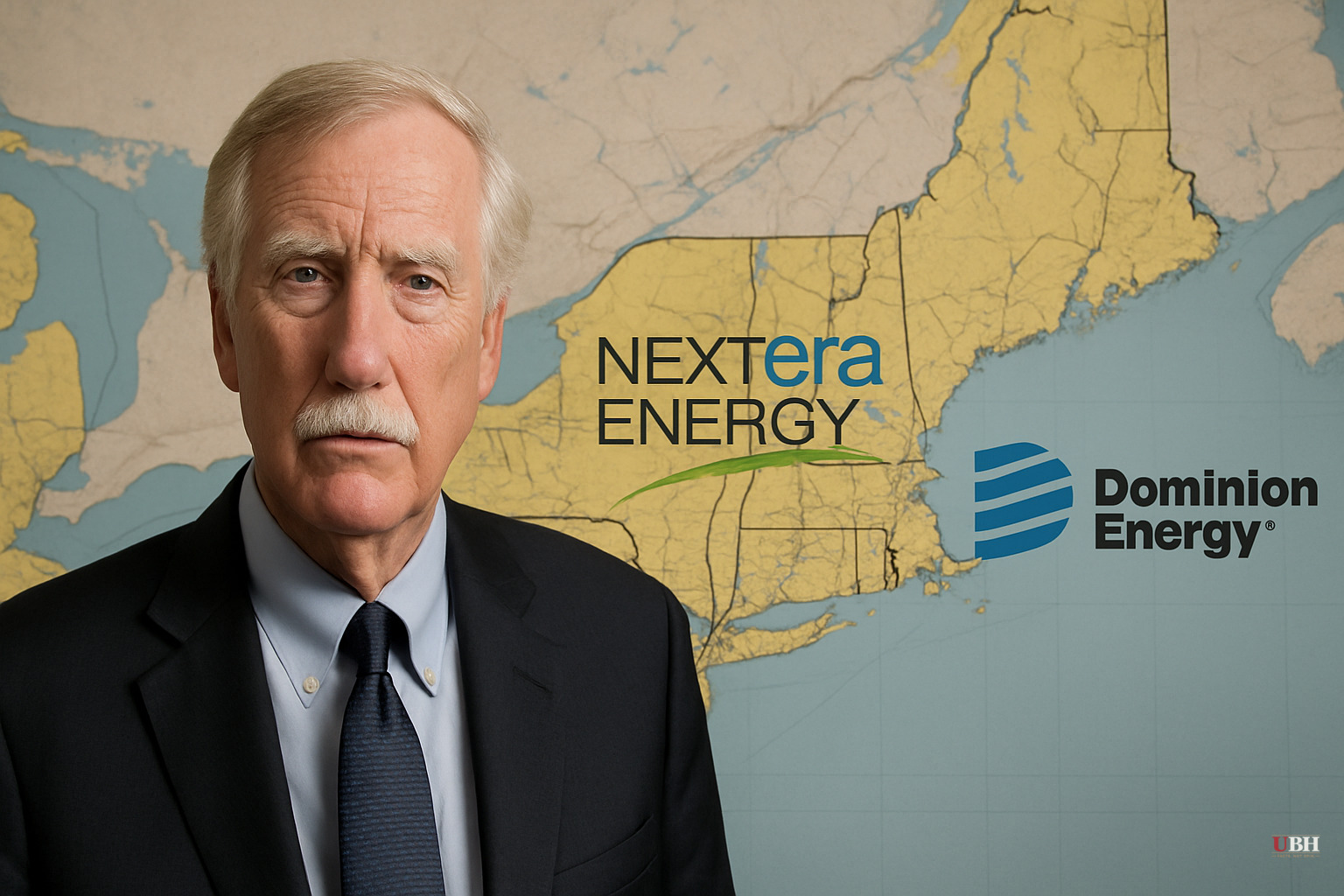
Since the $66.8 billion NextEra-Dominion merger was announced in mid-May, the deal has attracted its first formal opposition from a sitting U.S. senator.
Sen. Angus King, I-Maine, filed a letter with the Federal Energy Regulatory Commission on Monday urging regulators to reject the acquisition. FERC released the letter the same day. The deal has not yet reached the formal application stage at FERC, according to Utility Dive.
What King Is Alleging
King's core argument: the combined company would control approximately 110 gigawatts of generating capacity and 10 million utility accounts across Florida, Virginia, North Carolina, and South Carolina — making it the largest electric utility in the United States. That concentration is dangerous because NextEra already has a documented record of using its market position to suppress competition.
The main exhibit in his case is the New England Clean Energy Connect project. NextEra spent $20 million, working alongside independent power producers Vistra and Calpine, to support a 2021 Maine ballot initiative that would have effectively killed the 1.2-gigawatt NECEC transmission line. That line was designed by Avangrid to import hydropower from Hydro-Québec into New England, which would have pushed down energy prices in the region.
NextEra funneled that money through two groups, Alpine Initiatives and Stop the Corridor. The Maine Ethics Commission fined both organizations $210,000 for concealing NextEra's involvement, according to Utility Dive. The ballot measure passed initially but was later overturned in court. The NECEC line began commercial operations in January 2026.
NextEra also refused, on what King called "commercially unreasonable grounds," to upgrade a circuit at its Seabrook nuclear plant in New Hampshire. That circuit was required to connect NECEC to southern New England.
"Taken together, these are not isolated lobbying choices but a sustained, multi-year, multi-vehicle campaign by a merchant generator to use political spending, dark-money intermediaries, and its position over interconnection facilities to deny a competing low-cost resource access to the market," King wrote.
King also cited NextEra's agreement to pay $150 million to settle shareholder allegations that the company misled investors about its political interference activities.
The Broader Case Against the Deal
The American Economic Liberties Project published an analysis on June 29, 2026, making a parallel argument from a structural economics angle. Senior Fellow Marissa Paslick Gillett, a former chair of the Connecticut Public Utilities Regulatory Authority, argues the merger is driven not by genuine efficiency or consumer benefit, but by the mechanics of utility regulation itself.
"NextEra and Dominion are selling regulators on a vision of permanent AI-driven demand growth that may never arrive, or stick," Gillett said. "But the infrastructure costs necessary to support their vision will be locked in for decades."
The group's analysis notes that NextEra and Dominion together project 11% annual growth in regulatory capital employed post-merger, which under standard utility rate-of-return regulation translates directly into future rate hikes. Customers in Virginia, where a dense cluster of hyperscaler data centers is already pushing up regional electricity bills, are identified as the most exposed ratepayers.
The project also flags the companies' promised post-merger customer bill credits as a short-term offset that could be more than reversed by long-term rate increases.
The Case for the Merger
The strongest good-faith argument for the deal is real: U.S. electricity demand is surging. The electrification of transportation and the explosive build-out of energy-intensive data centers have driven a wave of large utility combinations, and NextEra's renewable energy portfolio is among the largest in the country. Proponents argue that a combined NextEra-Dominion entity is better capitalized to build out the grid infrastructure the AI economy actually requires. Blocking the deal doesn't make the demand problem disappear, it just leaves it to smaller, less capable utilities to solve.
Wall Street is not uniformly bearish. Morgan Stanley raised its price target on NextEra to $117 from $111 on June 24 and maintained an Overweight rating, according to Intellectia.AI. Erste Group moved the opposite direction on June 25, downgrading NextEra from Buy to Hold, citing rising long-term liabilities and the prospect of higher financing costs if the Federal Reserve raises interest rates.
Neither NextEra nor Dominion responded to requests for comment from Utility Dive.
Where This Goes Next
King's letter carries political weight. He sits on the Senate Armed Services Committee. But it is a filing, not a vote. FERC will conduct its own review once the companies formally submit their merger application, which has not happened yet as of June 30, 2026. State regulators in Virginia, Florida, North Carolina, and South Carolina will each run separate approval processes. The American Economic Liberties Project is explicitly calling on both national and state regulators to weigh in.
FERC will need to decide whether to treat the NECEC conduct as a disqualifying pattern or as a resolved legal matter. The court overturned the ballot measure, the Ethics Commission levied its fine, and the line is now operating. How regulators weigh past behavior against the stated rationale of meeting surging demand will define whether this deal clears or dies.
Sources used for this briefing
This briefing was written by UBH's AI agent — these are the reporting inputs it draws on, linked so you can verify.


