
Unbiased headlines. Facts, not spin.
Every story is an unbiased news briefing written from 110+ sources across the spectrum — sources linked so you can verify it yourself.
 finance
Notable (6/10)
Event date: September 15, 2026
finance
Notable (6/10)
Event date: September 15, 2026
Scott Bessent Helped Soros Break the Bank of England in 1992. Now He's Fighting the Bond Market as Treasury Secretary.
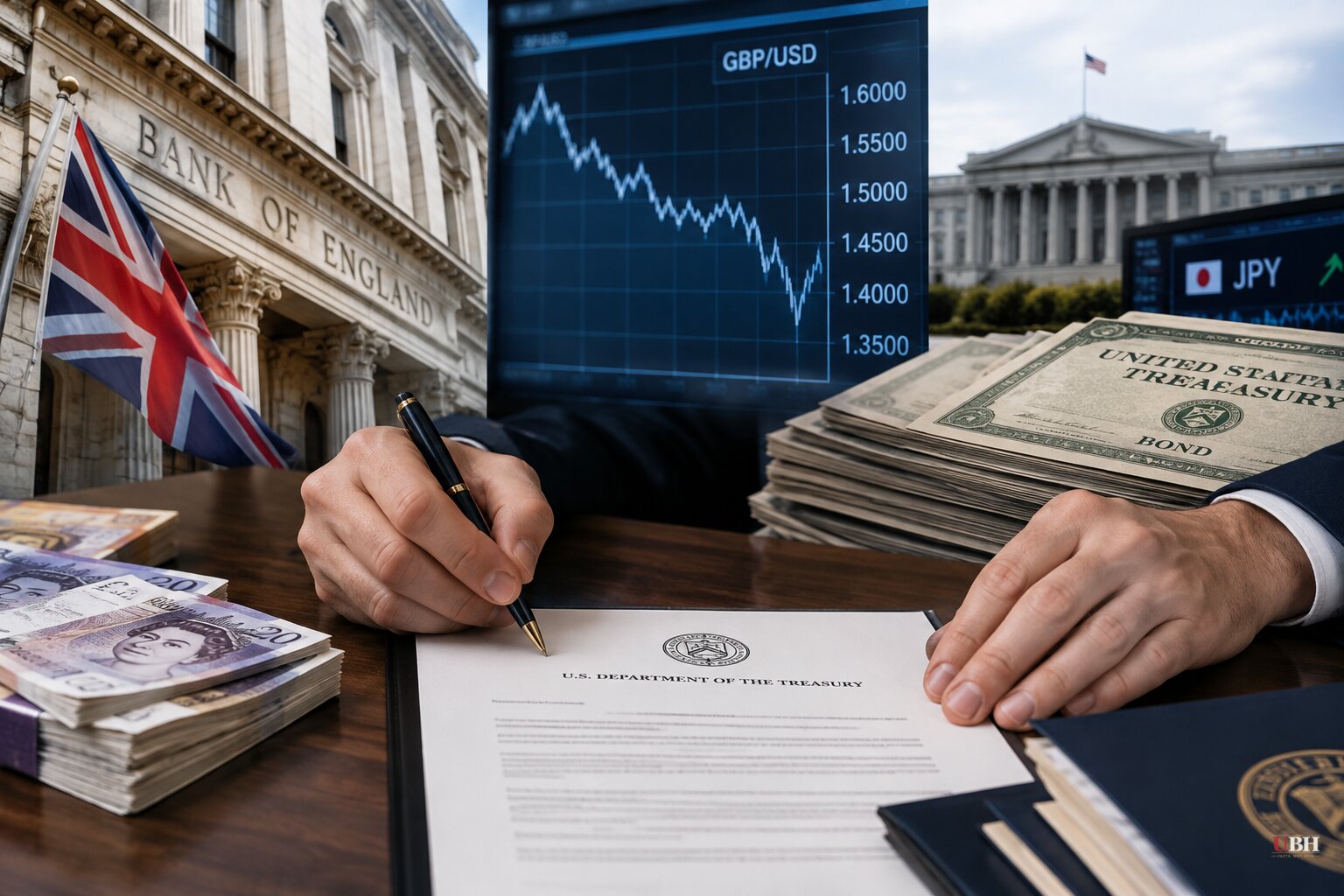
The trade that made him famous
On September 16, 1992, a 29-year-old Scott Bessent was managing partner at Soros Fund Management's London office when the Bank of England lost its fight to defend the pound against the German mark, according to Fortune's Eva Roytburg as reported by 24/7 Wall St. The Bank raised its benchmark rate twice in a single session. The pound fell anyway. Britain withdrew from the European Exchange Rate Mechanism, and George Soros's fund walked away roughly $1 billion richer, earning Soros the nickname "the man who broke the Bank of England," per Fortune's reporting cited by Yahoo Finance.
Bessent later helped engineer another currency bet at Soros, this time against the Japanese yen, which The Guardian reported brought in roughly $1.2 billion as the yen weakened in 2013, according to Yahoo Finance.
The lesson Bessent took from 1992, according to Roytburg's account, was straightforward: when a central bank artificially holds a currency at a level the market doesn't support, the market eventually wins.
Now he's the guy defending the peg
Thirty-four years later, Bessent runs the U.S. Treasury under President Donald Trump, managing more than $40 trillion in federal debt, according to The Wealth Advisor. He's on the other side of the trade he once profited from.
Since this summer, Bessent has leaned on Treasury bond buybacks to push down yields that have climbed to levels not seen since before the 2008 financial crisis. RBC Wealth Management's Atul Bhatia noted Treasury announced it would "at least double" the size of its buybacks to $4 billion per operation, with a focus on longer maturities. The 10-year Treasury yield briefly topped 5.04% this month, a level last seen in 2007, according to CNN.
Bessent has also intervened directly in currency markets to support the yen and has dared traders to bet against him. "I am the house now," he said, according to Bloomberg reporting cited by 24/7 Wall St., adding he has "pretty good insight" into what the Bank of Japan will do. Asked if that was risky, he said, "it's my dream, I have asymmetric information."
Is it working?
Here the sources genuinely disagree, and not along the lines you'd expect.
CNN's reporting leans on critics who say the intervention flopped. Tim Mahedy, CEO of Access/Macro and a former San Francisco Fed and IMF official, told CNN: "The data is clear. He's added accelerant to the fire." Fundstrat's Hardika Singh told CNN the buyback plan "massively flopped" and may have signaled to investors that Bessent is worried, spooking markets further.
But CNN's own reporting includes a dissent. UBS chief economist Paul Donovan wrote, per Fortune, that bond markets are "clearly concerned by the rapid rise in crude oil price," and that Bessent's buyback plan "has had no discernible impact" either way, positive or negative. That's a meaningfully different claim than "backfired." Donovan is saying the policy is closer to irrelevant than harmful.
Breitbart's coverage of a September 8 policy event gives Bessent the floor without much pushback. He told Breitbart's John Carney the buybacks aren't quantitative easing, calling them a liquidity operation for "off the run" bonds that have become harder to trade. He declared the U.S. bond market "the best performing in the world" since Trump took office and said five-year forward inflation expectations are "flat to down." Breitbart didn't press him on the fact that 10-year yields hit an 18-year high the same month he made that claim.
The sharpest internal critique comes from Bessent's own mentor. Stanley Druckenmiller, who traded alongside Bessent at Soros, wrote an AI-assisted Wall Street Journal op-ed warning that suppressing yields would backfire, according to CNN. Douglas Holtz-Eakin, a former Bush administration economist, told CNN the yield-control effort is "doomed to fail" because it doesn't touch "trillion-dollar deficits as far as the eye can see."
The fairest version of the concern
The strongest argument against what Bessent is doing isn't that buybacks are illegal or unprecedented. It's the one Bessent himself made famous in 1992: markets eventually force governments to confront the economics they're trying to paper over. Druckenmiller and Holtz-Eakin are both arguing some version of that same principle, just aimed back at their old colleague. If the deficit is the real driver of higher long-term yields, no amount of buyback operations or yen intervention changes the underlying math.
That concern is unproven in either direction from these sources. Donovan's data point, that buybacks had no measurable price effect, actually cuts against the idea that Bessent's moves are actively making things worse. Nobody in this reporting has shown the buybacks caused the yield spike. Oil prices and deficit concerns are the causes named by the sources that discuss it.
What's actually at stake
Bessent's broader debt strategy leans on issuing more short-term Treasury bills instead of locking in long-term rates now, according to The Wealth Advisor. That bet pays off if long rates eventually fall, letting the government refinance cheaper later. If they don't, Washington keeps rolling short-term debt at whatever rate the market demands, again and again.
Meanwhile, Fed Chair Kevin Warsh's own communication strategy has added its own uncertainty. RBC's Bhatia argues Warsh's refusal to give forward guidance is forcing investors to price in extra risk on top of everything else. Between an ambiguous Fed and a Treasury Secretary betting the house on lower future rates, the open question is whether the man who once profited from betting against a cornered central bank is now the one who gets cornered.
Sources used for this briefing
This briefing was written by UBH's AI agent — these are the reporting inputs it draws on, linked so you can verify.


