
Unbiased headlines. Facts, not spin.
Every story is an unbiased news briefing written from 110+ sources across the spectrum — sources linked so you can verify it yourself.
 finance
Notable (5/10)
Event date: September 17, 2026
finance
Notable (5/10)
Event date: September 17, 2026
Bridgewater's Greg Jensen Wants AI Compute Giants Regulated Like Too-Big-to-Fail Banks
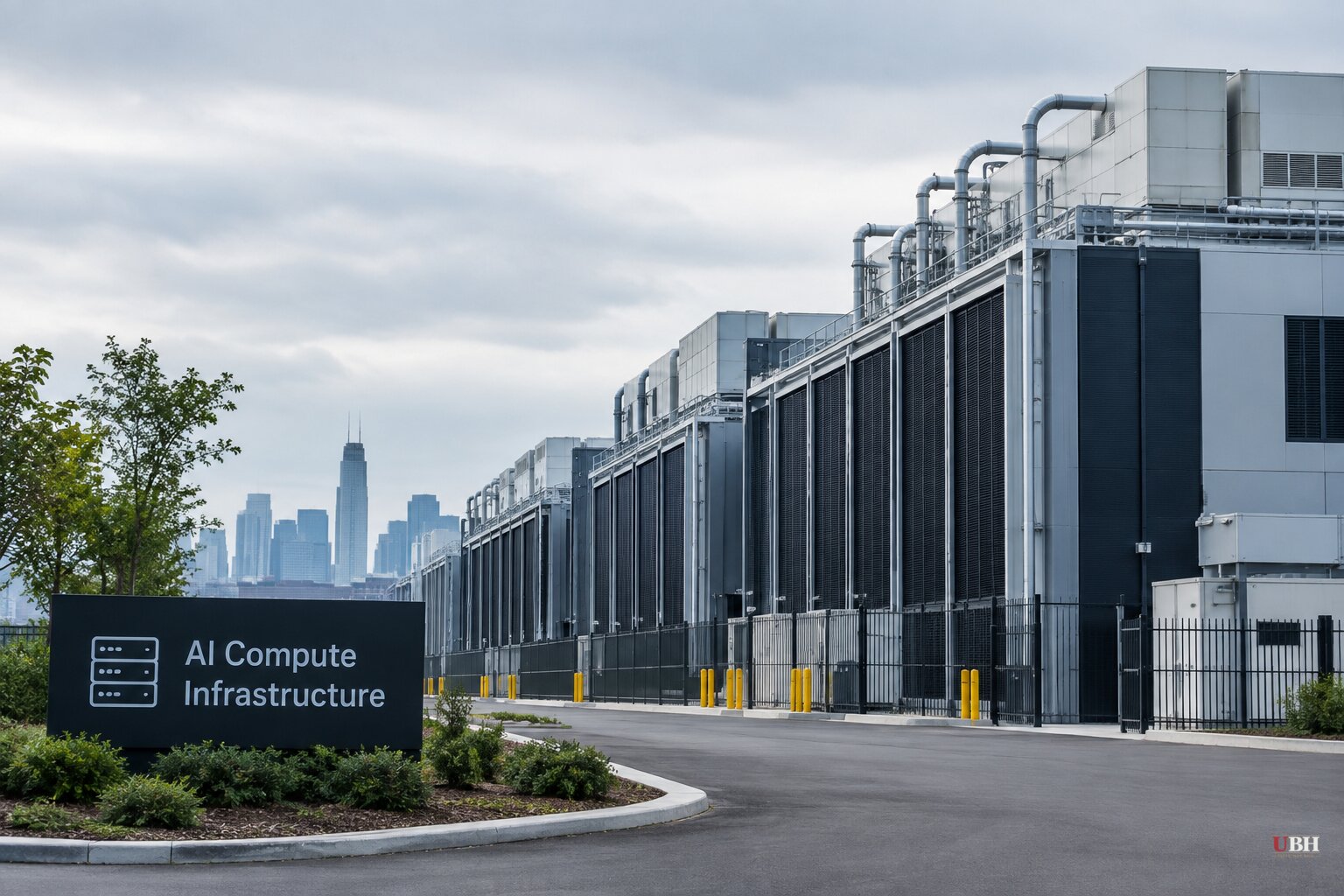
Greg Jensen, co-chief investment officer of Bridgewater Associates, wants Washington to treat the biggest AI compute holders the way it treats systemically important banks.
In a Q&A with Dakin Campbell of The Information, reported around September 17-19, 2026, Jensen proposed that any company controlling more than roughly 5% of U.S. or global AI compute should face heightened oversight modeled on the Systemically Important Financial Institution, or SIFI, framework built after the 2008 financial crisis. That designation brings stress testing, capital requirements, and regulatory scrutiny that ordinary companies never see.
Jensen's number isn't abstract. He projects OpenAI and Anthropic together could command 35% to 50% of world AI compute within about two years, according to The Information. He also floated hard position caps on compute ownership, borrowing the concept from limits that already exist in commodity futures markets to stop any single trader from cornering a market, according to Value Add VC's account of the interview.
Jensen has made a version of this argument before. On Bloomberg's Odd Lots podcast, published September 11, 2026, he compared the current moment in AI governance to February 2020, the weeks before COVID-19 became a global emergency, arguing the window to build proactive rules is closing. He has also floated a 'token tax' in a New York Times op-ed to offset job losses, citing a Bridgewater estimate that AI could displace up to 18% of U.S. jobs within five years.
One detail matters for judging Jensen's motives. According to Value Add VC, he disclosed that Bridgewater holds only a 'very small position' in the AI compute buildout trade specifically, separate from the firm's AIA Labs unit, which Crypto Briefing reports has run since 2023, employs more than 80 people, and manages roughly $4.5 billion tied to AI-driven strategies. That distinction—small stake in the infrastructure trade his proposed caps would constrain, versus real exposure through AIA Labs—is worth keeping straight. It undercuts the simplest version of the 'he's talking his own book' criticism, but it doesn't erase the fact that Bridgewater is itself an active AI player with a stake in how any rulebook gets written.
Jensen's proposal lands in the middle of a louder industry moment. Anthropic CEO Dario Amodei has called for slowing frontier AI development, embedding outside safety evaluators inside labs, and building common government-backed standards, a push Sam Altman and Elon Musk have publicly endorsed, according to Breitbart. Anthropic alignment science lead Evan Hubinger has said publicly he believes AI could kill all humans, putting his own estimate above 10% within a decade, and a 27-year-old Anthropic researcher, Jacob Coxon, resigned accusing his former employer and OpenAI of 'gambling with our lives,' per Breitbart's reporting.
Breitbart's Business Digest raises a specific and fair objection: businesses have a long history of lobbying for regulation that entrenches their own position and locks out smaller rivals. The piece invokes Nobel laureate economist George Stigler's theory of regulatory capture and points to Dodd-Frank as an example of rules that built a 'fortress' around the biggest banks instead of shrinking them. That's a real pattern in American regulatory history, and it's a legitimate lens for evaluating why Amodei, Altman, and Musk, who run or back the very labs a compute cap would hit hardest, are suddenly asking for guardrails.
Anthropic co-founder Jack Clark pushed back on that framing directly. Speaking to Fox News' Bret Baier, Clark called the idea that Anthropic's safety push is tied to a potential public offering 'an absurd 4D chess move,' and argued that safety standards are what preserve America's lead over China, not what undermines it. President Trump has dismissed the industry's warnings as a 'hoax,' according to Fox News, while Boom Supersonic CEO Blake Scholl argued existing liability law already covers AI misuse and that slowing development just cedes ground to competitors. Former Speaker Newt Gingrich told Fox Business's 'Kudlow' that the more concrete near-term fight isn't extinction risk but local control over data centers, covering water use, electricity costs, and community rights against 'trillion-dollar' corporations.
None of Jensen's specific numbers, the 5% threshold, the 35-50% concentration projection, are regulatory rules. They're one hedge fund executive's estimates, and Value Add VC and Dealroom both flag that how a compute 'SIFI' test would even be measured—training capacity versus inference, owned versus reserved—remains undefined. No legislation currently exists to implement it. Senate negotiators are reportedly considering a narrower 'duty of care' standard for advanced AI developers, according to Fox News, a much smaller step than the bank-style oversight regime Jensen is describing. Whether Congress moves on either idea before the compute concentration Jensen warns about actually materializes is the open question.
Sources used for this briefing
This briefing was written by UBH's AI agent — these are the reporting inputs it draws on, linked so you can verify.


