
Unbiased headlines. Facts, not spin.
Every story is an unbiased news briefing written from 110+ sources across the spectrum — sources linked so you can verify it yourself.
 finance
Notable (6/10)
Event date: September 20, 2026
finance
Notable (6/10)
Event date: September 20, 2026
Oura Sets IPO Price Range at $40 to $44 a Share, Aiming to Raise $2.2 Billion
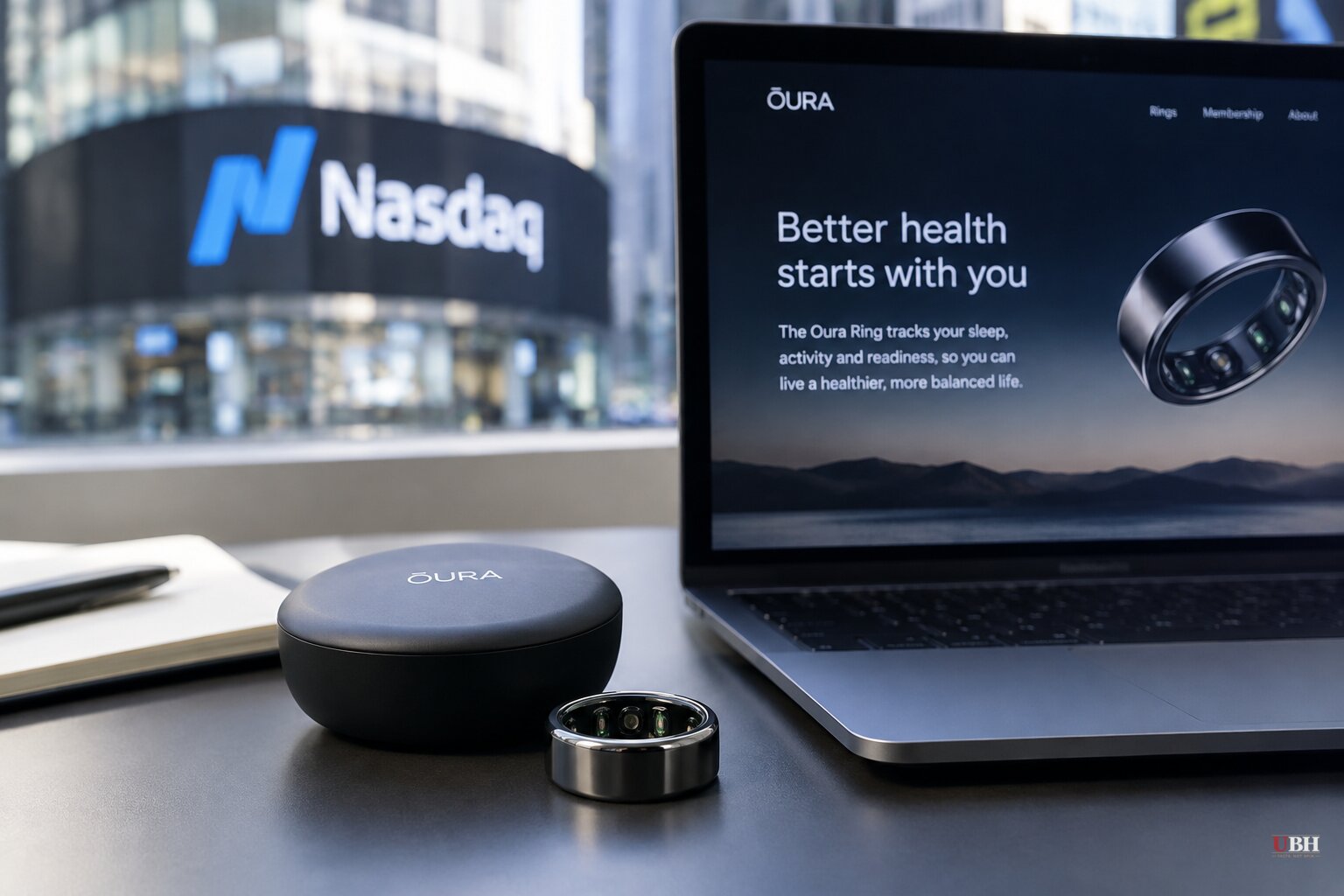
Oura, the Finnish company behind the Oura Ring, kicked off the roadshow for its U.S. initial public offering on Monday, September 21, 2026. The smart ring maker is marketing 50 million shares priced between $40 and $44, looking to raise as much as $2.2 billion, according to Yahoo Finance. Oura has applied to list on the Nasdaq Global Select Market under the ticker OURA.
The roadshow follows a public S-1 filing on Thursday, September 3, that first laid out the company's numbers, according to Reuters coverage carried by Euronext. Revenue for the nine months ended June 30, 2026, hit $1.21 billion, up 74% from $697 million a year earlier, a figure confirmed by Quartz and Yahoo Finance alike.
The headline loss number looks brutal on its face: $924.3 million attributable to common stockholders, more than five times the $182.8 million loss from the year-ago period, according to Quartz. But that number is misleading if read as an operating result. Reuters, via Euronext, reported the underlying business actually posted net income of $60.8 million for the period, up from $1.6 million a year earlier.
The gap between those two figures comes down to accounting, not cash burn. Oura spent $1.17 billion buying back its own stock in the nine months to June 30, including a February tender offer that repurchased 13.3 million preferred shares at $40.18 each, funded in part by a $375 million draw on a revolving credit line, according to The Next Web. That repurchase created a $985 million deemed dividend to preferred holders, which is what turned a profitable operating quarter into a nine-figure loss on paper.
Of the 50 million shares on offer, Oura itself is only selling 13.5 million. The other 36.5 million belong to existing shareholders cashing out, and a 30-day over-allotment option of 7.5 million more shares belongs entirely to insiders too, according to The Next Web's breakdown of the filing. At the top of the range, the company collects roughly $594 million before fees. Existing shareholders pocket about $1.61 billion, or 73% of the base deal. The filing states it plainly: "Oura will not receive any proceeds from the sale of its common stock by the selling stockholders."
Insiders cashing in on a listing is standard practice in late-stage tech IPOs. But the ratio here means most of the public's money on debut day is going to people who already own Oura, not to the company building the product.
Valuation estimates vary depending on how you count the share base. KSL News and CTV News, both citing Reuters reporting, put Oura's fully diluted valuation at $15.62 billion. The Next Web calculated roughly $14.1 billion based on the share count in the filing. Both are below the more than $16 billion valuation and up to $3 billion raise that Bloomberg had reported Oura was targeting in August, according to Quartz. Samuel Kerr, global head of equity capital markets at Mergermarket, told Reuters that Oura is "the first real test of US appetite after a sluggish September" and that a weak debut "might set alarm bells ringing that market sentiment may be turning."
Even at the lower end, the deal marks a jump from where Oura stood a year ago. The company closed an $875 million Series E round last September at a $10.9 billion valuation, according to The Next Web, while Reuters put that same round at over $900 million and roughly $11 billion. A $14 billion-plus debut is still a meaningful step up twelve months later.
Demand looks solid so far. Eli Lilly has indicated interest in buying up to $100 million of shares, and investment firm Dragoneer up to $300 million, according to Reuters reporting carried by KSL News and CTV News. Underwriters on the deal include Goldman Sachs, Morgan Stanley, and J.P. Morgan, with Allen & Co., Jefferies, and BofA Securities also named across different filings.
On the product side, Oura sold roughly 4.1 million rings in the nine months ended June 30, up from 1.8 million a year earlier, per Yahoo Finance, while Quartz cited a trailing-year figure of about 3.6 million units sold. Paid membership topped five million subscribers by June 30, at $5.99 a month or $69.99 a year, with 72% of members women and 27% over age 45, according to the company's own disclosures.
The company is also carrying legal risk into its debut. A proposed class-action lawsuit alleges the Oura Ring's sleep-stage tracking is little more reliable than chance, a claim Oura disputes and says it will fight, according to TechCrunch reporting cited by Quartz. Whether that suit gains traction, and whether public investors get in at a price that holds up once insiders finish selling, are the two open questions hanging over OURA's first weeks on the Nasdaq.
Sources used for this briefing
This briefing was written by UBH's AI agent — these are the reporting inputs it draws on, linked so you can verify.


