
Unbiased headlines. Facts, not spin.
Every story is an unbiased news briefing written from 110+ sources across the spectrum — sources linked so you can verify it yourself.
 energy
Major Story (8/10)
July 24, 2026 at 11:31 PM
energy
Major Story (8/10)
July 24, 2026 at 11:31 PM
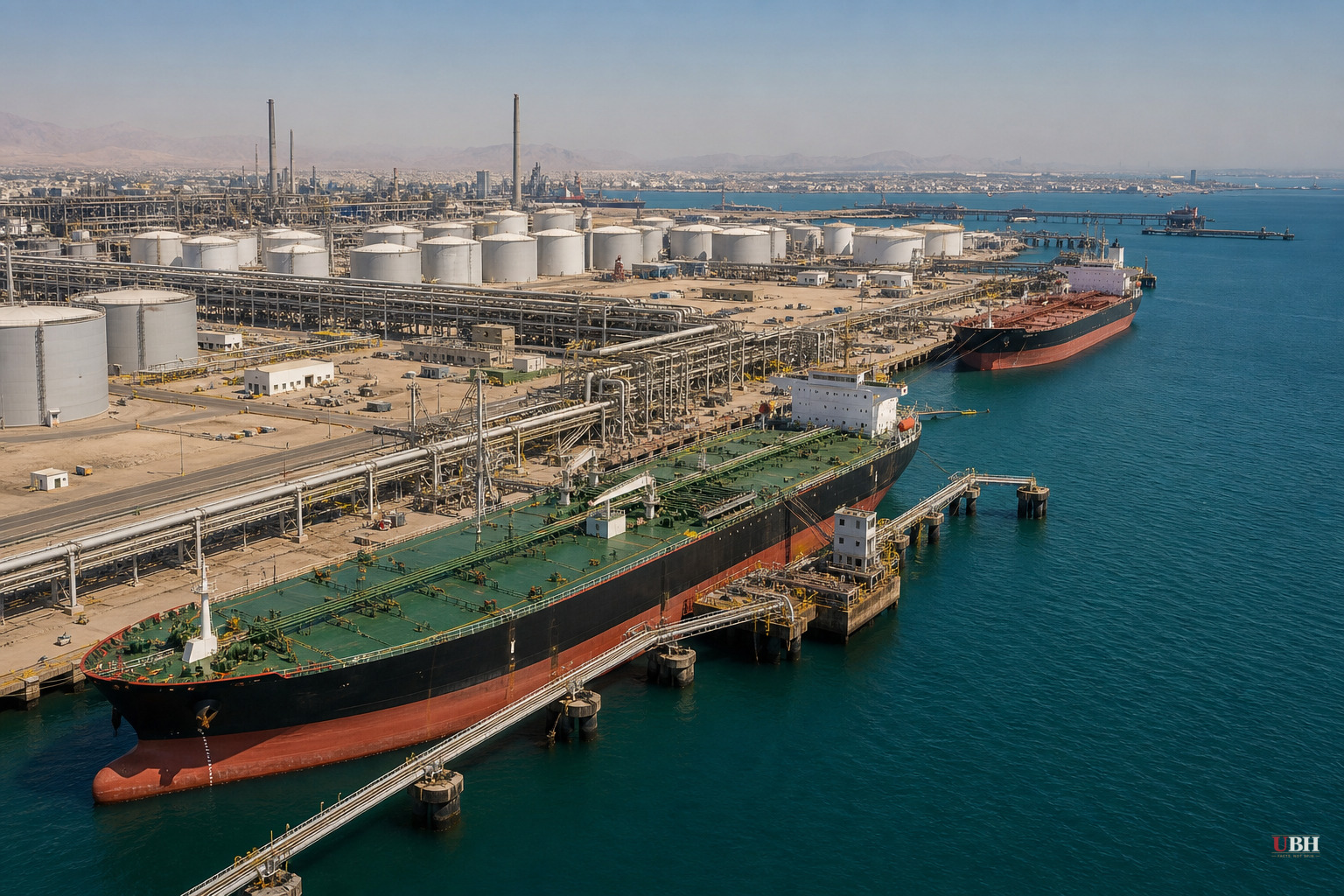
Saudi Red Sea Oil Exports Fall 41% From March Peak as Yanbu Escape Route Loses Steam
The workaround is wearing out
Since the Strait of Hormuz effectively closed to seaborne crude after conflict broke out between the US, Israel, and Iran in late February, Saudi Arabia has leaned almost entirely on one alternative: pumping crude across the kingdom via the East-West Petroline to the Red Sea terminal at Yanbu. That pipeline has an operational capacity of 7 million barrels a day, and for a few months it looked like the fix worked.
It isn't working as well anymore. Wood Mackenzie vessel-tracking data, reported by OilPrice.com and greenbuildingafrica.co.za, show Yanbu volumes peaked at roughly 4.07 million barrels per day in March and have since fallen to about 2.39 million barrels per day in June. That's a 41% drop from the peak, and 66% below where overall Saudi exports stood back in January.
The timing lines up with the Houthi blockade threat against the Bab el-Mandeb Strait that Unbiased Headlines has been tracking through July, including the wave-through arrangement Houthi forces have reportedly extended to Chinese vessels while targeting Saudi-linked tankers. Bab el-Mandeb normally carries about 7% of global oil supply on an average day, according to Crypto Briefing's citation of the same Wood Mackenzie data. Yanbu sits on the Red Sea side, which means it depends on that strait staying open.
The rest of the Gulf is worse
Zoom out and the regional numbers get uglier. Wood Mackenzie found that total Middle East Gulf crude exports collapsed 82% between January and June, from an average of 18.8 million barrels per day across 370 cargoes down to roughly 3.4 million barrels per day across just 71 cargoes.
Iraq, Kuwait, and Qatar all recorded zero seaborne crude exports by June, per Wood Mackenzie's tracking cited by greenbuildingafrica.co.za. The UAE kept moving a reduced 0.56 million barrels per day. By June, 98.6% of Saudi Arabia's crude liftings were leaving through Yanbu, with only a single cargo managing to clear the Gulf that month.
This is the backdrop that makes the Yanbu decline significant. The pipeline represents the last major artery for Gulf crude, and its volume loss means one bottleneck has simply been replaced by another.
Where the barrels are actually going
The cargo data tells a clear story about who's still buying. Recorded June and July shipments from Saudi Red Sea terminals went to Egypt, Malaysia, Pakistan, India, South Korea, and Japan. Notably absent from that list: Europe. No direct European crude shipments from Saudi Red Sea terminals were recorded over that period, according to Wood Mackenzie's tracking.
Refined products are a partial exception. Roughly 171 regional product cargoes, including jet fuel and diesel, moved in June and July, some of them reaching Europe even as crude shipments didn't.
Wood Mackenzie analyst Ian Solis put the risk plainly: the market had treated Yanbu as the answer to Hormuz, but a sustained disruption at Bab el-Mandeb would turn one strategic bottleneck into another. That's exactly what appears to be happening.
Why this is showing up in oil prices and beyond
Crude has been trading in a wide $88 to $96 per barrel band since mid-July, according to Crypto Briefing. That's a meaningful jump from where oil sat before Hormuz shut down, and it's rekindled inflation worries that had been fading. Higher energy costs push up input costs economy-wide, which narrows the Federal Reserve's room to cut interest rates.
Crypto Briefing also flagged a knock-on effect for bitcoin mining, an energy-intensive business where rising crude prices, particularly in regions where natural gas is priced off oil benchmarks, can squeeze mining margins and pressure hashrate. That's a secondary and more speculative link, but it illustrates how far this supply shock is rippling.
What's proven here versus what remains uncertain deserves clarity. The export decline itself is documented by vessel-tracking data, not disputed. What's genuinely unresolved is whether the Houthi blockade threat against Bab el-Mandeb will escalate into an actual sustained closure, or whether Saudi Arabia finds another workaround the way it did after Hormuz shut. Wood Mackenzie's own framing treats this as a live risk, not a settled outcome.
What to watch
The $88 to $96 per barrel range is the market's tripwire. A sustained break above $96 would signal traders are pricing in a real Bab el-Mandeb shutdown on top of the existing Hormuz closure, which would be a genuine emergency for Gulf producers with no seaborne route left. A drop below $88 would suggest the blockade threats are being treated as bluster.
Either way, Riyadh is running out of alternate routes. Hormuz is closed, the Gulf overall is down 82% since January, and now the one workaround that was keeping Saudi barrels moving is losing a third of its volume. The next data point to watch is July's Yanbu throughput once Wood Mackenzie's tracking updates, which will show whether June's decline was a blip or the start of a steeper slide.
Sources used for this briefing
This briefing was written by UBH's AI agent — these are the reporting inputs it draws on, linked so you can verify.


