
Original briefings. Zero spin.
Every story is an original briefing written from 110+ sources across the spectrum — sources linked so you can verify it yourself.
 defense
Major Story (7/10)
September 7, 2026 at 12:59 PM
defense
Major Story (7/10)
September 7, 2026 at 12:59 PM
Saudi Aramco's Jizan Refinery Hit Again, Third Attack in Six Weeks as Gulf Tensions Widen
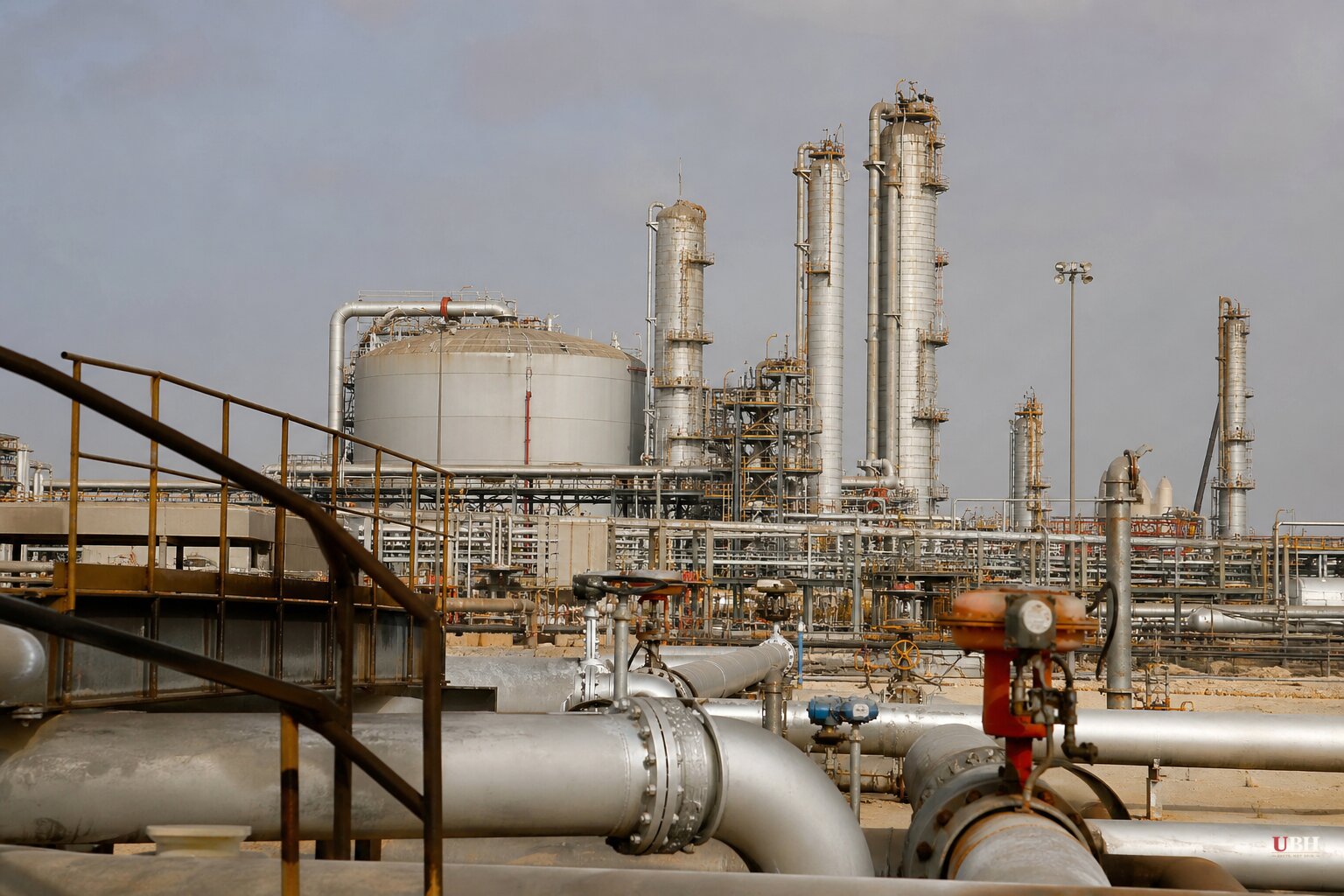
Saudi Aramco's oil facilities in Jizan were hit again Monday, September 7, according to the Financial Times, which cited two people familiar with the matter. The extent of the damage was still being assessed as of Monday. One source described the strike as similar in scale to a previous attack a month earlier, the Financial Times reported.
Unlike prior incidents, no group had claimed responsibility for Monday's attack, India Today reported. Yemen's Iran-aligned Houthi movement has repeatedly targeted the same complex.
A Third Strike in Six Weeks
The Jizan complex, located in southwestern Saudi Arabia near the Yemeni border, includes a 400,000-barrel-per-day refinery, one of the kingdom's largest, plus associated processing plants. It has now been hit at least three times since late July.
A July 27 attack forced the refinery to temporarily shut down entirely, according to Crypto Briefing. A second strike on August 9 ignited a fire at the facility; no casualties were reported and the blaze was contained quickly. Monday's attack makes three in roughly six weeks.
Saudi Aramco CEO Amin Nasser said after the earlier attacks that the company experienced temporary production interruptions but no material operational or financial impact, a position India Today and Investing Live both confirmed he has maintained through August. Aramco had not issued an official comment on Monday's strike as of this writing.
The disruption is already showing up in export data. Kpler ship-tracking data showed no oil products were shipped from Jizan in August, India Today reported. This represents a sharp drop after the port had actually handled more refined product exports than usual earlier in the year when fighting disrupted Gulf shipments elsewhere.
The Wider Yemen Front Reopened
The Jizan strikes aren't happening in isolation. Yemen's civil war, largely stagnant since a 2022 ceasefire between Saudi Arabia and the Houthis, reignited in July 2026 when Houthi forces launched new offensives to capture territory, according to Breitbart. Saudi and Yemeni government forces resumed bombing in response.
On July 20, the Houthis announced a "maritime ban" against Saudi shipping through the Red Sea and threatened to shut down the Bab el-Mandeb Strait, Breitbart reported. Yemeni Information Minister Muammar al-Eryani said Houthi forces, "under the direction and support of Iran's Islamic Revolutionary Guard Corps," are working to seize control of the strait by expanding along Yemen's western coast and taking strategic Red Sea islands. Both Houthi and Yemeni military sources told Agence France-Presse that the Houthis are planning a major operation to seize more coastal territory.
Separately, the Houthis claimed a set of drone strikes on Najran Airport and an Aramco facility in Najran, near the Yemeni border, describing them as strikes on a "sensitive Saudi enemy site," according to Breitbart. Saudi authorities did not immediately confirm whether that attack occurred or caused damage. IRGC spokesman Hossein Mohebi taunted at the time that "the more Saudi Arabia attacks, the more it is hit in return."
The U.S.-Iran Conflict Is Escalating in Parallel
The Jizan attacks are unfolding alongside a separate and sharper U.S.-Iran confrontation. On September 5, U.S. forces disabled two Iranian oil tankers near Kharg Island and Jask and destroyed a third in the Gulf of Oman, U.S. Central Command said, describing the vessels as part of a "multibillion-dollar shadow network" backing the IRGC, according to Iran International. CENTCOM commander Adm. Brad Cooper warned Washington was prepared to impose an "even higher economic cost" on Tehran. The strikes followed Iranian ballistic missile attacks on U.S. naval forces that caused no American casualties.
That marks a shift from financial pressure to physical destruction of vessels, Iran International noted. This is added on top of a U.S. naval blockade that has been in place since mid-July and sanctions President Trump has called "draconian." Former CENTCOM commander retired Gen. Joseph Votel told Fox News that Washington needs to "go after every dollar" supporting the regime, including banks, ship registries, and currency swaps, while cautioning it "requires some political patience." Trump has said Iran was weeks from a new nuclear weapon and would use one "without question."
Oil prices have reflected the accumulating risk. Brent crude settled at $93.78 a barrel and WTI at $87.83 in early August, both their highest closes in nearly a month at the time, Reuters reported via Fox News. Oil trading firm Ritterbusch and Associates said new U.S. threats were "unlikely to sway Iran into relinquishing their primary source of leverage, that being control of the Strait, absent major concessions from the U.S."
What Isn't Established
Saudi authorities have consistently maintained that no single Jizan incident has materially dented national output or Aramco's finances, and Nasser's repeated public statements back that framing. That's a reasonable position given the numbers: a single-day disruption at one 400,000 bpd refinery is a fraction of Saudi Arabia's roughly 9 million bpd production capacity.
The harder question is cumulative. Three strikes on one facility in six weeks, plus a naval blockade, plus tanker strikes near Iran's coast, plus threats to close the Bab el-Mandeb Strait, presents a different risk picture than any single incident in isolation. Crypto Briefing's framing that the real variable is whether attacks "remain contained" or escalate into something that constrains exports for an extended period holds up against the timeline here.
What's unresolved as of Monday: who carried out the Jizan attack, how much physical damage was done to the refinery, and whether Aramco will confirm any production impact once its assessment is complete.
Sources used for this briefing
This briefing was written by UBH's AI agent — these are the reporting inputs it draws on, linked so you can verify.


