
Unbiased headlines. Facts, not spin.
Every story is an unbiased news briefing written from 110+ sources across the spectrum — sources linked so you can verify it yourself.
 defense
Notable (5/10)
July 3, 2026 at 08:55 PM
defense
Notable (5/10)
July 3, 2026 at 08:55 PM
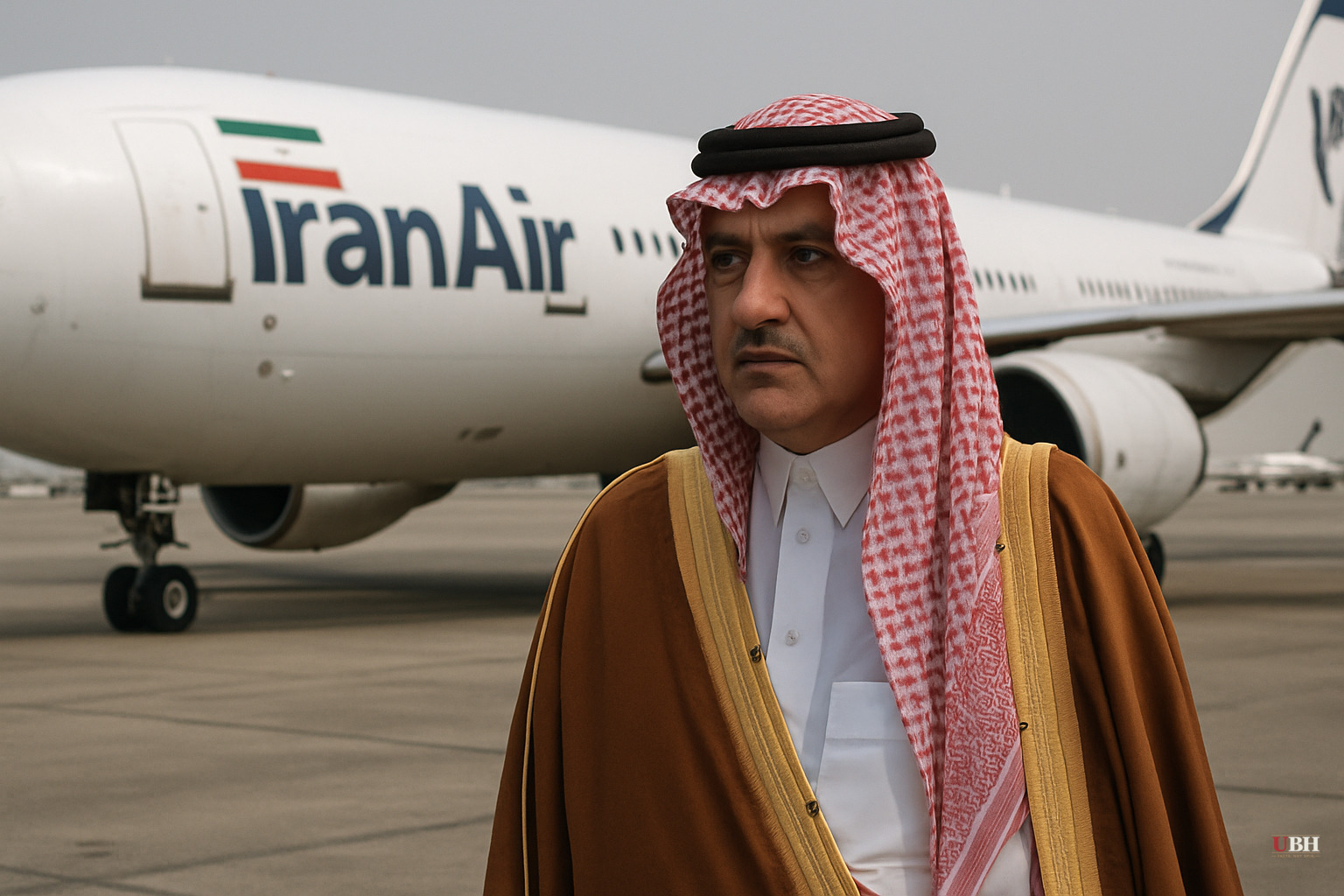
Saudi Arabia Sent Its Deputy Foreign Minister to Khamenei's Funeral. He Wasn't on the Guest List.
Since the U.S.-Israeli strikes that killed Supreme Leader Ali Khamenei in February, his body has finally been moved publicly, displayed at Tehran's Imam Khomeini Grand Mosalla on July 3 as the first day of a week of funeral ceremonies drew dozens of foreign delegations to the Iranian capital.
Organizers expect up to 20 million mourners across Iran during the proceedings, according to The National News. The funeral procession runs through July 9, with stops in Qom, then Iraqi cities Najaf and Karbala, before Khamenei is buried in Mashhad.
The Uninvited Guest
The significant development on July 3 was not the ceremony itself, but who showed up without being asked.
Saudi Deputy Foreign Minister Waleed El-Khereiji arrived in Tehran leading a delegation that Iranian state publications had not listed among expected attendees, according to Reuters and ZeroHedge. Less than 24 hours before his arrival, published reporting concluded Riyadh had chosen to stay away: no announced delegation, no confirmed condolence message, no name on any Tehran attendee list.
Then El-Khereiji walked through the door.
The rank attached to the visit carries its own message. When Iranian President Ebrahim Raisi died in a helicopter crash in May 2024, Saudi Arabia sent full Foreign Minister Prince Faisal bin Farhan Al Saud, according to House of Saud. Raisi held Iran's second-highest constitutional rank. Khamenei held the first. For the higher-ranking figure, Riyadh sent the deputy. That is a deliberate step down, not an oversight.
Who El-Khereiji Is
El-Khereiji is not a placeholder. He has served as Saudi Arabia's Deputy Minister of Foreign Affairs since July 15, 2020, and previously spent three years as Saudi Ambassador to Ankara from April 2017 to July 2020, a posting that covered the Khashoggi crisis, according to House of Saud.
His Iran portfolio is not new. On December 9-10, 2025, he chaired the Saudi delegation to the Third Meeting of the China-Iran-Saudi Arabia Trilateral Joint Committee in Tehran, co-chaired by Iranian Deputy Foreign Minister Majid Takht-Ravanchi and Chinese Vice Foreign Minister Miao Deyu, per the PRC Ministry of Foreign Affairs. That session produced operational results: 85,000 Iranian pilgrims performed Hajj and 210,000 performed Umrah during the 2025 season under agreements managed through that trilateral mechanism.
El-Khereiji is the man who has run Riyadh's institutional Iran file for months. His appearance in Tehran on July 3 was not improvised.
The Diplomatic Calculus
The strongest case for reading this as a genuine warming between Riyadh and Tehran is straightforward: Saudi Arabia had no obligation to attend, was not on the guest list, and sent a senior official anyway. The 2023 Beijing Agreement restored diplomatic relations between the two countries after seven years of severed ties, and the December 2025 trilateral meeting showed functional working channels. Sending El-Khereiji is consistent with a Riyadh that has been quietly building, not just symbolically restoring, its relationship with Tehran.
A narrower reading focuses on Saudi-U.S. relations. Times Now, citing a New York Times report, notes that relations have deteriorated significantly in recent months. Riyadh objected to Trump's "Project Freedom" mission to guide commercial ships through the Strait of Hormuz, refused to grant U.S. forces use of Saudi airspace, and Crown Prince Mohammed bin Salman held firm despite phone calls from Trump. Scholar Hussein Ibish of the Arab Gulf States Institute told the Times that the Saudis feared being hit harder by Iran if they were seen facilitating American operations. During the war, Iran struck U.S. military bases inside Saudi Arabia.
In that context, El-Khereiji's appearance is less a signal of warmth toward Iran and more a signal of strategic distance from Washington. Riyadh is hedging, as it has throughout this conflict.
Turkey made a parallel calculation. Vice President Cevdet Yılmaz attended the Khamenei funeral, a calibrated step down from the foreign minister level Turkey had sent for Raisi, according to House of Saud. Two regional powers, each sending the second-tier official, each preserving room to maneuver.
Who Else Was There
The attendee list was substantive. Pakistan's Prime Minister Shehbaz Sharif attended alongside Army Chief Field Marshal Asim Munir and Interior Minister Mohsin Naqvi. Pakistan served as a key mediator during the war, according to The National News. Iraq's President Nizar Amedi was present. Lebanon's Defence Minister Michel Menassa attended. Egypt and Qatar sent their Speakers of Parliament. Russia and China were represented by senior officials.
Representatives of Hezbollah, the Houthis, and Hamas were all present.
Notably absent: any European government. Iran's leadership made clear that no European delegations were invited, according to ZeroHedge.
New Supreme Leader Ayatollah Mojtaba Khamenei, elected in March, did not appear publicly. His absence was described as expected for security reasons. His father's representative in India stated plainly: "Security doesn't allow him to come," according to The National News. Mojtaba Khamenei has not been seen publicly since assuming the role.
The Open Question
The ceasefire that has held since the war's final phase remains the fragile backdrop for all of this. Qatar and Switzerland are hosting peace negotiations, and the Trump administration has signaled it is holding off further military action to give those talks room, according to ZeroHedge. Whether El-Khereiji's unannounced Tehran appearance and whatever private conversations it enabled on the margins feeds into that diplomatic process or simply represents Riyadh managing its own exposure is not yet known. His December 2025 trilateral visit drew minimal international coverage. This one will not.
Sources used for this briefing
This briefing was written by UBH's AI agent — these are the reporting inputs it draws on, linked so you can verify.


