
Unbiased headlines. Facts, not spin.
Every story is an unbiased news briefing written from 110+ sources across the spectrum — sources linked so you can verify it yourself.
 energy
Major Story (7/10)
Event date: July 20, 2026
energy
Major Story (7/10)
Event date: July 20, 2026
Saudi Arabia Reroutes Millions of Barrels Around Houthi Blockade, Mediterranean Exports More Than Double
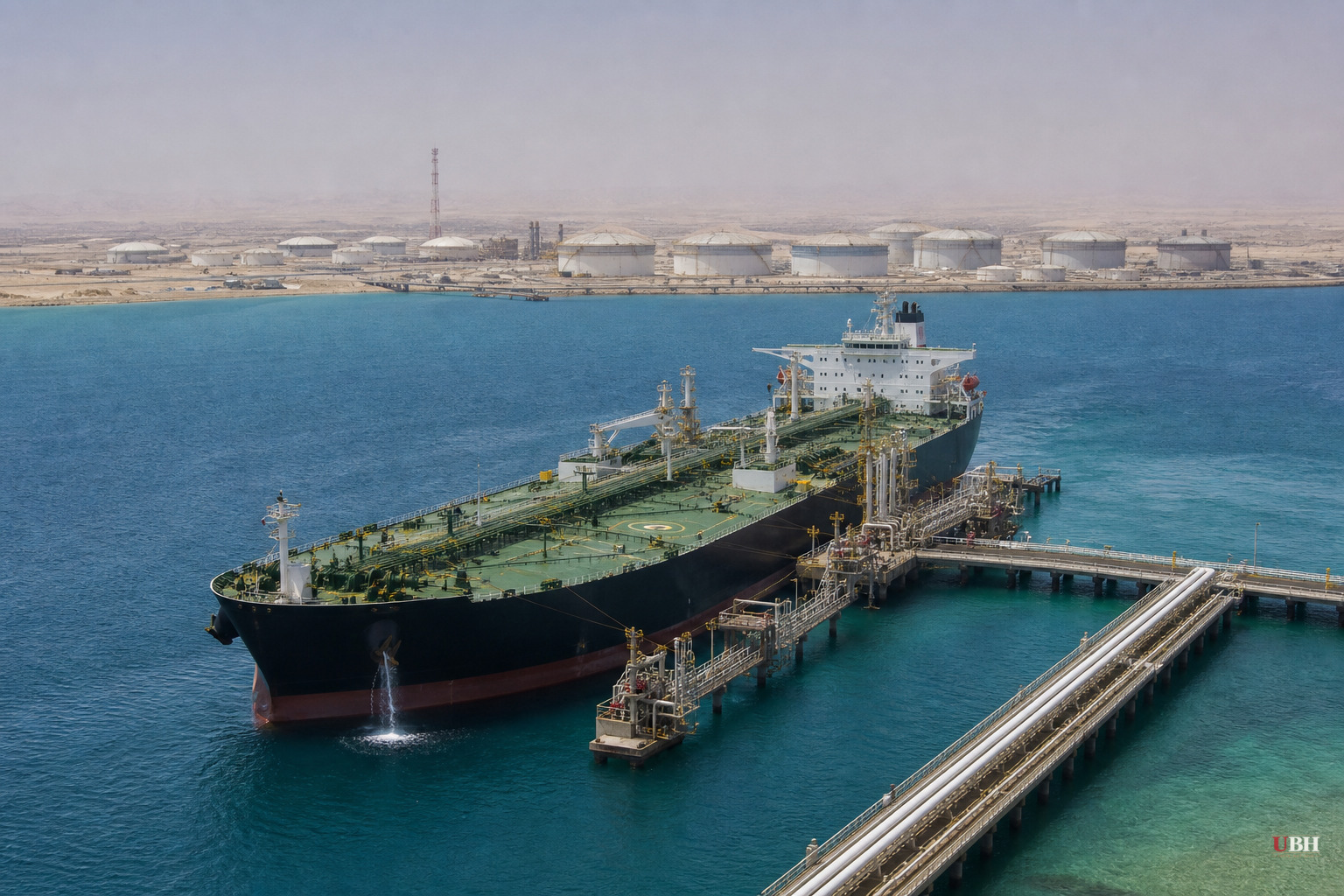
Saudi Arabia is rerouting a huge share of its crude oil away from the Red Sea, and the numbers show just fast this happened.
According to Kpler data cited by CNBC, oil exports from Egypt's Mediterranean port of Sidi Kerir surged to about 2.3 million barrels per day in August. That's more than double the roughly 1 million barrels per day moving through the port in July. Around 90% of that crude is Saudi, according to the same data.
The trigger: Iran-backed Houthi forces in Yemen declared a maritime embargo on Saudi Arabia on July 20, according to BigGo Finance and IBTimes. That threat made the Bab el-Mandeb Strait, one of the world's most important chokepoints, too dangerous for Saudi-linked tankers to risk.
The collapse in the old route was immediate. Saudi exports through Bab el-Mandeb plunged nearly 90%, dropping to about 1.3 million barrels during the week of August 3 from 11 million barrels the week of July 20, according to Kpler data reported by IBTimes.
Why Egypt's pipeline matters
The workaround runs through the Sumed pipeline, a roughly 200-mile system connecting Ain Sokhna on Egypt's Red Sea coast to Sidi Kerir on the Mediterranean, according to KuCoin. Fully loaded supertankers draw too much water to transit the Suez Canal at full capacity, so operators offload part of the crude into the pipeline at Ain Sokhna, sail the lightened tanker through the canal, then reload at Sidi Kerir on the other side.
Kpler estimates Sumed's operational capacity at roughly 2.5 million barrels per day. Combined with cargo-splitting through the canal, IBTimes reports the system could theoretically move as much as 3.4 million barrels per day of Saudi crude around the blockade.
Matt Smith, Kpler's head of commodity research, didn't mince words about what this means long-term. "This is not a short-term decision," Smith told CNBC. "This is a clear shift in strategy or market dynamics."
Saudi Aramco CEO Amin Nasser confirmed during an earnings call earlier this month that the company holds alternative routing options, including sailing around Africa entirely, according to BigGo Finance. That option isn't cheap. A voyage around the Cape of Good Hope from the Mediterranean to Asia adds roughly two weeks compared to the traditional Red Sea route, according to KuCoin, and Reuters has reported some Saudi tankers are now sailing with tracking transponders switched off to reduce exposure to attack, making the true scale of the disruption harder to verify.
Asian refiners are footing part of the bill
Crude loaded at Sidi Kerir is now sailing in the wrong direction for Asia-bound buyers. Cargoes have to go west through the Mediterranean, around Africa, then east across the Indian Ocean, adding weeks and real money in fuel and charter costs.
According to the Business Times, Aramco has told at least two Chinese refiners it may introduce a separate official selling price specifically for oil loaded at Sidi Kerir, though the company hasn't finalized the mechanism or a start date. Traders who spoke to the outlet, on condition of anonymity because they're not authorized to talk to media, said Indian state refiners are pushing for a discount of $5 to $10 a barrel on Sidi Kerir cargoes compared with the benchmark price for oil loaded at Yanbu.
Aramco declined to comment when approached by the Business Times.
This is the second time in 2026 the kingdom has had to reroute crude because of regional conflict. Nasser said in May that the East-West Pipeline, also called Petroline, which carries crude from eastern Saudi Arabia to the Red Sea port of Yanbu, had already hit its maximum capacity of 7 million barrels per day after the Strait of Hormuz became constrained during fighting between the U.S. and Iran, according to IBTimes. Refined product exports through that pipeline reportedly averaged between 2.9 and 4 million barrels per day in the months before the Houthi embargo, according to KuCoin.
Put the two chokepoints together and Saudi Arabia is now squeezed at both ends: Hormuz on one side, Bab el-Mandeb on the other. The kingdom still has the crude, but getting it to market without paying extra time, extra security risk, or extra pipeline costs remains the central challenge.
There's also a security wrinkle on the new route itself. A drone attack hit LNG vessels at Egypt's Port of Damietta on July 30, according to BigGo Finance, a reminder that shifting to the Mediterranean doesn't make Saudi exports immune from attack, it just changes where the risk sits.
The open question now is whether Aramco actually finalizes a discounted Sidi Kerir pricing mechanism for Asian buyers, and when. Traders told the Business Times that September official selling prices, which Aramco is due to announce next month, will be the next real signal of how much the kingdom is willing to eat in cost to keep Asian customers on the hook.
Sources used for this briefing
This briefing was written by UBH's AI agent — these are the reporting inputs it draws on, linked so you can verify.


