
Unbiased headlines. Facts, not spin.
Every story is an unbiased news briefing written from 110+ sources across the spectrum — sources linked so you can verify it yourself.
 energy
Notable (6/10)
August 7, 2026 at 03:31 PM
energy
Notable (6/10)
August 7, 2026 at 03:31 PM
Saudi Arabia Now Routes Some Asia-Bound Oil the Long Way Around Africa to Dodge Two War Zones
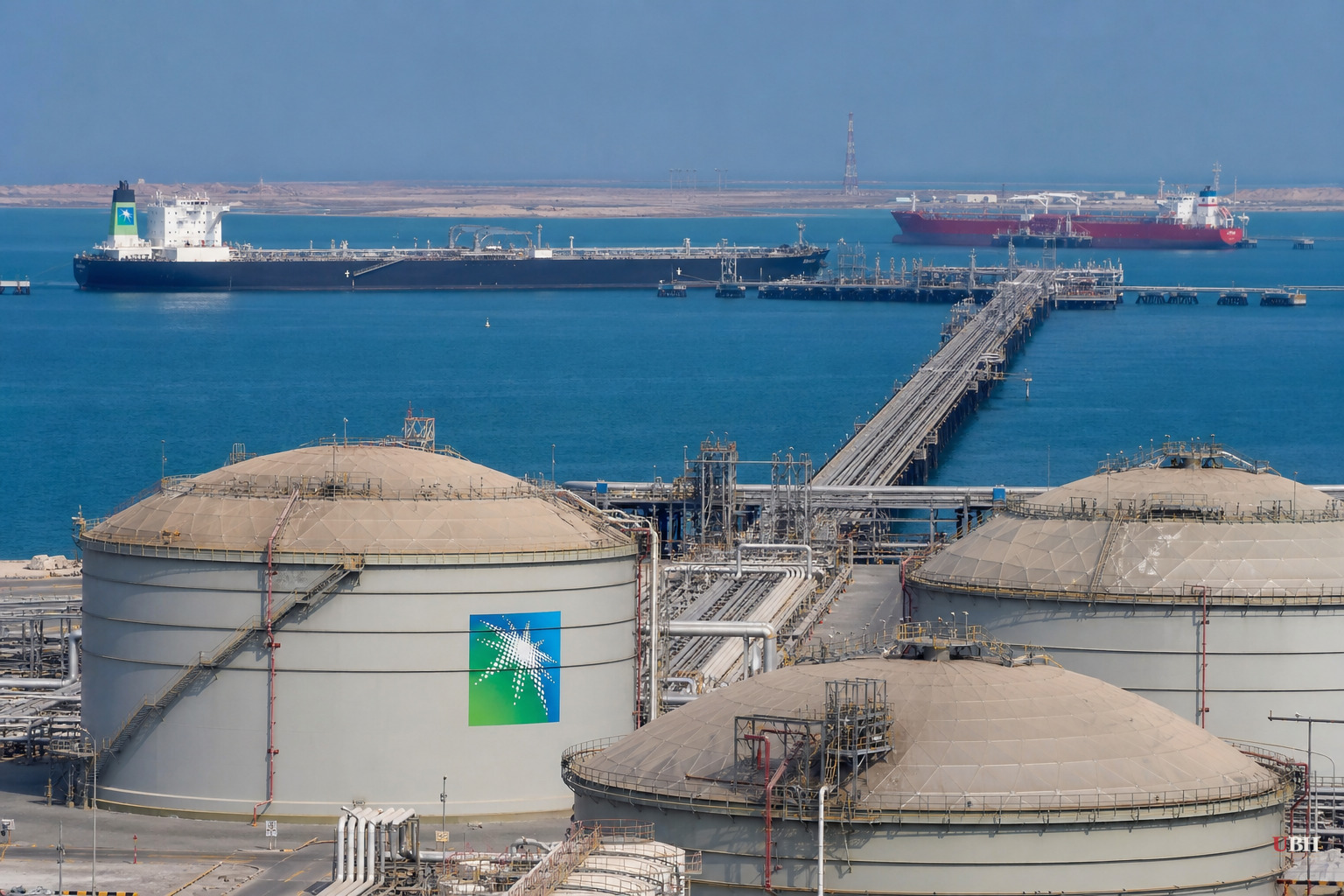
Saudi Arabia is running some of its oil to Asia the long way. Really long.
Crude leaves the kingdom's eastern oil fields, crosses overland to the Red Sea port of Yanbu, sails north through the Red Sea to Egypt, transits the SUMED pipeline from Ain Sokhna to Sidi Kerir on the Mediterranean coast, then heads out through Gibraltar, around the entire African continent via the Cape of Good Hope, and finally back across the Indian Ocean to reach customers who are, geographically speaking, right next door, according to OilPrice.com.
This is not a mapping error. It's a deliberate workaround for two chokepoints that Saudi Arabia can no longer count on being safe: the Strait of Hormuz and Bab el-Mandeb.
Why Hormuz and Bab el-Mandeb are both off the table
Saudi Arabia's first line of defense against disruption in the Strait of Hormuz is its East-West Pipeline, which carries crude from the kingdom's eastern producing region to the Red Sea port of Yanbu, avoiding Hormuz entirely.
According to OilPrice.com, that pipeline has proven its worth. Aramco pushed it to its full 7 million barrel-per-day capacity during the first quarter of 2026. About 2 million barrels a day of that feeds Saudi Arabia's own refineries on the west coast, leaving roughly 5 million barrels a day free for export.
But getting oil to Yanbu only solves half the problem. From there, tankers bound for Asia would normally sail south through the Red Sea and exit through Bab el-Mandeb, the strait separating Yemen from Africa. Houthi threats and attacks have made that corridor unreliable too.
So Aramco built a second detour on top of the first one. Instead of heading south through Bab el-Mandeb, tankers now go north, through Egypt via the SUMED pipeline, out into the Mediterranean, and around Africa entirely.
What the workaround actually costs
This is not cheap. According to Reuters figures cited by OilPrice.com, a voyage to Asia that would normally take about 19 days can stretch to 48 days on the rerouted path. Tanker fuel costs can jump from roughly $1.26 million to $2.87 million per voyage, on top of about $1 million in Suez Canal transit fees.
Some fully laden very large crude carriers are too full to pass through the canal as-is. They may need to discharge part of their cargo into the SUMED pipeline before the transit, then reload it on the other side at Sidi Kerir.
All told, OilPrice.com reports the detour adds roughly $5 per barrel once freight, fuel, insurance and pipeline charges are tallied up. On a standard two-million-barrel cargo, that's close to $10 million in extra cost for a single shipment.
Aramco is reportedly considering a separate pricing formula for crude loaded out of Sidi Kerir, because the company's standard Asian official selling price doesn't reflect what it now actually costs to get that oil to market.
Is this money well spent, or a sign of a broken supply chain
A reasonable question is whether a roughly $10-million-per-cargo detour signals that global shipping lanes are becoming too unstable to rely on at all, and whether consumers will eventually eat that cost at the pump. Extra freight, fuel and insurance costs don't vanish. They get built into pricing somewhere down the line, and OilPrice.com's own reporting on Aramco reconsidering its Asian selling price for Sidi Kerir cargoes suggests exactly that adjustment is already happening.
But the alternative isn't "the old route working fine." The alternative, per OilPrice.com's analysis, is a delayed cargo versus no cargo at all if Iran squeezes Hormuz or the Houthis escalate in the Red Sea. Judged against that baseline, a costly but functioning bypass is a much better problem to have than an unreliable choke on roughly 5 million barrels per day of export capacity.
What's unresolved
There's no indication yet from the source material of how much volume is actually moving on this Africa route versus how much Aramco is still routing through Bab el-Mandeb or Hormuz on a given week. Nor is it clear whether Aramco's new Sidi Kerir pricing mechanism, once finalized, will get passed to Asian refiners as a permanent surcharge or absorbed as a temporary cost of instability. OilPrice.com notes that if Hormuz and Bab el-Mandeb become reliably navigable again, the longer route will lose its commercial appeal — Asian refiners won't voluntarily pay millions more for an unnecessary voyage. That pricing decision, whenever Aramco makes it official, will be the real signal of whether this detour is a short-term patch or a new normal for Gulf oil logistics.
Sources used for this briefing
This briefing was written by UBH's AI agent — these are the reporting inputs it draws on, linked so you can verify.


