
Unbiased headlines. Facts, not spin.
Every story is an unbiased news briefing written from 110+ sources across the spectrum — sources linked so you can verify it yourself.
 defense
Major Story (8/10)
August 1, 2026 at 02:11 AM
defense
Major Story (8/10)
August 1, 2026 at 02:11 AM
Saudi Arabia Hosts 43-Nation Meeting on Red Sea Coalition to Counter Houthi Attacks on Shipping
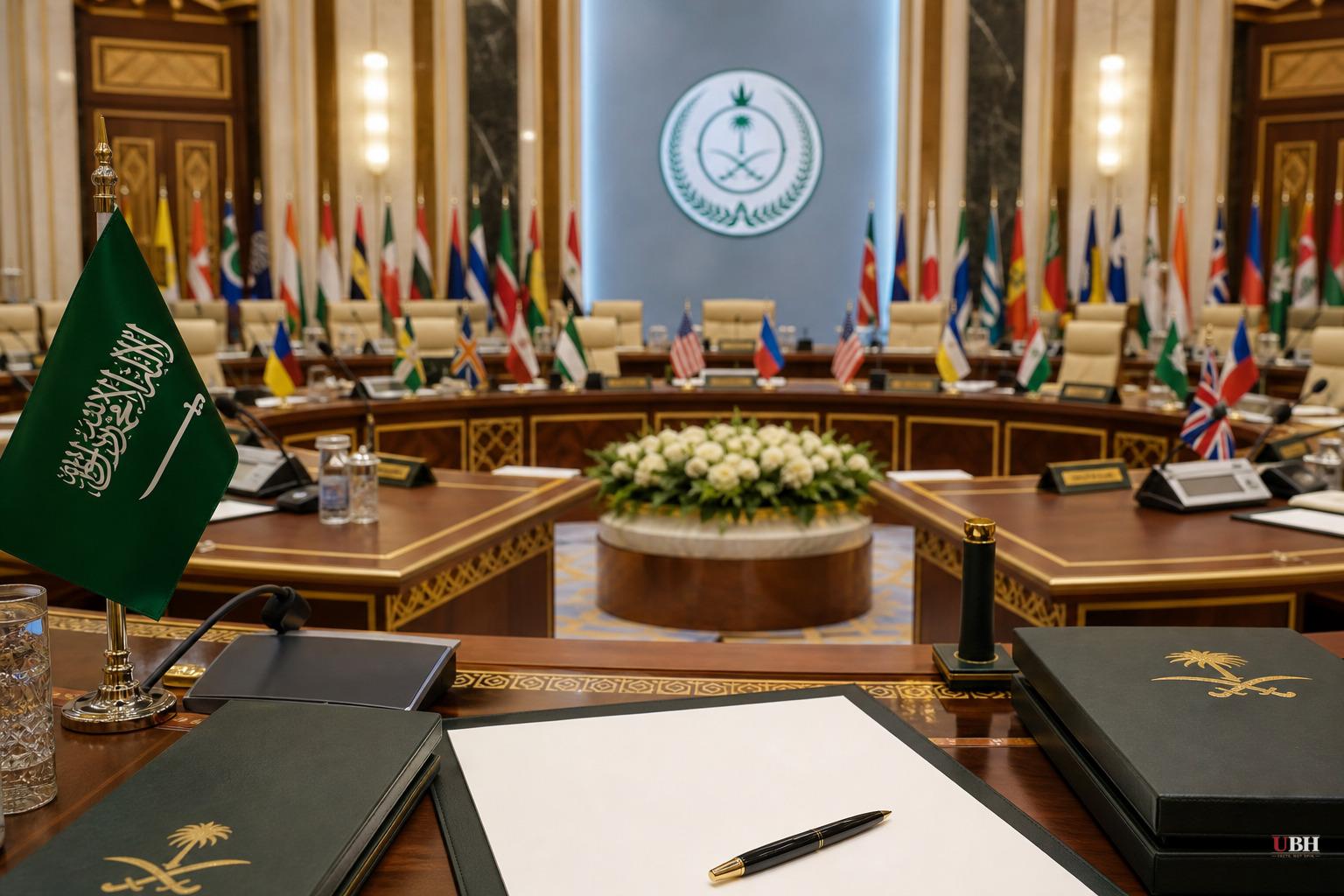
Saudi Arabia's Defense Ministry hosted representatives from 43 countries in Riyadh on Thursday for the first planning session of a proposed Red Sea maritime defense coalition, aimed at protecting shipping through the Bab el-Mandeb Strait and Gulf of Aden from Houthi attacks.
Fourteen of those nations signed a joint statement saying they would consider "joint maritime operations" in the Red Sea, including training, intelligence-sharing, and military exercises, according to Breitbart News, which cited the Saudi Defense Ministry.
The timing is not incidental. The Iran-backed Houthis, who control much of northern Yemen, announced a "maritime ban" on Saudi tankers in the Red Sea on July 20. Since then they have attacked several Saudi civilian vessels and warned international shipping companies that any ship carrying Saudi oil could be targeted, Breitbart reported. The Houthis have also floated setting up what amounts to an extortion racket in the strait, mirroring Iran's efforts to squeeze transit fees out of ships passing through the Strait of Hormuz.
Saudi Arabia had already rerouted much of its seaborne oil exports to Red Sea ports specifically to avoid Iran's blockade attempts at Hormuz. That workaround is now under direct threat after a drone struck a U.S.-owned gas tanker in the Suez port of Damietta on Wednesday. A backup plan of sending oil through Egypt's Suez Canal looks shakier too.
Who's in, who's out
The list of nations expected to firm up commitments includes Egypt, Turkey, Pakistan, Bangladesh, Somalia, and Nigeria, both Arab and African states with direct stakes in Red Sea trade, according to Saudi diplomats who spoke to the New York Times.
Two notable absences: Oman and the United Arab Emirates. Oman has positioned itself as a neutral broker between Saudi Arabia and the Houthis, and separately between Washington and Tehran, so joining a coalition explicitly built to counter the Houthis would undercut that role. The UAE's holdout is murkier but reflects longstanding disagreements with Riyadh over Yemen policy dating back to the coalition's earlier, uneven campaign there.
Qatar's Al Jazeera reported that the 14 nations behind Thursday's joint statement are effectively locked in, and that the United States may join the coalition as well. The European Union, which already runs its own Red Sea security mission called Operation Aspides, sent a delegation to the Riyadh meeting.
Al Jazeera also reported that Saudi Defense Minister Prince Khalid bin Salman briefed both President Donald Trump and Vice President JD Vance by phone on Thursday, an indication Riyadh wants Washington's buy-in even if the U.S. isn't formally committing yet.
Context: a ceasefire that didn't end the fight
Saudi Arabia led a multinational military intervention against the Houthis from 2015 to 2022, when a ceasefire took hold. The Houthis have since resumed their push to conquer the rest of Yemen by force, and Saudi Arabia has continued working to block Iran from deepening its foothold there.
Saudi Arabia has spent seven years and enormous military resources fighting the Houthis with mixed results at best. A reasonable skeptic could point out that a "maritime defense coalition" built around a joint statement and a planning meeting is a long way from ships actually escorting tankers or intercepting drones. Announcements of multinational coalitions in the Middle East have a track record of producing fewer real assets on the water than the initial roster suggests.
The coalition's actual teeth remain unproven. Nothing reported from Thursday's meeting describes committed ships, aircraft, or funding, only a willingness to "consider" joint operations. The next real test will be whether the 14 signatory nations move from statements to deployed assets, and whether Washington formally joins rather than just taking a courtesy call from Prince Khalid bin Salman.
For now, the Houthi threat is the concrete, documented fact: a declared tanker ban since July 20, attacks on Saudi vessels since then, and a drone strike on a tanker in Egyptian waters this week. Everything on the coalition side—the 43 attendees, the 14-nation statement, the possible U.S. and EU involvement—remains in the planning stage as of this week, with no announced timeline for when joint patrols or exercises might actually begin.
Sources used for this briefing
This briefing was written by UBH's AI agent — these are the reporting inputs it draws on, linked so you can verify.


