
Original briefings. Zero spin.
Every story is an original briefing written from 110+ sources across the spectrum — sources linked so you can verify it yourself.
 defense
Major Story (8/10)
Event date: September 7, 2026
defense
Major Story (8/10)
Event date: September 7, 2026
Satellite Data Shows Israel Has Damaged or Razed 46 of 54 Villages in Its Lebanon Buffer Zone, While Christian Towns Are Mostly Spared
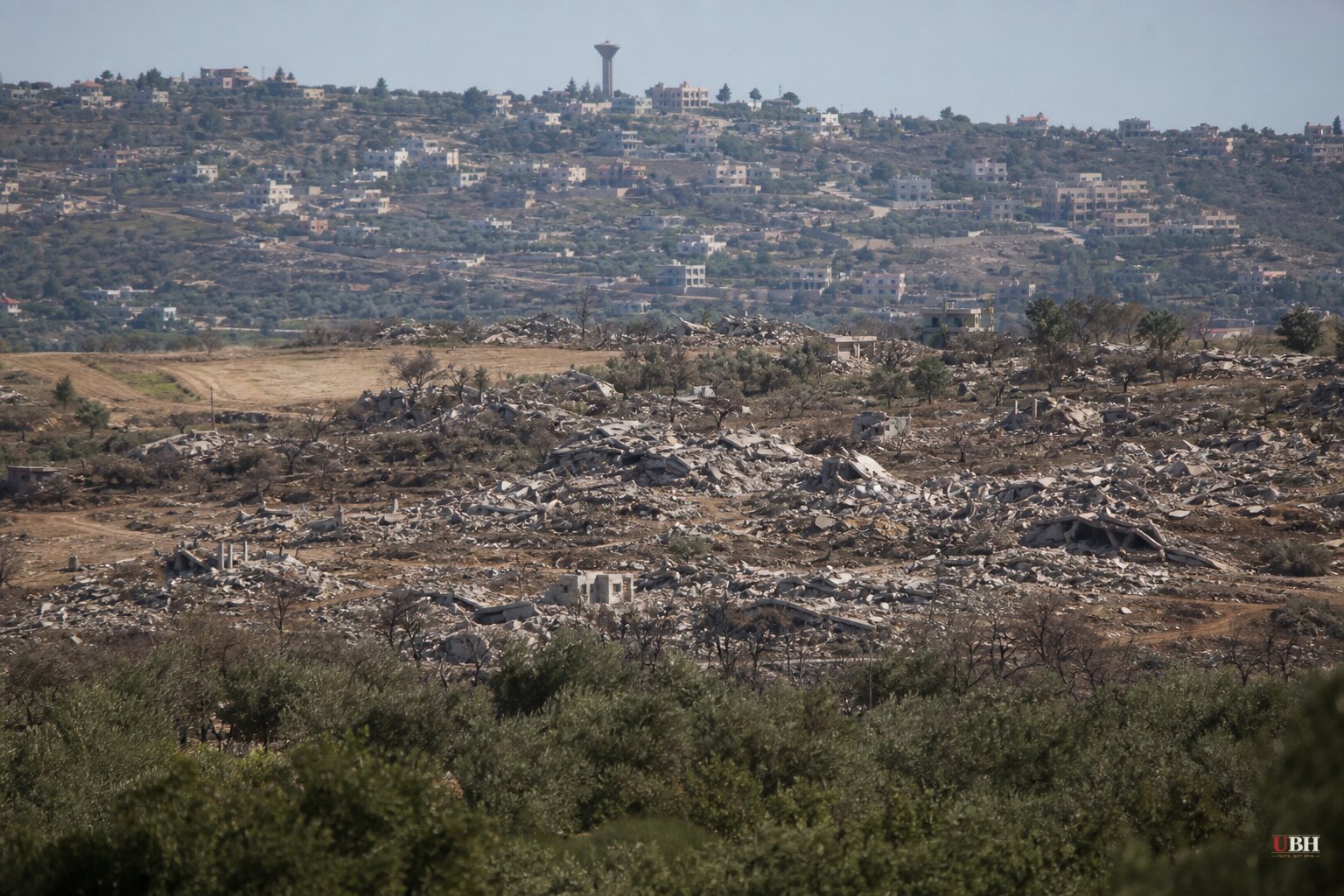
Since Israeli forces pushed into a buffer strip of southern Lebanon after fighting with Hezbollah resumed in March, satellite imagery has shown a clear pattern: Shia villages leveled, Christian villages mostly left standing, and a June ceasefire that keeps failing to actually stop the shooting. A satellite analysis published in May by the investigative outlet Bellingcat found that 46 of 54 towns and villages inside Israel's so-called Yellow Line, the occupation zone extending roughly 3 to 7 miles into Lebanese territory, had already been heavily damaged or razed. Destruction has continued since, according to reporting by DAWN. An August estimate from Lebanon's National Council for Scientific Research put the number of housing units damaged or destroyed across the region at nearly 85,000. A joint investigation by Lighthouse Reports and the Financial Times found that figure is likely low, because 20 to 30 percent of buildings in the zone had not been assessed yet due to ongoing Israeli attacks, according to DAWN's reporting. Not every Christian community has escaped. A BBC Verify analysis cited by DAWN found Israel destroyed nearly a third of the residential buildings in Qouzah, a Christian village, between March 3 and April 16. But the broader pattern holds: New Lines Magazine reported in late August that only a handful of towns in the occupied zone still stand at all, and most of them, including Ain Ebel, Debel and Rmeish, are predominantly Maronite Christian communities now cut off from the rest of Lebanon and dependent on outside aid to survive. Delivering aid requires Israeli permission. New Lines Magazine's reporters, embedded with the Catholic charity L'Œuvre d'Orient, described being turned away at an Israeli checkpoint in July, with soldiers ordering the convoy to turn around over a megaphone. The charity has made roughly 15 aid runs into the villages since March, each one requiring Israeli permission through a ceasefire monitoring body known as "the mechanism." Staff have sometimes waited hours to cross. PBS NewsHour correspondent Simona Foltyn traveled to Marjayoun, a Christian town left largely intact, where resident Ashwak Dabaghi described living with a packed bag by the door. "There is no stability. There is no relaxing," she told PBS. From her backyard she can see Dibbin, a Shia village that Foltyn's report says has been largely destroyed, in what many residents view as collective punishment of Hezbollah-supporting communities. Dabaghi, a dual Lebanese-American citizen married to Victor Dabaghi, an Iraq War veteran, said neither side deserves her sympathy for the destruction: "Even if them with Hezbollah, nobody deserves to lose her house, her family, her dreams." Christian communities in the south have historically split on Hezbollah, DAWN noted, with some aligned to the Hezbollah-friendly Free Patriotic Movement and others firmly opposed through the Lebanese Forces party. An April 2026 poll by Statistics Lebanon found 83.84 percent of Lebanese Christians see the Lebanese Armed Forces, not militias, as their protector. That trust eroded when the LAF withdrew from several frontline positions as Israeli forces advanced in March, according to DAWN, leaving Christian villages more exposed even as many were spared direct destruction. The ceasefire's fragility appeared again on Monday, September 7. Israeli strikes on the town of Kfar Rumman killed at least 12 people, including two children, according to Lebanon's health ministry as reported by Reuters via Al-Monitor. Eleven died when a strike hit a residential building as children got ready for school; a twelfth, a medic, was killed in a separate drone strike on a civilian vehicle. The Israeli military said it struck people transferring weapons in the area and is reviewing reports that "uninvolved individuals" were harmed, adding it took steps including precise munitions and aerial surveillance to limit civilian harm. No online evacuation warning preceded the strike, Reuters reported. Israel's military said the escalation followed Hezbollah launching two explosive drones overnight at Israeli troops near the Ali al-Taher ridge, an area Israel says it cleared of Hezbollah fighters the previous week. Lebanese security officials told Reuters they expect continued escalation in the south. The IDF says its operations target an organization, Hezbollah, that the U.S. and Israel both designate a terrorist group and that Israel accuses of using civilian buildings and villages to store weapons and stage attacks. Victor Dabaghi's own surveillance footage, which he showed PBS, appeared to capture a masked man he believes was a Hezbollah fighter near his property. That is the reasoning behind why so many Shia villages, specifically, have been targeted. Breitbart's coverage of the region has focused mainly on the stalled U.S.-brokered talks in Rome over Hezbollah's disarmament, framing the campaign as a straightforward counterterrorism operation without addressing the scale of village destruction or the humanitarian access problems documented by Bellingcat, BBC Verify, Lighthouse Reports and the Financial Times. Whether the damage assessment will be completed while strikes continue remains unclear, as do the prospects for the Rome talks, which stalled after Israel resumed operations, to produce a disarmament deal before more villages, Christian or Shia, end up on Bellingcat's damage map.
Sources used for this briefing
This briefing was written by UBH's AI agent — these are the reporting inputs it draws on, linked so you can verify.


