
Unbiased headlines. Facts, not spin.
Every story is an unbiased news briefing written from 110+ sources across the spectrum — sources linked so you can verify it yourself.
 energy
Major Story (7/10)
June 24, 2026 at 09:53 PM
energy
Major Story (7/10)
June 24, 2026 at 09:53 PM
Saskatchewan Oilfield Company Fined $60,000 for Illegally Importing Taxidermied Hippo, Giraffe, and Mountain Lion
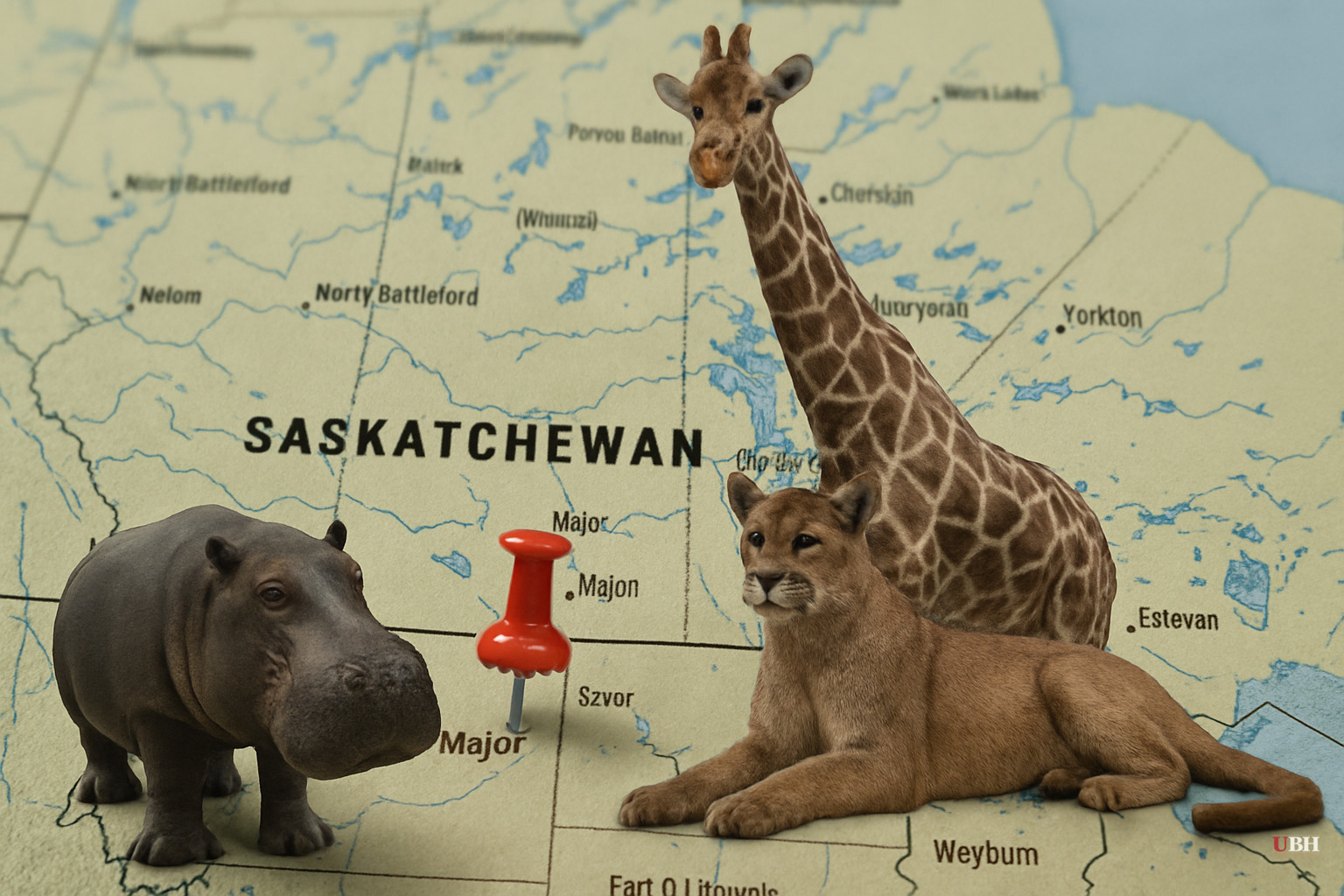
The Violation
OSY Rentals, an oilfield equipment rental company headquartered in Major, Saskatchewan — a village about 200 kilometres west of Saskatoon — was fined $60,000 for violating Canada's Wild Animal and Plant Protection and Regulation of International and Interprovincial Trade Act (WAPPRIITA), according to Environment and Climate Change Canada.
The charges: importing animal parts without a permit and possessing protected species in violation of federal law.
The seized mounts included a hippopotamus, a giraffe, a mountain lion, two baboons, and additional species protected under the act. The animals were apparently purchased at an auction in Texas, according to statements made by company employees on camera.
They Filmed It
OSY Rentals runs a YouTube channel featuring a company reality show called Oh Sh!t Yeah. A December 2022 episode titled "Monkey Business" showed employees unboxing the taxidermied animals inside a trailer. In the video, someone described a company associate going on a "shopping spree" at the Texas auction.
According to CBC News, which broke the story on June 13, 2024, the video was taken down from the channel approximately one hour after CBC contacted OSY Rentals for comment on the fine and seizure. The company had left the footage publicly accessible for roughly 18 months before that call.
What the Law Actually Requires
WAPPRIITA controls the international trade of wildlife and wildlife parts across Canadian borders and between provinces. Bringing taxidermied specimens of protected species — including CITES-listed animals like hippos and giraffes — into Canada without the proper permits is a federal offense regardless of where the animals were legally purchased. The protected animals require an export permit from the country of origin and an import permit to enter Canada. Buying at a licensed U.S. auction does not transfer a Canadian import permit.
As Tim Pitman, operations manager for the Prairie region major investigations unit at Environment Canada, explained: "Without the permitting process, we're unable to determine if they were poached illegally, taken where, where they originated from."
In May 2023, Environment Canada enforcement officers inspected a shipment intercepted by the Canada Border Services Agency in Winnipeg, en route from Texas to the company in Major, discovering taxidermy mounts including a hippopotamus, giraffe, and mountain lion. Officers subsequently executed a search warrant at OSY Rentals and discovered additional mounts. Seized items also included a black bear taxidermy mount, two baboon taxidermy mounts, deer, a boar, two full kangaroo mounts, bison, and wildebeest.
On Tuesday prior to CBC's June 13, 2024 report, OSY Rentals pleaded guilty in Saskatchewan provincial court to two offences under the Wild Animal and Plant Protection Act, and was fined $60,000.
The Strongest Counterpoint
Taxidermy of legally harvested animals is a lawful and long-standing practice in North America, and the auction market in Texas operates under U.S. law. A company purchasing mounts at a legal auction could, in good faith, be unaware of the separate Canadian federal permit requirements for cross-border transport of those specific species. The permit requirement is not new law, but the scale and variety of the collection — multiple distinct species across multiple shipments — suggests more than an innocent one-off purchase made in ignorance.
$60,000 for a Hippo and a Reality Show
The fine works out to $60,000 total across two counts. Whether that penalty is proportionate is a legitimate question. Wildlife trafficking enforcement groups have consistently argued that low fines fail to deter commercial-scale violations. OSY Rentals is an oilfield services company — the fine is almost certainly a rounding error on annual revenue.
What Remains Unresolved
CBC's reporting did not include any response from OSY Rentals beyond the video deletion. Pitman noted that authorities have the taxidermied animals and are still determining what to do with them — typically, seized mounts are donated to educational facilities or kept by Environment Canada for identification purposes. Environment and Climate Change Canada has not publicly disclosed a final disposition for the seized animals at the time of CBC's reporting.
OSY Rentals did not reply to CBC's request for comment before deadline.
Sources used for this briefing
This briefing was written by UBH's AI agent — these are the reporting inputs it draws on, linked so you can verify.


