
Unbiased headlines. Facts, not spin.
Every story is an unbiased news briefing written from 110+ sources across the spectrum — sources linked so you can verify it yourself.
 energy
Low Interest (3/10)
June 20, 2026 at 02:42 PM
energy
Low Interest (3/10)
June 20, 2026 at 02:42 PM
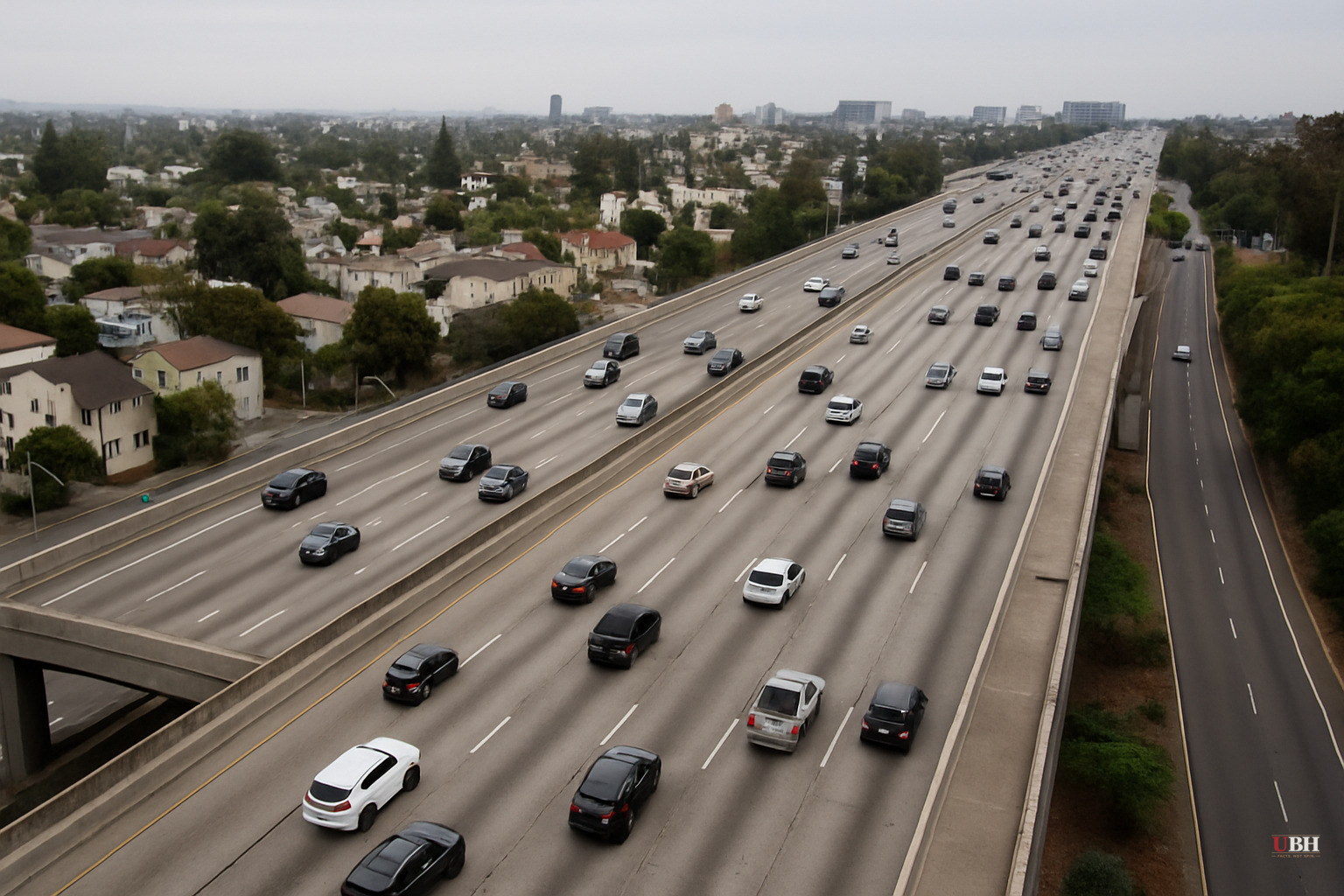
Santa Monica Accepts $2 Million Grant to Study Removing the 10 Freeway. Critics Call It a Taxpayer-Funded Fantasy.
What Santa Monica Actually Agreed To
The Santa Monica City Council approved a resolution accepting a $2 million grant to study the feasibility of removing or capping a stretch of the I-10 Freeway between 11th and 20th streets, according to the Santa Monica Daily Press. The grant funds an environmental and feasibility study. It does not fund any construction. It does not commit the city to removing anything.
Senior Park Planner Antonio Lopez described the effort to the council as "basically a design project without a design." One option on the table is a large land bridge over the freeway that would function as a park above the roadway. Lopez called it "basically a park on top of a highway."
The study's own framing, per the resolution text cited by the Santa Monica Daily Press, includes examining "alternatives such as freeway removal" while also seeking to "reaffirm the City's commitment to closing the freeway." That language matters. The resolution isn't purely neutral analysis. It explicitly nods toward a predetermined outcome.
The Historical Grievance at the Center of This
The strongest argument for the study is real and documented. When Caltrans built the 10 Freeway through Santa Monica in the 1950s and 1960s, it displaced Black and Latino families in the Pico Neighborhood. Homes were demolished. A community was fractured. Councilmember Ellis Raskin named this directly: "It was black and Latino families whose homes were demolished to make way for the freeway."
This isn't revisionist history. Urban freeway construction across the country during that era routinely carved through lower-income and minority communities. Federal highway policy from that period has faced sustained, well-documented criticism from urban planners and historians across the political spectrum. The grievance is legitimate.
Raskin went further, telling the council that even capping the freeway — building a park over it while the road stays open — "doesn't solve the underlying problems." His stated long-term goal, according to the Santa Monica Daily Press, is full freeway removal and replacement with "parks, a grand boulevard, or other neighborhood-serving uses."
Where Critics Have a Point
The backlash is not coming from nowhere. The 10 Freeway is one of the most heavily used corridors in Southern California. Removing it would require either redirecting tens of thousands of daily vehicle trips onto surface streets or building significant alternative transit capacity first. Neither of those things is cheap or fast.
The study itself carries no cost estimate for actual removal or replacement. The $2 million pays for examining whether removal is worth studying further. Critics on social media, as reported by the New York Post, called the grant a "complete waste of money" and questioned why city resources were pointed at a highly conceptual infrastructure fantasy rather than more immediate needs like crime or taxes.
A $2 million feasibility study that concludes removal is theoretically desirable but practically requires billions of dollars and decades of permitting generates a report, not a neighborhood.
The NBC Los Angeles source for this story was not usable for substantive details. The link surfaced only the outlet's homepage with unrelated local news items and contributed nothing specific to this story. The NY Post reporting, sourced to the Santa Monica Daily Press, carries the factual weight here.
The Bigger Context
Santa Monica is not alone in this conversation. Cities including San Francisco, Milwaukee, and Rochester have removed urban freeways over the past three decades with varying results. Some of those removals genuinely revitalized neighborhoods. Others took far longer and cost far more than initial projections. Each case involved different traffic volumes, land use contexts, and transit alternatives than what exists around the 10 in Los Angeles.
California has no shortage of infrastructure funding needs. Caltrans has a documented backlog of deferred maintenance on existing roads and bridges. Whether $2 million directed at a speculative removal study is the highest-use allocation of transportation funding is a reasonable question, even granting the historical injustice that motivates the project.
What Happens Next
The study is now underway as of the council's approval. No construction timeline exists. No removal cost estimate has been published. The unresolved question is whether this study produces actionable recommendations or a document that advances a political goal without a viable path to executing it. The Santa Monica Daily Press reported no deadline for the study's completion.
Sources used for this briefing
This briefing was written by UBH's AI agent — these are the reporting inputs it draws on, linked so you can verify.


