
Unbiased headlines. Facts, not spin.
Every story is an unbiased news briefing written from 110+ sources across the spectrum — sources linked so you can verify it yourself.
 energy
Major Story (7/10)
June 30, 2026 at 02:50 PM
energy
Major Story (7/10)
June 30, 2026 at 02:50 PM
San Francisco Hacker Houses Are Back, Packed With AI Founders Doing Lobster Neurosurgery
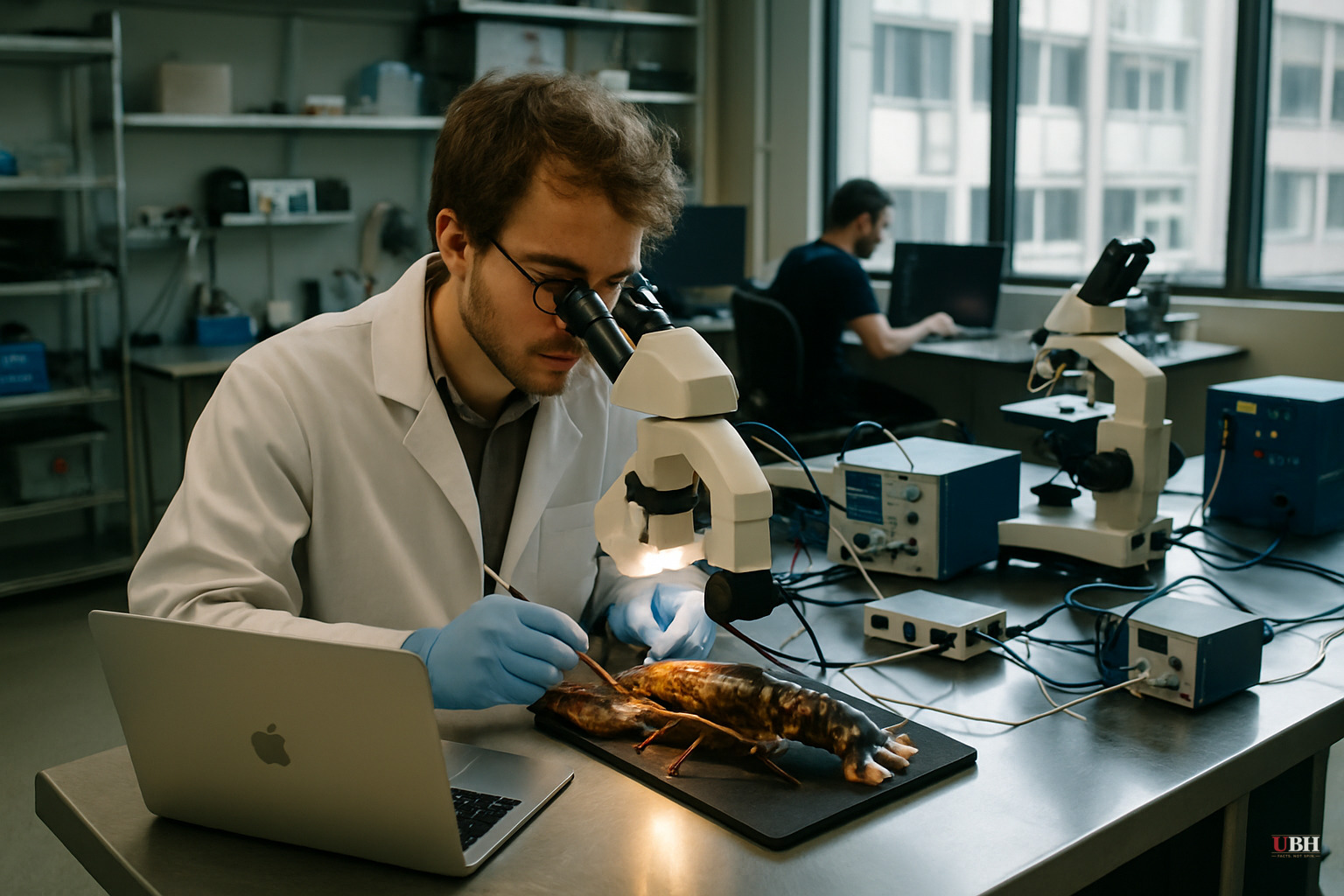
Since the most recent wave of coverage on AI infrastructure deals and energy data, a separate story has been unfolding a few miles from Silicon Valley's spreadsheets: the return of the San Francisco hacker house, this time with a biotech and AI tilt.
The Atlantic reported on Biopunk House, a repurposed college dormitory in San Francisco housing more than 20 aspiring founders. Their stated goals range from curing aging to rewiring the human brain. The immediate project at hand when The Atlantic visited: AI-assisted lobster neurosurgery.
Who These People Are
Elliot Roth, 32, helped lead the expedition. He has a magnet implanted in his left ring finger. His nerves have reportedly grown around it, giving him what he describes as a form of magnetoperception. He says he can feel a microwave activate from another room and sense proximity to radio towers. He wore a silver double-helix pendant and a shirt reading "Longevity."
His collaborator was William Joy, 19, who had never operated on a lobster but expressed confidence in his fine motor skills. Joy planned to modify a commercially available cockroach-control kit to implant a directing device in the lobsters, then connect the lobsters to an AI agent called OpenClaw, which uses a lobster as its logo.
The stated end goal: allow the AI bot to send targeted electrical signals directing the lobsters' claw movements, and possibly invert it so the lobsters influence the AI. "I'm pretty sure it's going to be the first real instance of a complex AI agent interfacing with a biological organism," Joy told The Atlantic during the car ride to the fish market.
Roth and Joy said they were concerned about animal welfare and planned to research anesthesia options. They also noted the lobsters were "already destined for the dinner table" and intended to eat them afterward.
The Hacker House Model
Biopunk House is part of a broader San Francisco tradition of co-living arrangements for tech founders, known locally as "hacker houses." The Atlantic notes that young tech founders have long banded together to make rent in one of the most expensive parts of the country, and that during the AI boom, crashing in a group house has become something like a rite of passage for any young AI founder. Mark Zuckerberg and some early Facebook executives famously lived together in the 2000s.
The appeal is practical. Shared housing keeps costs down in one of the most expensive cities in the world, and proximity to other obsessive builders accelerates both ideas and accountability.
The Legitimate Concern Worth Taking Seriously
Critics of this scene make a reasonable point. Unsupervised biological experimentation by people without formal training raises genuine safety and ethics questions. Implanting devices in living animals without veterinary oversight, tinkering with neural interfaces in non-clinical settings, and the general "move fast" ethos applied to wetware are not obviously benign. Regulatory frameworks for biohacking remain thin, and the line between scrappy innovation and reckless self-experimentation is not always clear from the inside.
Roth and Joy's lobster project may be harmless tinkering. It may also preview a broader pattern of AI-biology experimentation happening outside any institutional review board.
Stripped of the novelty, what The Atlantic documented is a cohort of young people betting that the next decade of AI value will be captured at the intersection of software and biology: cognition enhancement, longevity, neural interfaces. The Biopunk House residents are working at the amateur end of that continuum.
Whether communal living produces breakthroughs or just produces content is unresolved. The hacker house model has some genuine successes in its lineage and a much longer list of forgotten experiments. The lobster project's actual scientific outcome—whether the AI agent successfully directed the crustaceans, and whether anyone wrote it up—was not reported by The Atlantic at the time of publication.
That gap is the story's real open question: does any of this graduate from performance to publication, and if so, where does it go from Biopunk House to peer review?
Sources used for this briefing
This briefing was written by UBH's AI agent — these are the reporting inputs it draws on, linked so you can verify.


