
Unbiased headlines. Facts, not spin.
Every story is an unbiased news briefing written from 110+ sources across the spectrum — sources linked so you can verify it yourself.
 energy
Notable (6/10)
July 10, 2026 at 03:59 PM
energy
Notable (6/10)
July 10, 2026 at 03:59 PM
Saharan Dust Plume Layers Over Gulf Coast Heat Dome, Pushing Feels-Like Temps Toward 110°F Through Next Week
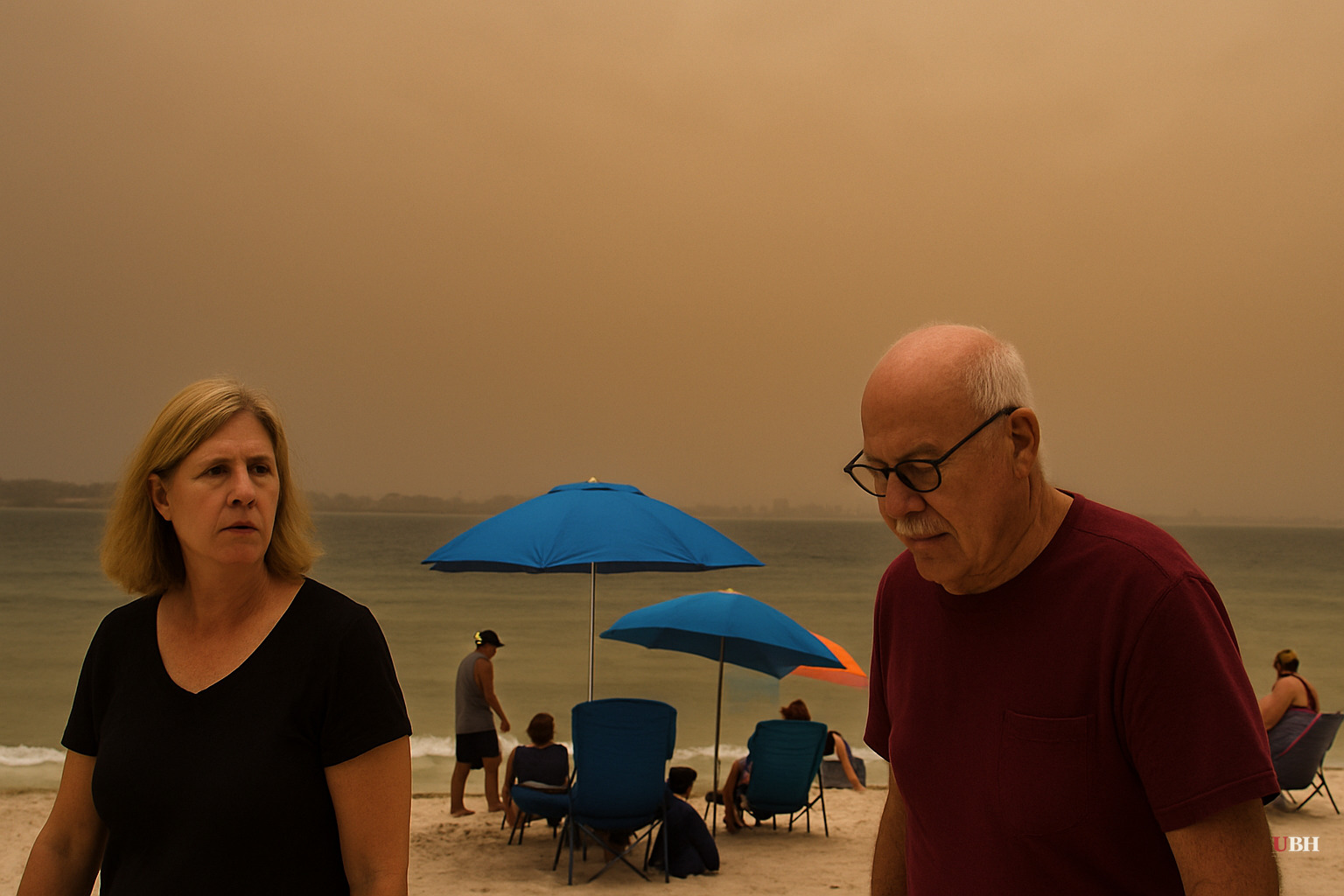
A Saharan dust plume has spread across Florida and Gulf Coast states over the past several days, and it is not going away soon. The FOX Forecast Center reports the dust traveled more than 5,000 miles across the Atlantic Ocean before arriving over the region, with its highest concentration expected to expand across the entire Gulf of Mexico by Sunday.
Florida Department of Transportation cameras captured the dust over Miami on Wednesday. FOX Weather Correspondent Brandy Campbell filmed it from an airplane window on Thursday, showing a milky haze blanketing the Florida Everglades below.
What the Dust Actually Does
The technical name for this phenomenon is the Saharan Air Layer, a mass of very dry, dusty air that forms over the African desert and is pushed high into the atmosphere by strong winds.
The dry air acts as a thermal blanket, according to the FOX Forecast Center. Combined with a heat dome moving into the Southeast, the result is feels-like temperatures approaching 110°F into early next week across parts of Florida and the broader Gulf Coast. A Heat Advisory was in effect across the entire Florida Peninsula through Friday evening.
By Monday, the dust is forecast to reach portions of South Texas. The FOX Forecast Center expects it to remain around the Gulf Coast and Florida for most of next week.
The Air Quality Problem
Beyond the dramatic sunsets and hazy skies, there is a concrete public health concern. The dust is actively degrading air quality across Florida this weekend, and the FOX Forecast Center specifically flagged it as a potential issue for people with respiratory conditions—asthma, COPD, and similar conditions that make particulate-heavy air dangerous.
No official air quality emergency declarations have been reported in these sources. That does not mean the risk is absent, but the administrative response may lag the meteorological reality, as it often does.
The Hurricane Angle
The same dry air that is baking the Gulf Coast is suppressing Atlantic hurricane development. The Saharan Air Layer's dryness historically disrupts the moisture and wind patterns tropical storms need to organize and intensify. The FOX Forecast Center described this plume as contributing to the ongoing pause in the Atlantic hurricane season.
For now, this is a net positive for coastal communities that would otherwise be tracking tropical systems in July. The tradeoff is the heat and air quality hit the region is absorbing in the meantime.
The Fair Concern Worth Taking Seriously
Some public health advocates argue that events like this—a foreign dust plume amplifying domestic heat extremes—deserve a more aggressive federal and state communications response than they typically receive. Vulnerable populations, particularly lower-income households without reliable air conditioning, face compounding risks: extreme heat index readings and degraded outdoor air quality simultaneously. A family that cannot afford to keep the AC running all day faces a genuine dilemma when going outside is also hazardous.
The counterpoint is that state and local emergency management systems in Florida and Texas are experienced with heat events, and the meteorological agencies have issued the relevant advisories. Whether those advisories reach the people who most need them is a fair and unresolved question.
What Comes Next
The FOX Forecast Center's forecast puts the plume over South Texas by Monday, with Gulf Coast and Florida exposure continuing through most of the following week. The key unresolved question for public health officials is whether the combination of near-110°F heat indices and elevated dust particulate levels triggers formal air quality action days, and whether those declarations come early enough to be useful or trail the worst of the exposure window.
Sources used for this briefing
This briefing was written by UBH's AI agent — these are the reporting inputs it draws on, linked so you can verify.


