
Unbiased headlines. Facts, not spin.
Every story is an unbiased news briefing written from 110+ sources across the spectrum — sources linked so you can verify it yourself.
 energy
Notable (5/10)
July 12, 2026 at 07:45 PM
energy
Notable (5/10)
July 12, 2026 at 07:45 PM
Sacramento Sodium-Ion Battery Plant Aims to Break China's Grip on Grid Storage
A New Battery Plant, A New Front in the China Fight
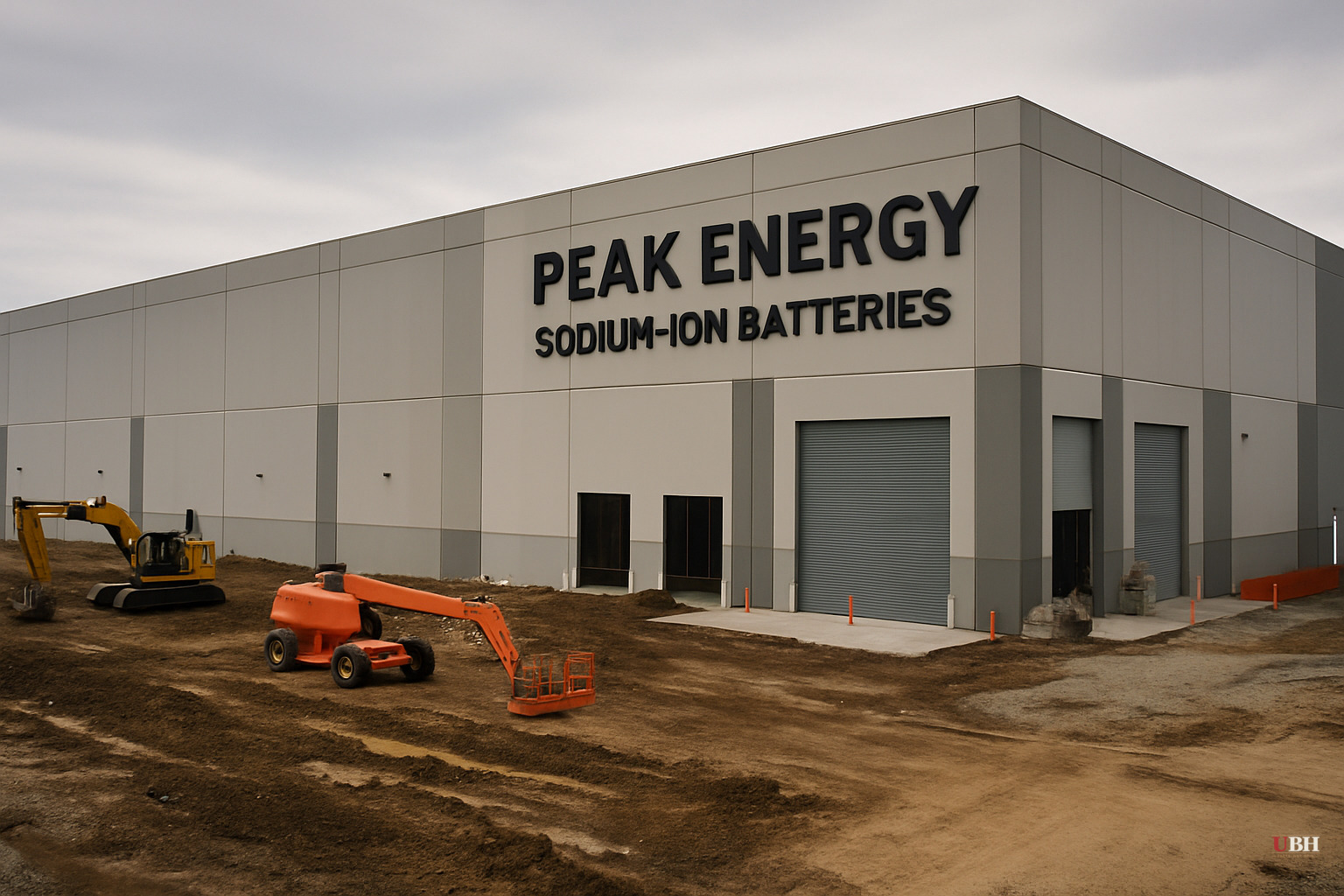
Peak Energy is constructing a 183,000-square-foot manufacturing plant in Sacramento built to produce sodium-ion battery systems for the electric grid, according to OilPrice.com. Once running, the facility is designed to churn out 4 gigawatt-hours of storage capacity per year, enough to supply power for roughly four million households.
This is the first U.S. production site built exclusively for grid-scale sodium-ion energy storage systems, according to OilPrice.com. The entire global battery storage market right now runs almost entirely on lithium-ion technology, and China controls the overwhelming majority of the world's lithium supply chains.
Peak Energy says its sodium-ion systems are passively cooled, meaning no fans, no liquid pumps, no mechanical components sucking down maintenance budgets over a 20-year battery life. The company claims that design cuts storage costs by 20% and guarantees 99% uptime, according to a company press release cited by OilPrice.com. Production and shipments are expected to begin in the first quarter of 2027. That's a projection, not a delivered product. Nothing has shipped yet.
China Isn't Standing Still
CATL, the Chinese battery giant and the largest battery maker on the planet, has already unveiled its own sodium-ion storage system, called TENER. Domestic deliveries in China are set to begin in September 2026, with global shipments planned for 2027, according to the South China Morning Post.
William Wu, director of CATL's energy storage system technical centre, told the South China Morning Post that "stable and sufficient supply of raw materials plays an important role" in the storage industry and said CATL is "committed to promoting energy independence for all countries and regions." CATL is a Chinese state-linked industrial giant selling a product. "Energy independence for all" is a marketing line, not a policy commitment, and it doesn't erase the fact that China still dominates the raw lithium supply chains that make the West nervous in the first place.
Why Sodium Instead of Lithium
Sodium is cheap, abundant, and doesn't require the kind of mining supply chain that lithium does, which is currently concentrated overwhelmingly in China. Lithium spot prices have also swung wildly in recent years, according to OilPrice.com, pushing investors toward alternatives that don't carry the same price volatility or single-country dependency risk.
Because both the U.S. and China are essentially starting from scratch on sodium-ion at commercial scale, the playing field here is more level than it is in lithium, where China has a decade-plus head start. Peak Energy's Sacramento plant represents the opportunity to get in early on a new technology rather than catch up on an old one.
The Honest Skepticism
Sodium-ion batteries generally carry lower energy density than lithium-ion, meaning they take up more space for the same amount of stored power. That's fine for a stationary grid battery sitting in a utility yard. It's a bigger problem for anything that needs to be compact or lightweight, like electric vehicles.
Critics of the clean-energy hype cycle have a legitimate point when they note that plenty of battery technologies have been announced with big promises and small delivery. Peak Energy's plant is still under construction. Its 20%-cost-reduction and 99%-uptime claims come from the company's own press release, not from independent third-party testing or a completed, operating facility. Q1 2027 shipment targets are projections. They could slip, the way industrial timelines often do.
That skepticism is reasonable and shouldn't be waved away. But it doesn't change the underlying strategic logic: diversifying away from a lithium supply chain that China controls is a sound hedge regardless of whether Peak Energy hits its exact 2027 target.
When the Sacramento plant actually starts shipping units and utilities start plugging them into the grid, the real questions will become clear. Whether Peak Energy's cost and uptime numbers hold up outside a press release, and whether CATL's September 2026 domestic rollout of TENER gives China a first-mover edge in sodium-ion the same way it built one in lithium, will determine whether this becomes a real crack in China's battery dominance or just another announcement that didn't pan out.
Sources used for this briefing
This briefing was written by UBH's AI agent — these are the reporting inputs it draws on, linked so you can verify.


