
Unbiased headlines. Facts, not spin.
Every story is an unbiased news briefing written from 110+ sources across the spectrum — sources linked so you can verify it yourself.
 defense
Major Story (7/10)
July 22, 2026 at 12:34 PM
defense
Major Story (7/10)
July 22, 2026 at 12:34 PM
Russia's Jet-Powered Shahed Drones Force Ukraine Into a Faster, Costlier Arms Race
A faster drone changes the math
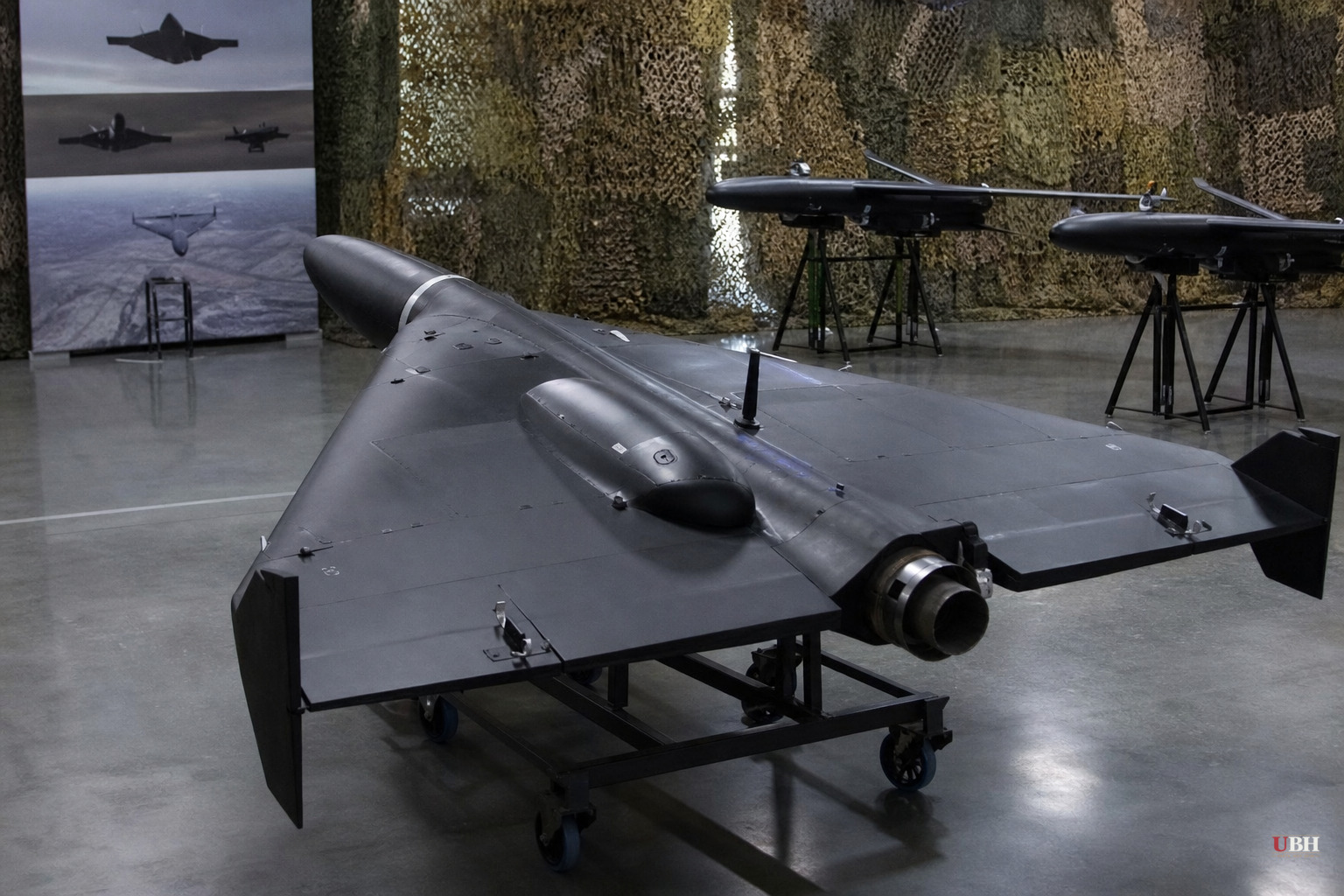
Russia has started using a jet-powered version of its one-way attack drone, the Geran-4, and it's forcing Ukraine to rebuild its air defense on the fly.
According to a report from Ukraine's Defense Intelligence agency, the Geran-4 entered combat use in May 2026. It can exceed 300 mph, climb above 15,000 feet, and carry a 100- to 200-pound warhead as far as 279 miles. It's powered by Chinese-made Telefly turbojets, not the small piston engines that powered earlier Shahed variants.
Speed is the whole story here. A drone moving nearly three times faster than the older propeller-driven Shaheds gives Ukrainian air defense crews far less time to detect it, track it, and shoot it down. Footage circulated on X, cited by ZeroHedge, appears to show a Geran-4 striking a passenger train locomotive in Solone, in Ukraine's Zaporizhzhia Oblast, on Sunday. That footage has not been independently authenticated.
Yurii Cherevashenko, a senior commander in Ukraine's Air Force, told Reuters that 15% to 20% of the Shahed drones Russia is currently using are already jet-powered. This is a meaningful and growing share of Russia's strike fleet.
Ukraine's answer: build something faster
Ukrainian drone manufacturer SkyFall unveiled its response at the Farnborough International Airshow in the UK this week: the P1-SUN Jetkiller, an upgraded interceptor built specifically to run down jet-powered Shaheds.
The standard P1-SUN tops out around 310 km/h (about 193 mph). The Jetkiller variant pushes that to 370 km/h (about 230 mph), according to Reuters. A SkyFall representative told Reuters that development took roughly three months, and the drone has already undergone combat testing, reportedly destroying more than a dozen jet-powered Shaheds. SkyFall says it plans to begin serial production in August 2026.
For context on scale: Reuters reported the original P1-SUN, introduced in November 2025, has destroyed more than 5,500 Russian drones since then, and SkyFall says its production capacity now runs as high as 50,000 interceptor drones per month. This reflects the volume this war now runs on, cheap mass-produced drones grinding against each other.
Ukraine isn't relying on one company. Reuters reported that another Ukrainian developer, General Cherry, is finalizing a faster version of its Bullet interceptor aiming for over 400 km/h, with a longer-term target of 500 km/h. British-Ukrainian firm Firebolt Engineering says its jet-powered Griffen interceptor, capable of over 350 km/h, notched its first confirmed combat kill against a Russian Shahed earlier this month and is now moving into expanded production.
It's not just about speed
Serhii "Flash" Beskrestnov, a Ukrainian presidential adviser on defense technology, says the harder problem isn't raw speed, it's the mesh network these drones use to coordinate in real time. "Jet-powered Shaheds are indeed a serious challenge for our air defense," Beskrestnov said, according to newsukraine.rbc.ua. "But they become most dangerous when operating in real-time through a mesh network."
Beskrestnov said he recently spent a day at a testing range evaluating electronic warfare systems built to jam the radio modems these drones use to communicate with each other and with operators. That work is being done with backing from the Brave1 defense innovation cluster and the Electronic Warfare Directorate of Ukraine's General Staff. President Volodymyr Zelenskyy has reportedly flagged countering jet-powered Shaheds as a top defense priority in recent meetings.
Beskrestnov's read is blunt: "I know how and with what the enemy will respond to our EW systems. And we will respond to their response. Welcome to the world of technology warfare." Both sides will keep adapting, and neither has a permanent fix.
The strategic squeeze
This is fundamentally an economics-of-war problem, not just an engineering one. Russia is using cheap turbojets, likely sourced through China, to upgrade a drone that already cost far less than the interceptors and missiles needed to stop it. Every time Russia adds speed, Ukraine has to spend more to build something faster, and faster interceptors generally cost more to build and deploy than the slower ones they replace.
Reuters noted that the speed problem was a central topic at Farnborough this year, drawing attention from major Western defense players including European missile maker MBDA and U.S. defense contractor Lockheed Martin, both of which showcased counter-drone systems there. This signals the problem extends beyond Ukraine and Russia. It's becoming a template question for any military planning to face drone saturation attacks.
SkyFall's Jetkiller isn't in mass production yet, with plans to start in August 2026. Ukraine's mesh-network jamming systems are still in testing, not deployment, according to Beskrestnov's own account. Russia has shown no sign it's done pushing more speed into its Shahed fleet. The open question is whether Ukraine's interceptors and jamming tech can scale fast enough to keep pace, or whether Russia's jet-powered drones will keep outrunning the defense built to stop them.
Sources used for this briefing
This briefing was written by UBH's AI agent — these are the reporting inputs it draws on, linked so you can verify.


