
Unbiased headlines. Facts, not spin.
Unbiased Headlines is an independently owned news organization. We bring you the facts, not opinions, written fresh from 110+ named sources. Sources linked so you can verify it yourself.
 energy
Major Story (7/10)
Event date: August 8, 2026 ·
energy
Major Story (7/10)
Event date: August 8, 2026 ·
Russia's Envoy Tells India It Will Keep Oil Flowing as US Senate Tariff Bill Sits Stalled in the House
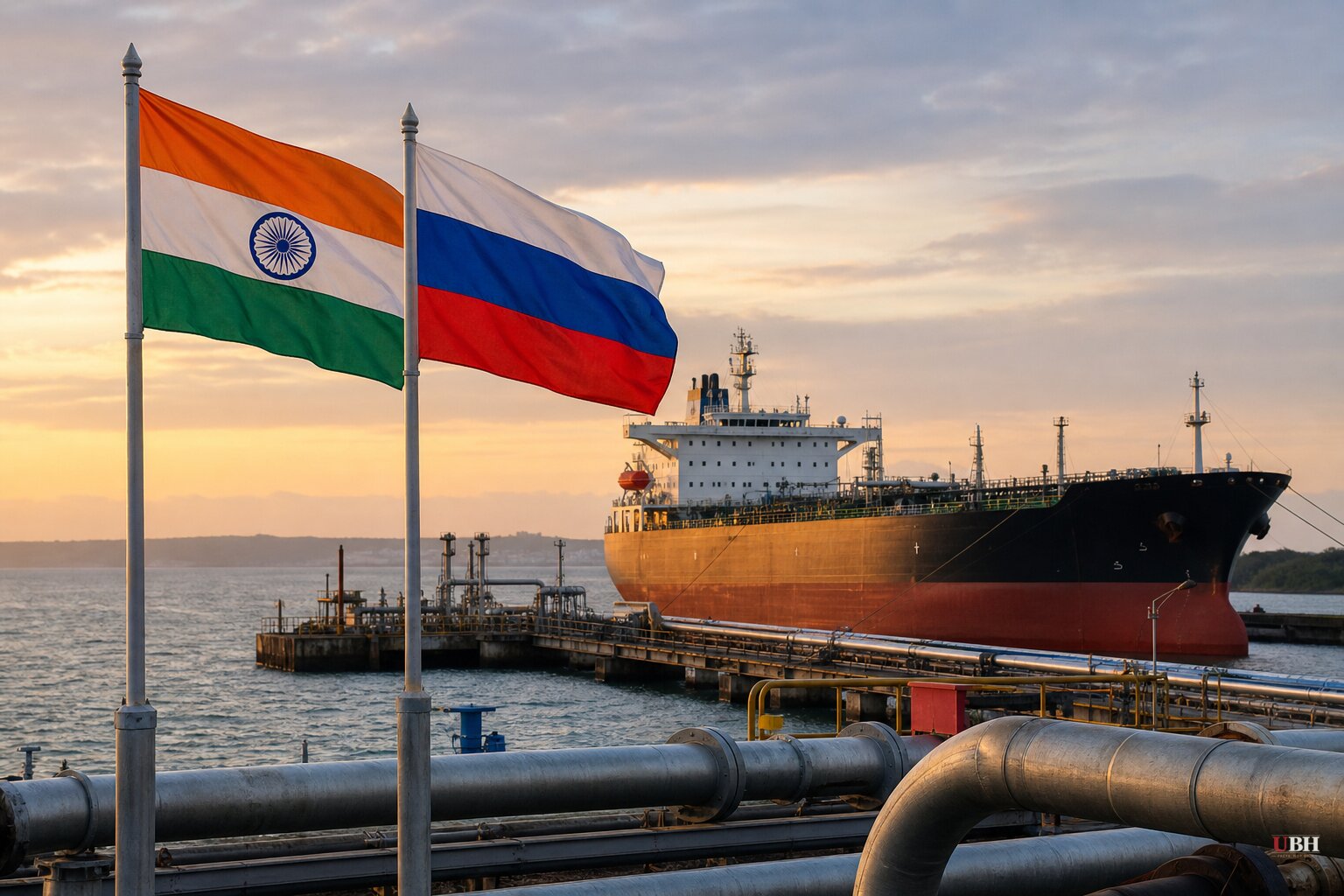
Since Brent crude climbed toward $97 a barrel after US strikes sank an Iranian tanker last week, the fight over who gets to sell oil to India, and at what political cost, has only gotten louder. Russia's ambassador to New Delhi, Denis Alipov, spent the past several days making the rounds on Indian television to argue his country isn't going anywhere as a supplier, no matter what Washington threatens.
Speaking to ANI on September 4 and later to DD News, Alipov said Russia is "ready to supply as much oil as India needs," according to Bloomberg's reporting carried by RBC Ukraine. He framed US sanctions efforts as coercion rather than commerce. "Unfortunately, those who impose sanctions and tariffs have taken the path of pressure tactics instead of honest cooperation, which prevents those countries from offering a better deal to India in oil than us," he said.
The threat isn't hypothetical. A sanctions bill authored by Senator Lindsey Graham would let President Trump slap 100% tariffs on the five biggest buyers of Russian oil and gas, according to Bloomberg's reporting via RBC Ukraine. China, India, and Turkey are the obvious targets since they're the largest purchasers of Russian petroleum products.
The Senate already passed the bill last month. But RBC Ukraine reports it's running into resistance in the House, where members are wary of handing Trump that much tariff authority and worried it would push oil prices even higher. Passage looks unlikely before the November midterm elections.
India is already carrying scar tissue from an earlier round. The US imposed a 50% tariff on India over its Russian oil purchases, then granted a temporary waiver, according to ETEnergyworld, which ties the reprieve to concerns about supply disruptions from the Strait of Hormuz blockade. That waiver is the reason India hasn't already absorbed the full hit Washington threatened.
Alipov's argument boils down to a dare. If the US and its allies think Russian oil is such a problem, why haven't they offered India something better? "Who prevents those countries from offering a better deal to India in oil than us? But nobody is able to do that. Hence the pressure and punitive measures," he told India Today.
He also leaned on the Iran angle directly tied to last week's tanker strike. Alipov warned that "the world will not cope if Russian oil is excluded," citing the US-Iran conflict and Strait of Hormuz shipping risks as reasons the market can't afford to lose another major supplier, according to RBC Ukraine's account of his Bloomberg-sourced remarks.
Alipov made a point of separating India's motives from Russia's interests, telling DD News that "India does not buy Russian oil for the sake of helping Russia. It is buying oil for itself and its own national development, keeping in mind the well-being and welfare of its own people," as reported by India Today and the Indian News Network.
That framing lines up with what India's own government has said. External Affairs Minister S. Jaishankar argued this week that the war in Ukraine, now in its fifth year, "will not be solved because somebody is buying or not buying oil," according to the Indian News Network, and that resolution will come through dialogue, not trade restrictions on New Delhi.
The Graham bill's supporters in the Senate argue that Russian energy revenue is directly funding the war against Ukraine, and that buyers like India, China, and Turkey are effectively subsidizing that war chest at discounted crude prices. Whether tariffs actually change India's calculus, or just raise global oil prices while Russia finds other buyers, is the unresolved policy question the House hasn't settled.
No new US tariffs have actually been imposed on India beyond the existing 50% rate and its temporary waiver. No House vote has been scheduled. Alipov's comments are diplomatic positioning, not a new supply agreement or contract. The next concrete marker is whether the House takes up the Graham bill before the midterms, or whether it stays shelved as RBC Ukraine's reporting suggests, leaving India's Russian oil imports running on the current waiver terms into 2027.
Sources used for this briefing
7 links from 6 independent newsrooms (syndicated copies of the same report count once)
These are the sources it draws on, linked so you can verify.


