
Unbiased headlines. Facts, not spin.
Unbiased Headlines is an independently owned news organization. We bring you the facts, not opinions, written fresh from 110+ named sources. Sources linked so you can verify it yourself.
 energy
Breaking / Critical (9/10)
energy
Breaking / Critical (9/10)
Oil Nears $100 as U.S. Sinks Three Iranian Tankers, India's Benchmark Already Crossed It
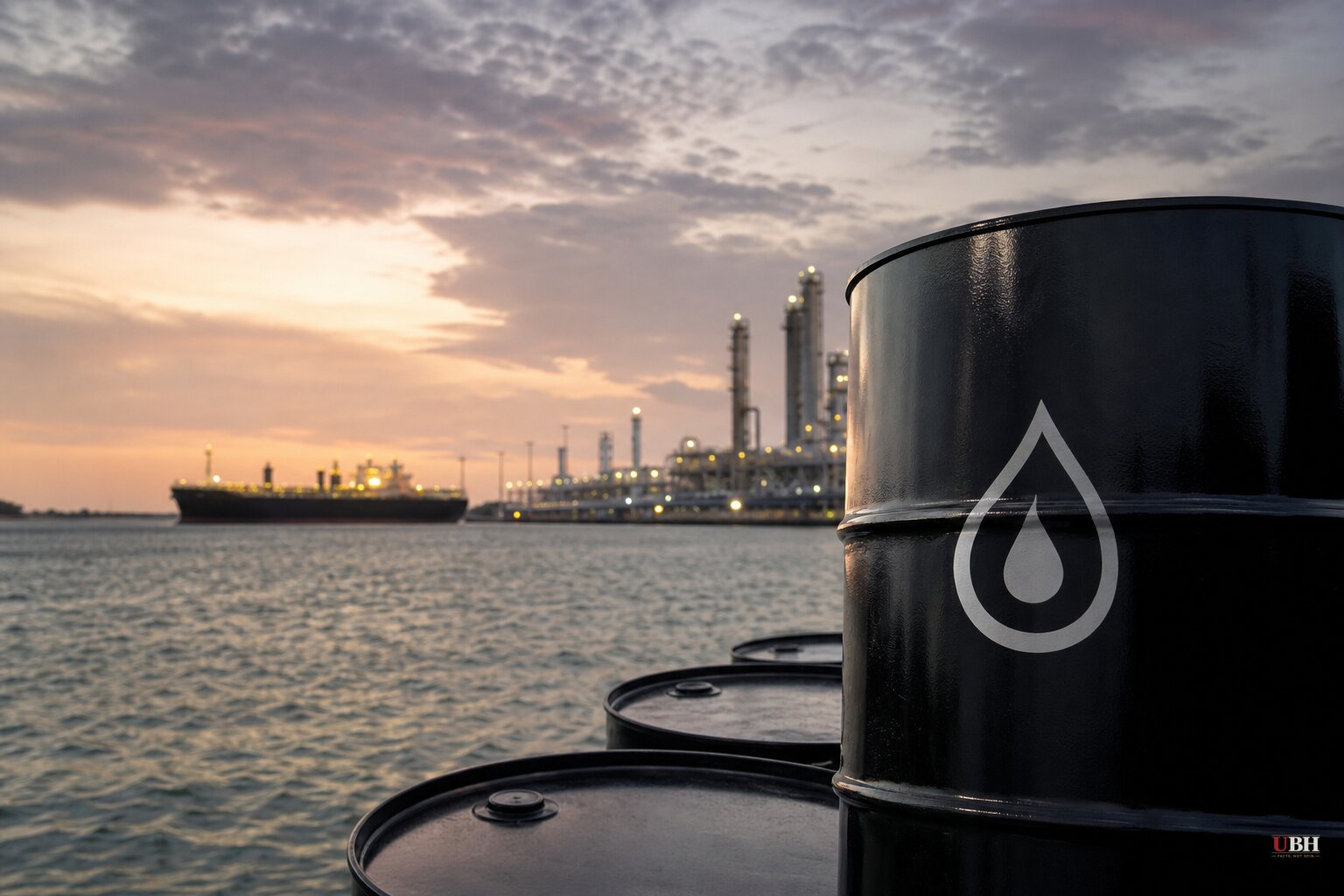
Tanker war pushes crude toward triple digits
Oil is creeping back toward $100 a barrel after the U.S. military struck three Iranian oil tankers over the weekend, and India's own crude benchmark has already blown past that mark.
According to OilPrice.com, the Indian Basket, the price India actually pays for its crude mix, hit $101.10 a barrel, up 1.73%. Brent and West Texas Intermediate haven't crossed $100 yet, but they're closing in fast. Angel One reported Brent at $96.80 and WTI at $92.14 during Monday, September 7 trading, both up from Friday's close. Brent gained 7.6% to 7.8% last week and WTI jumped nearly 10%, according to Angel One and Sunday Guardian Live. This marks the strongest weekly performance for both benchmarks since mid-July.
What actually happened Saturday
U.S. Central Command said American forces disabled or destroyed three Iranian oil tankers on Saturday after Iran's Islamic Revolutionary Guard Corps fired ballistic missiles at two U.S. Navy warships, according to Breitbart. The Navy vessels evaded the missiles and no American personnel were hurt.
CENTCOM says U.S. forces permanently disabled the M/T Downy near Kharg Island, Iran's main oil export hub, disabled the M/T Stark 1 near Jask, and destroyed the unladen M/T Kylo, also known as the Noxen, in the Gulf of Oman after ordering its crew off the ship. CENTCOM Commander Adm. Brad Cooper called it a deliberate three-for-two response, telling reporters, "If you shoot at two of our ships, we will impose an even higher economic cost, taking out three of yours." Defense Secretary Pete Hegseth reinforced the policy on X: "if Iran shoots at U.S. ships, we will destroy (and sink) their oil tankers."
Iran's IRGC claims it targeted three oil tankers traveling "unauthorized routes" through the Strait plus three U.S. vessels elsewhere, according to Angel One. CENTCOM's account and the IRGC's claim describe different events, and neither side's full damage assessment has been independently verified in these sources.
Iran threatens harsher retaliation
Iranian parliament speaker Mohammad Bagher Qalibaf said the era of "proportionate responses" is over, warning future Iranian retaliation will be "faster, heavier and more painful," according to dinardetectives. Mohsen Rezaei, secretary of Iran's Supreme National Security Council, said Tehran will announce an "exclusion zone" stretching from the U.S. naval blockade line into the Strait of Hormuz and the Persian Gulf, warning that any ship entering the zone bound for the Strait will be added to Iran's sanctions list.
Goldman Sachs co-head of commodities research Daan Struyven told Bloomberg TV that "the risk of shipping disruptions broadening and intensifying is an important one," and said crude could climb to $120 a barrel if attacks on shipping spread further. Goldman also flagged bigger potential shocks in natural gas and refined fuel prices than in crude itself.
Traffic through the Strait is thinning out
Kpler data cited by Angel One shows an average of just 10 commodity vessels a day passed through the Strait of Hormuz over the last 10 days, the lowest since May. Sunday Guardian Live, citing Reuters, reported an even sharper single-day drop: only four commodity vessels transited the Strait on Thursday against a 10-day average near 15. The two figures measure different windows and aren't directly comparable, but both indicate fewer tankers are moving through a route that has historically carried roughly a fifth of the world's oil supply.
Sunday Guardian Live also noted, citing Reuters, that Iran shipped about 90% of its crude exports through Kharg Island before the conflict, which is exactly the terminal near where the U.S. disabled the Downy.
Washington's other pressure points
Fox News reported that Treasury Secretary Scott Bessent planned to press G20 finance ministers, hosted in Asheville, North Carolina, to help cut off Iran's economic lifelines, alongside separate G20 discussions on global growth and sovereign debt. Fox News also reported the Justice Department is looking at reactivating maritime prize courts, a legal mechanism that would let the U.S. formally claim seized Iranian tankers and their cargo as war prizes, selling the oil with proceeds going to Treasury, a plan first reported by Bloomberg Law.
On a separate track, Fox News reported that Iran's Rezaei dismissed as a "lie" claims aired on Iranian state television of a plot to assassinate Barron Trump, 20, after a video alleged a $10 million bounty and surveillance of him. The U.S. Secret Service said it was investigating the video as a potential threat. Iran's own top security official denies the plot exists. No independent confirmation of either the threat or the denial appears in the available reporting.
OPEC+ met Sunday and left its October production policy unchanged, according to Angel One, saying new quotas would need to be negotiated before any next move. With Kharg Island exposed, the exclusion zone still unannounced, and Goldman putting $120 oil on the table if attacks spread, the next flashpoint is whichever side decides to test the other's threshold first.
Sources used for this briefing
7 links from 6 independent newsrooms (syndicated copies of the same report count once)
These are the sources it draws on, linked so you can verify.


