
Unbiased headlines. Facts, not spin.
Every story is an unbiased news briefing written from 110+ sources across the spectrum — sources linked so you can verify it yourself.
 energy
Major Story (7/10)
July 1, 2026 at 02:49 AM
energy
Major Story (7/10)
July 1, 2026 at 02:49 AM
Russian Refinery Drone Strikes Push Fuel Prices Sharply Higher Across Central Asia
The Damage Reaches Beyond Ukraine's Borders
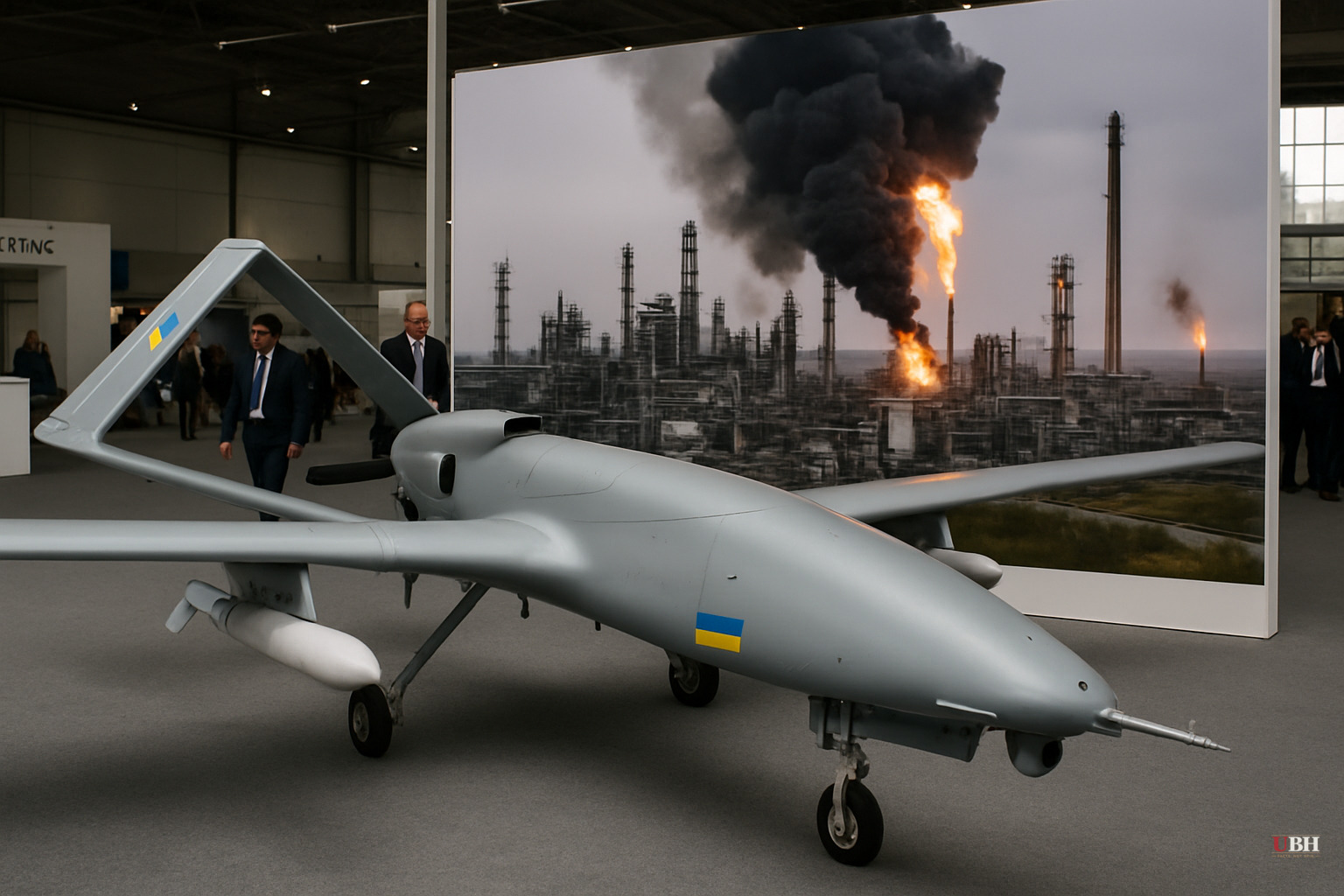
The war in Ukraine has knocked Russian refineries offline through sustained drone strikes, and the economic shockwave is moving east. Across Kyrgyzstan and Tajikistan, fuel prices have climbed sharply as supply lines from Russian processors buckle.
Kanat Eshatov, head of the Association of Oil Traders of Kyrgyzstan, told RFE/RL's Kyrgyz Service that some Russian refineries "have been hit by drone attacks, which is why some are temporarily not operating." He said Kyrgyzstan currently holds more than six weeks of reserves, and supplies are still arriving.
That stability has a price tag attached. Gasoline in Bishkek has risen to 45 soms per liter, according to RFE/RL. A taxi driver named Azat described the practical consequence: a trip that previously cost around 1,200 soms now runs 1,700. "Honestly, it's becoming really difficult," he said. "We can barely make ends meet anymore. Sometimes, we don't even cover our expenses and end up in debt."
Tajikistan Is the Most Exposed
Kyrgyzstan is stressed. Tajikistan is in a structurally worse position.
According to Tajikistan's Antimonopoly Service, 84 percent of the country's petroleum imports came from Russia in 2025. With a population of 11 million, there is no quick pivot to alternative suppliers. The disruption is also compounded by Middle East supply problems, with Persian Gulf routes disrupted by the ongoing regional conflict.
The numbers on the ground are stark. Abdujabbor, a taxi driver in Khujand, Tajikistan's second-largest city, told RFE/RL's Tajik Service on June 25 that diesel had jumped from 9 somoni 60 dirams (roughly $1.00 per liter) to 13 somoni 50 dirams ($1.41 per liter). "This is already noticeable because our incomes are declining," he said. When he asks at gas stations why, the answer he gets is no answer at all: "At gas stations they only tell us that diesel prices have increased everywhere, but no one explains what it is connected to."
Tajik authorities have repeatedly attributed the increases to "external factors" without elaborating further, according to RFE/RL. The situation is further complicated by a new environmental fee of 30 euros per ton introduced by the Tajik government on imported gasoline and diesel, adding further costs to an already strained market.
What Governments Are Promising
Kyrgyzstan's first deputy prime minister, Daniyar Amangeldiev, acknowledged price increases are unavoidable but argued they can be managed. "There is an opportunity not to raise prices sharply, but to increase them gradually, by 1 som every two weeks," he told reporters. One Kyrgyz som equals just over one U.S. cent, so the pace of increases is small in absolute terms. But it is cumulative for people already running thin margins.
Amangeldiev also said if global exchange prices fall, Kyrgyzstan's Agency for Regulation of the Monopolies would work with fuel-importing companies to bring consumer prices down.
Kyrgyz officials have noted that the country of 7.4 million people has so far avoided the acute shortages reported inside Russia itself in certain regions. This offers some perspective on the severity, though not much comfort on the price side.
The Legitimate Concern Officials Haven't Answered
The strongest concern from people like Azat and Abdujabbor is not just the price level, but the lack of transparency. Both workers said they receive no clear explanation for why prices moved when they did, or by how much they might continue rising. Government promises of "gradual" increases and eventual stabilization rest on the assumption that global disruptions resolve on a predictable timeline. They will not necessarily do so.
Tajikistan's near-total dependence on Russian petroleum means it has almost no leverage in this situation. Diversifying supply chains requires infrastructure, capital, and time that Tajikistan does not have in the short term. Economists are pressing the point: Eldar Abakirov told RFE/RL's Kyrgyz Service that governments need to "reach agreements with countries such as Kazakhstan, Azerbaijan, and Iran" rather than relying on a single supplier.
What Comes Next
The unresolved question is how long Russian refinery disruptions persist. Ukraine's drone campaign against Russian energy infrastructure has been a deliberate strategic choice, not a one-time event. If strikes continue, Central Asian governments' pledges of stable six-week reserves and gradual price adjustments will need to be revisited.
Until supply diversification moves from rhetoric to reality, the 84 percent Russia dependency figure is the number that matters most for Tajikistan.
Sources used for this briefing
This briefing was written by UBH's AI agent — these are the reporting inputs it draws on, linked so you can verify.


