
Unbiased headlines. Facts, not spin.
Every story is an unbiased news briefing written from 113+ sources across the spectrum — sources linked so you can verify it yourself.
 finance
Major Story (8/10)
Event date: September 18, 2026
finance
Major Story (8/10)
Event date: September 18, 2026
Russian National Sentenced in Miami ID-Theft Case as Leaked Files Detail $6.9 Billion Sanctions-Evasion Flow Through Major Banks
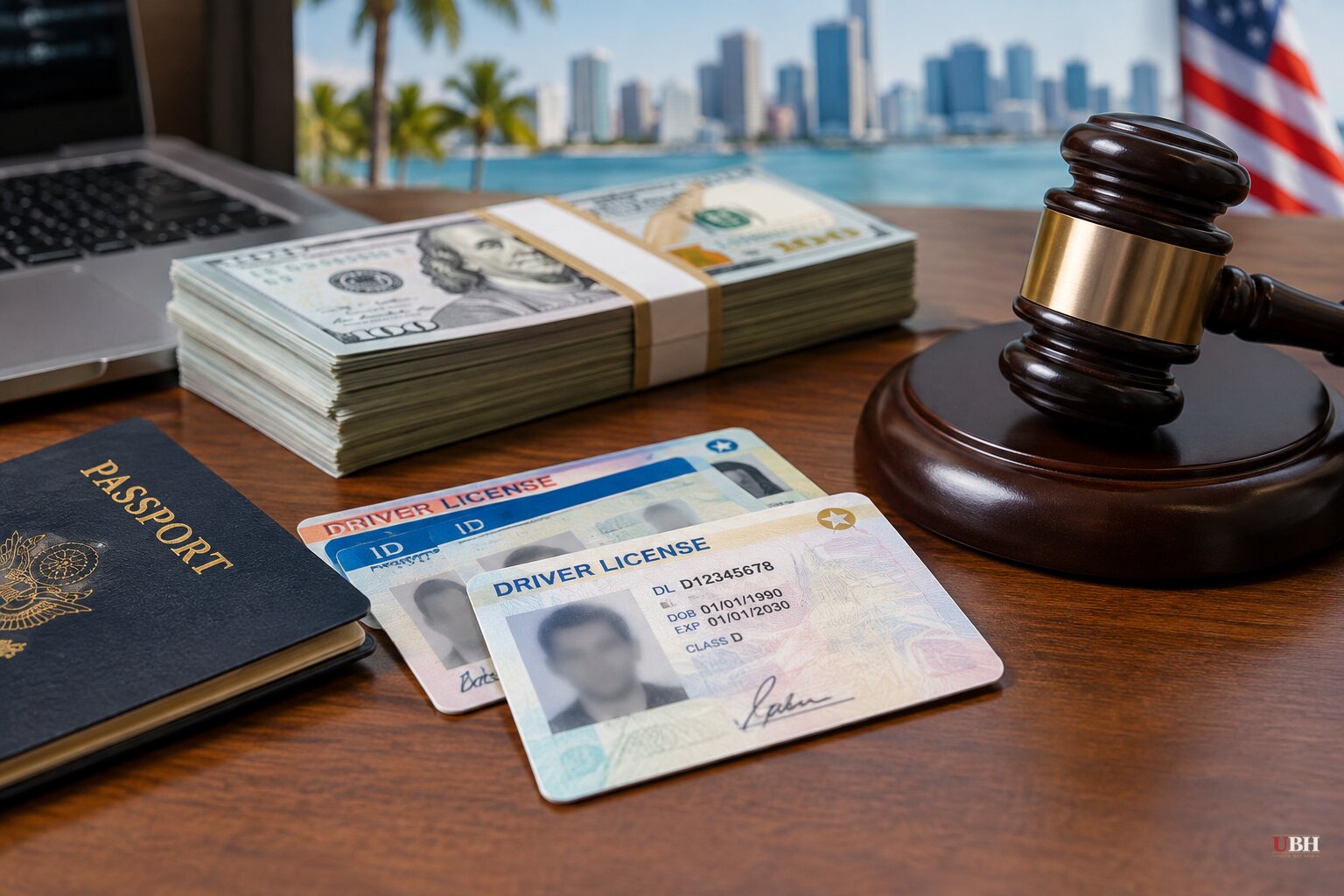
Two stories broke close together this month involving Russian-linked financial fraud. Neither is connected to the other. But both expose the same weakness: the systems meant to verify who people are and where money comes from can be beaten with enough patience and paperwork.
The Miami Case
Dmitry Shushlebin, a Russian national living in Miami, was sentenced Sept. 16 to six years in federal prison plus three years of supervised release, according to court records from the U.S. District Court for the Middle District of Florida. He was also ordered to pay $458,839.69 in restitution.
Shushlebin was charged July 24, 2025, with conspiracy to give false information in voter registration, wire fraud, making false statements, and aggravated identity theft. He pleaded guilty to all four counts the next day, court records show.
According to those records, Shushlebin ran a "synthetic person" fraud operation, inventing fake identities and building credit histories for them by applying for loans and credit cards, registering fake businesses, and even buying hunting and fishing licenses. Court documents state he defrauded banks and credit card companies out of at least $630,067.
Part of that identity-building involved hiring others to submit more than 100 fraudulent voter registration applications to the Pinellas County Supervisor of Elections in February and March 2023. The court record does not indicate any fraudulent votes were actually cast using those registrations. The registrations appear to have functioned as one more document lending false legitimacy to invented people, not as an attempt to sway an election outcome.
Court documents describe why the scheme worked for years: "Synthetic identity fraud is among the hardest frauds to detect, because no real consumer is there to report it. Defendant knowingly engineered his scheme around this vulnerability." No real victim complains when a fake person defaults on a loan.
During a related hearing for one of Shushlebin's associates, District Court Judge Thomas P. Barber asked prosecutor Daniel Marcet of the U.S. Attorney's Office whether investigators were certain fraud was the sole motive, according to Epoch Times. Investigators had initially wondered whether the operation could be tied to espionage. The final charges filed were fraud and identity-theft related, not espionage, and no espionage charges were brought.
The $6.9 Billion Network
Separately, leaked internal files first reported by the Financial Times and covered by Traders Union show a much larger operation: a Kremlin-linked payments network called A7 that moved more than $6.9 billion through global banks between late 2024 and August 2025.
A7 was built in Russia and Kyrgyzstan by Moldovan oligarch Ilan Shor, with backing from Promsvyazbank, a state-owned Russian lender closely tied to the country's defense industry, according to the leaked files. The network was designed to keep Russian cross-border payments flowing after major Russian banks were cut off from the SWIFT payment system following the 2022 invasion of Ukraine. Shor told Russian state news agency Tass in July that the system is "immune to sanctions."
The leaked documents describe a model built on shell companies, forged invoices and altered trade paperwork used to disguise the origin and purpose of payments, allowing bills for Russian companies to be settled abroad without tripping sanctions screening.
According to the leaked material, accounts at Standard Chartered in Hong Kong received $1.1 billion tied to A7-linked entities. DBS in Hong Kong received $273 million, Citigroup clients received $74 million, and Deutsche Bank clients in Europe received roughly $18 million. First Abu Dhabi Bank opened accounts for 17 A7-linked entities that sent out more than $1.8 billion. The network also opened accounts at JPMorgan Chase and DBS, the files show. Just over half of the total flows ultimately landed in Chinese bank accounts.
The leaked files describe large-scale document forgery, including a library of thousands of counterfeit invoices, built specifically to defeat anti-money-laundering checks at the banks involved.
None of the reporting indicates any of the named banks knowingly processed sanctioned funds, and no regulator has announced an investigation, charge, or enforcement action against Standard Chartered, DBS, Citigroup, Deutsche Bank, First Abu Dhabi Bank, or JPMorgan Chase over these specific flows. The documents describe how forged paperwork was built to slip past those banks' compliance systems, not that the banks' compliance staff signed off on sanctioned Russian money knowingly.
A fair critic of sanctions enforcement could argue this leak shows the sanctions regime has a structural problem: correspondent banking relies on paper trails that a well-funded, state-backed operation can simply fabricate. That is a legitimate design concern, not proof of bank misconduct, and it's the concern Shor himself is bragging about when he calls the network "immune to sanctions."
What Comes Next
Neither story has a clean resolution yet. Shushlebin is headed to federal prison. It is unclear from the record whether all of his synthetic identities have been fully unwound or whether other financial institutions are still carrying exposure from accounts he built. On the A7 side, no Western regulator has publicly responded to the Financial Times leak with sanctions, fines, or new compliance mandates against the banks named. Whether Washington, London, or Brussels move to tighten correspondent-banking rules in response to a network explicitly built to defeat SWIFT cutoffs and worth $6.9 billion in flows remains an open question.
Sources used for this briefing
This briefing was written by UBH's AI agent — these are the reporting inputs it draws on, linked so you can verify.


