
Unbiased headlines. Facts, not spin.
Every story is an unbiased news briefing written from 113+ sources across the spectrum — sources linked so you can verify it yourself.
 finance
Major Story (8/10)
September 21, 2026 at 04:49 PM
finance
Major Story (8/10)
September 21, 2026 at 04:49 PM
Paramount Settles Antitrust Suit With California and 11 Other States, Clearing $111 Billion Warner Bros. Merger
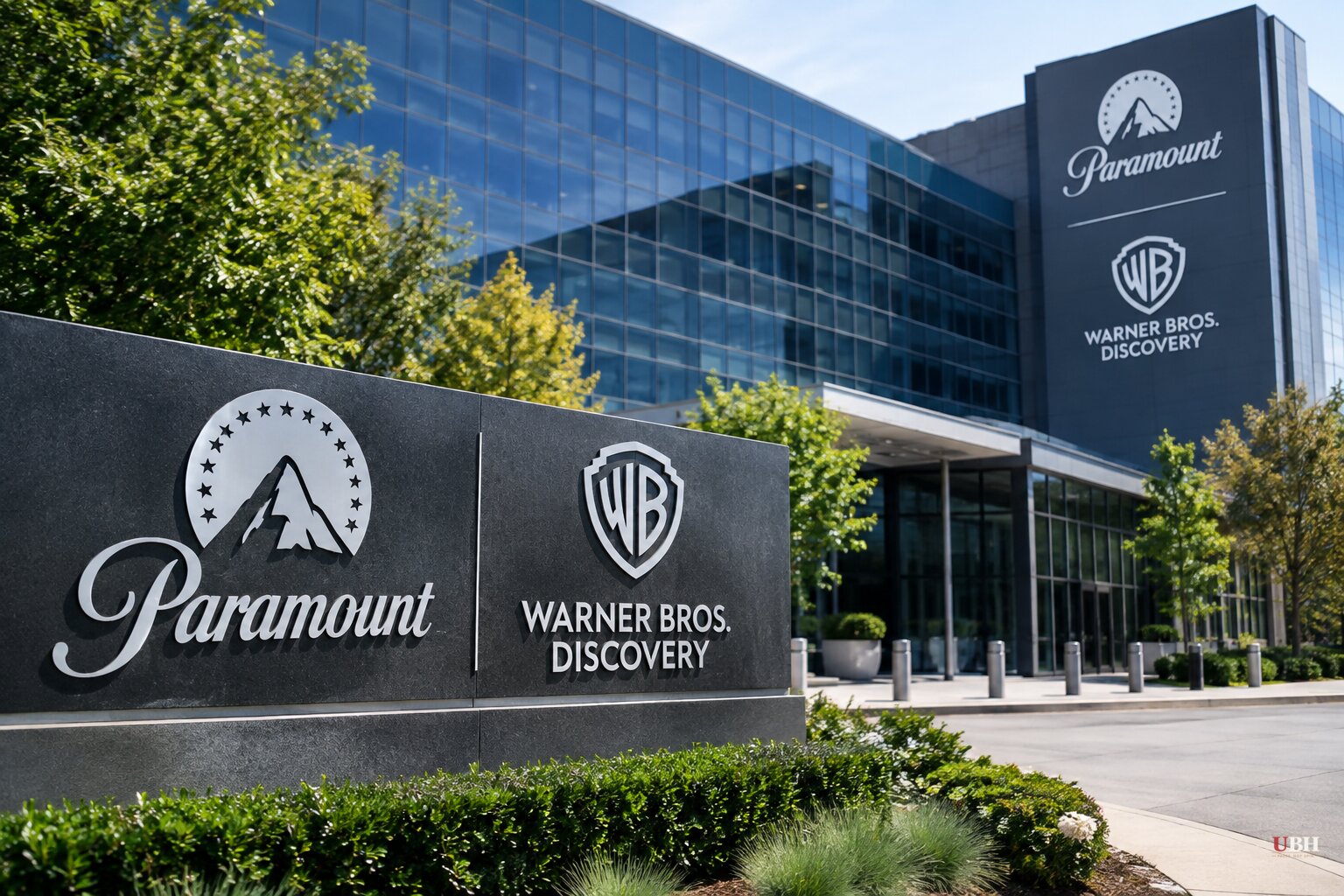
Since California Attorney General Rob Bonta and 11 other states filed suit in mid-July to block Paramount Skydance's $111 billion acquisition of Warner Bros. Discovery, the case has dragged through canceled negotiations, a looming March trial date, and a fight over a $1.9 billion bond. That ended Monday, September 21, when multiple outlets reported that Paramount and the states reached a settlement clearing the way for the merger to close.
What the deal actually says
According to Bloomberg, the New York Times, and CNBC, the settlement creates independent editorial boards for CNN and CBS. Paramount also agreed to a $30 million penalty for every film short of its pledge to release 30 movies annually in theaters, according to CNBC and Yahoo Finance. If the company keeps missing that target, Yahoo Finance reported that Paramount could be forced to sell its 49% stake in Miramax.
The LA Times reported Paramount also committed to spending $1.5 billion on film production in California over the next five years and to keeping both studio lots in the state. Governor Gavin Newsom said he took Paramount CEO David Ellison's threat to leave California "seriously" and pushed for a settlement behind the scenes, according to two people close to the matter cited by the LA Times. Los Angeles Mayor Karen Bass and Xavier Becerra, the Democratic nominee for California governor, also pressed Bonta to settle rather than take the case to trial in Oakland next March.
Four holdout states folded
Massachusetts, New York, Connecticut, and Minnesota had resisted the terms California outlined, according to Bloomberg. Those four states ultimately concluded that continuing the legal fight without California leading it wasn't worth the expense, Bloomberg reported, citing a person familiar with the matter. Their holdout did secure the CNN and CBS editorial-board provisions, according to both Bloomberg and ZeroHedge.
A federal judge, Araceli Martínez-Olguín of the U.S. District Court for the Northern District of California, must still approve the agreement. She had scheduled a hearing for September 24 on Paramount's request that the merger's opponents, including the Writers Guild of America, post a nearly $1.9 billion bond to keep blocking the deal. The Justice Department had backed Paramount's bond demand.
Money was the clock Ellison was racing
Paramount's urgency wasn't abstract. The company agreed to pay Warner Bros. Discovery shareholders a "ticking fee" of 25 cents per share each quarter if the deal didn't close by September 30, worth roughly $650 million per quarter, according to CNBC and NBC News. Separately, Paramount faced $7 million a day in late fees to Warner Bros. starting October 1, per ZeroHedge. Avoiding both was a major driver of the settlement's timing.
Markets reacted immediately. Warner Bros. Discovery shares rose as much as 10%, and Paramount Skydance climbed more than 10.8%, on Monday morning, according to Yahoo Finance.
The opposition hasn't gone quiet
Not everyone sees the settlement as a fair resolution. Lina Khan, who chaired the FTC under President Biden, wrote that the merger "seems facially illegal" and warned that behavioral remedies, promises about editorial boards and film quotas, "routinely fail," according to Ars Technica. John Bergmayer, legal director at Public Knowledge, argued the deal still leaves fewer studios competing for scripts and talent, giving one company more leverage over distributors and consumers less streaming choice.
Consolidating two of the last major independent studios and a raft of cable networks into one company could reduce competitive pressure on prices and on how much studios pay writers and other creative workers. Free Press co-CEO Jessica González went further, accusing Bonta of breaking a promise to "enforce the law and protect consumers and workers."
Whether that concern holds up is a different question than whether it's sincere. The settlement did add teeth Paramount didn't have to accept, including a financial penalty tied to theatrical output and independent editorial boards at two of its most politically scrutinized properties. Regulators in the U.S. and internationally had already approved the deal before the states sued, and the states' own coalition splintered once California signaled it was ready to settle, which suggests even the plaintiffs weren't unified on how strong their case actually was.
NBC News reported that opposition on the ground kept going even as the settlement leaked. About 20 protesters, organized by the Committee for the First Amendment, a group led by actor Jane Fonda, rallied outside New York Attorney General Letitia James's office Monday urging her not to settle. Producer Bruce Cohen told NBC News the merger is "bad for Hollywood, it's bad for workers, it's bad for democracy." A similar rally hit Bonta's Oakland office Sunday, and another is planned Tuesday outside the Writers Guild of America's Los Angeles office. None of that has changed the outcome; the settlement was already reported as done by the time Monday's rally wrapped up.
What's left unresolved is whether Judge Martínez-Olguín approves the settlement as written, and whether the independent editorial boards and film-quota penalties actually get enforced once the merger closes, or whether Public Knowledge's prediction plays out over the next few years: fewer buyers for scripts and less competitive pressure on prices.
Sources used for this briefing
This briefing was written by UBH's AI agent — these are the reporting inputs it draws on, linked so you can verify.


