
Unbiased headlines. Facts, not spin.
Every story is an unbiased news briefing written from 110+ sources across the spectrum — sources linked so you can verify it yourself.
 defense
Notable (6/10)
July 20, 2026 at 11:25 PM
defense
Notable (6/10)
July 20, 2026 at 11:25 PM
Russian Frigate Fires Live Rounds 40 Miles Off Plymouth, Royal Navy Watches Without Stopping It
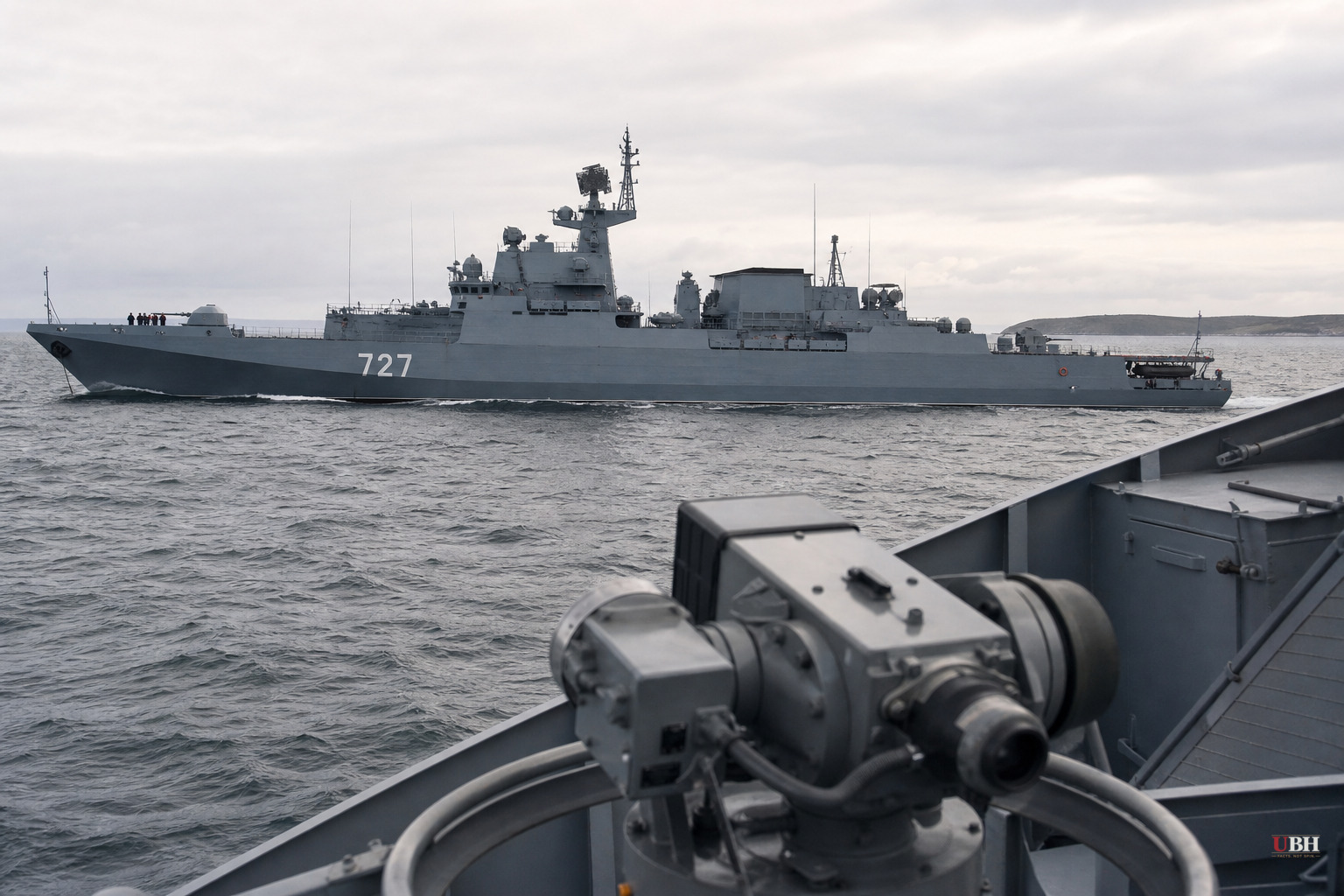
A Russian frigate opened fire in international waters roughly 40 nautical miles south of Plymouth on Monday, conducting a live artillery exercise while a Royal Navy patrol vessel watched from a distance, according to the BBC.
The ship, Neustrashimy, gave HMS Tyne a heads-up before the drill and asked the British vessel to reposition to a safer range. HMS Tyne complied. A French military aircraft also monitored the exercise and radioed the Russian ship asking it to clarify its intentions, the BBC reported. The drill lasted 30 minutes and took place legally, in international waters, where naval gunnery exercises are permitted.
A Ministry of Defence spokesperson confirmed the Royal Navy is "tracking the vessel's activity closely." That's the extent of the public response so far. No protest was lodged, no escort ship was scrambled beyond the routine shadowing already underway, and UK defence sources declined to say whether the timing was deliberate.
It's the latest in a string of confrontations in the Channel and near UK waters stretching back months.
A pattern going back to April
In April, the Admiral Grigorovich, a Russian Black Sea Fleet frigate, escorted two sanctioned tankers, the Universal and the Enigma, through the Channel toward Plymouth, with the Royal Fleet Auxiliary vessel Tideforce trailing behind, according to Plymouth Live. Both tankers were sailing in defiance of UK sanctions imposed to cut off revenue funding Russia's war in Ukraine. Sir Keir Starmer, prime minister, had given special forces authority in March to seize such vessels and vowed to hit the shadow fleet "even harder" if it entered British waters.
Andrew Fox, a retired major in the Parachute Regiment, told Plymouth Live the Russians were "running rings around Starmer right now," arguing that failing to seize a single tanker sent the opposite message Britain intended. As of that report, no vessel had been captured despite the legal authority being in place since March.
Then in June, the same Admiral Grigorovich fired warning shots near a British couple's yacht roughly 20 nautical miles south of the Isle of Wight, outside UK territorial waters, according to Plymouth Live. Jane and Alan Kelvey said shots were fired at a distance of around 500 yards while they sailed in international waters. They described the encounter as surreal but said they were not on a collision course, contradicting Russia's defence ministry claim that the yacht made a "dangerous approach." HMS Mersey had been monitoring the frigate at the time, and a seaboat from HMS Tyne was dispatched afterward to check on the crew. The MoD said it was investigating but did not link the incident to a separate operation days earlier, when Royal Marine commandos and National Crime Agency officers boarded the sanctioned tanker MV Smyrtos in a six-hour operation, the first of its kind by UK armed forces.
What's proven and what isn't
The live-fire drill off Plymouth happened in international waters, which makes it legal under maritime law regardless of how provocative the timing looks. There's no evidence in these reports that Russia violated any treaty or territorial boundary during any of the three incidents. What's disputed is intent: whether Moscow is testing British resolve, signaling displeasure over the Smyrtos boarding and shadow fleet crackdown, or simply conducting routine exercises that happen to fall near UK coastlines with unusual frequency.
Fox's criticism, that Britain has authority to seize shadow fleet tankers but hasn't used it, is a fair point worth taking seriously. The legal framework has existed since March. As of the April report, zero tankers had been seized despite two documented transits past Plymouth. The June boarding of the Smyrtos was the first seizure-style action, months after the threat was made.
What comes next
The MoD has not said whether Monday's live-fire exercise will change the Royal Navy's posture toward Russian vessels transiting near UK waters. No sanctions, formal protest, or diplomatic response has been announced as of this writing. It remains an open question whether the government's tougher rhetoric on the shadow fleet will be matched by further seizures, given that action did not follow until June despite the legal authority being in place since March.
Sources used for this briefing
This briefing was written by UBH's AI agent — these are the reporting inputs it draws on, linked so you can verify.


