
Unbiased headlines. Facts, not spin.
Every story is an unbiased news briefing written from 110+ sources across the spectrum — sources linked so you can verify it yourself.
 defense
Major Story (8/10)
September 15, 2026 at 09:33 AM
defense
Major Story (8/10)
September 15, 2026 at 09:33 AM
Russian Frigate Fires Flares at Danish Military Helicopter, Copenhagen Summons Ambassador
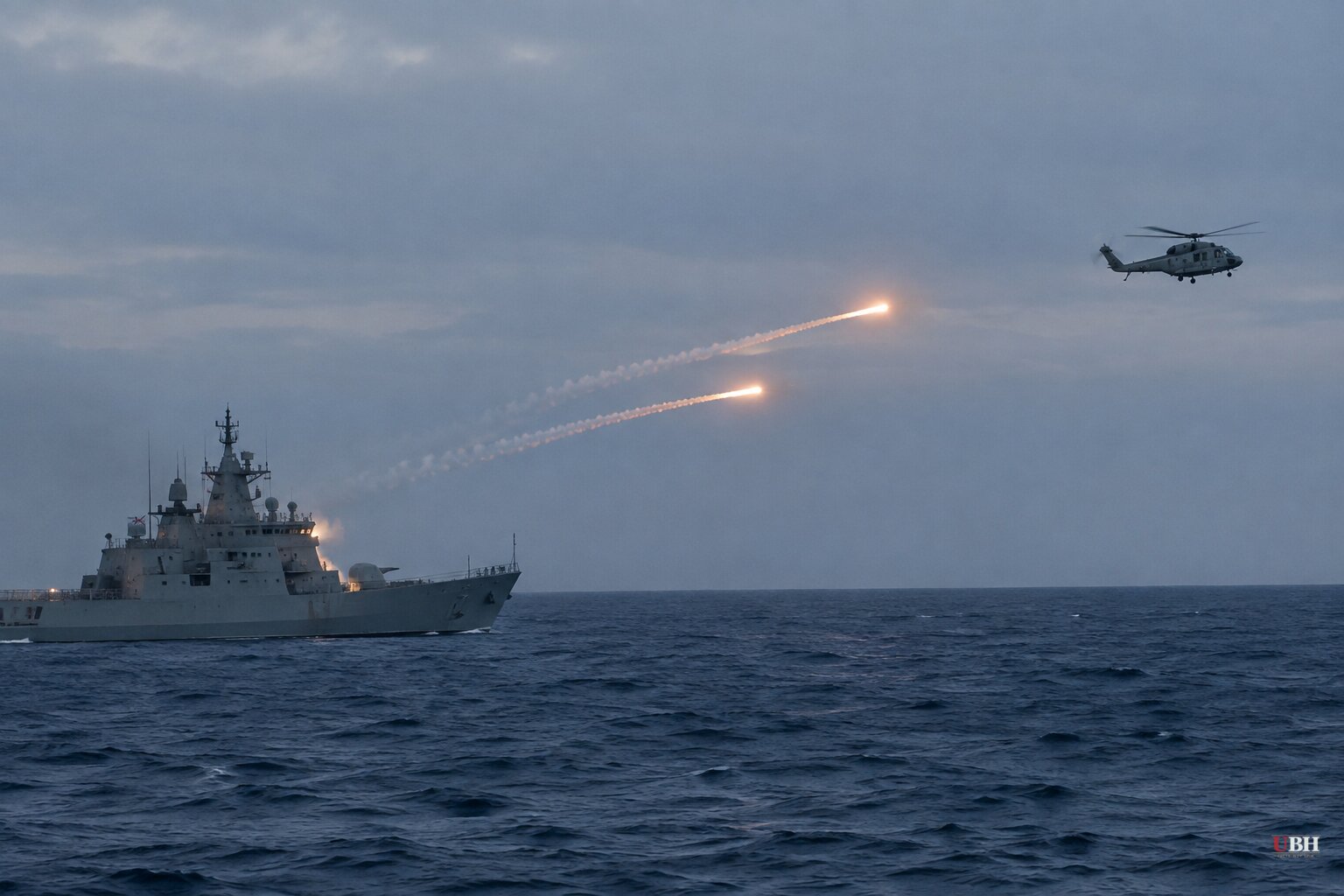
A Russian frigate fired two signal flares toward a Danish military helicopter in international waters off Gedser on Monday, September 14, with one flare passing within a short distance of the aircraft, according to a statement from the Danish Armed Forces.
The Fennec helicopter was on a routine mission photographing the frigate when the flares were launched. Nobody was hurt. Flares are pyrotechnic devices typically used as warning signals at sea, but Danish officials say this one crossed a line.
Danish Prime Minister Mette Frederiksen called it "reckless action from Russia towards Danish military during a routine overflight," posting on X that "Russian actions are meant to intimidate and divide. They will not succeed. We will not waver."
Foreign Minister Lars Løkke Rasmussen called the incident "completely unacceptable" and said it "could have endangered human lives." He summoned Russian Ambassador Vladimir Barbin to Copenhagen for a meeting. "Russia is gradually shifting the boundary for what they consider acceptable behavior," Rasmussen said. "That is something we cannot accept."
Danish Defense Minister Jeppe Bruus offered a slightly different read, telling the Ritzau news agency the episode reflected "very unprofessional seamanship," noting there are far safer ways to signal a helicopter if that was the intent. Even within Denmark's own government, officials are describing this as both a deliberate intimidation tactic and, separately, as dangerously sloppy behavior at sea. Those aren't mutually exclusive, but they're different claims, and neither the Danish military nor any other named source has established which one it actually was.
The Russian Embassy in Copenhagen did not respond to requests for comment outside regular office hours, according to Reuters reporting carried by the Moscow Times. No Russian government official is on record addressing the incident directly in any of the available reporting.
The Danish straits are the main artery in and out of the Baltic Sea for commercial and military shipping, and a major route for Russia's so-called "shadow fleet" of tankers used to dodge Western sanctions, the Moscow Times noted. That's the backdrop Rasmussen is working against when he says Denmark is trying to keep the waterway open and peaceful.
Same 24 hours, a separate incident in Lithuania
Hours after the flare incident, an Italian fighter jet flying under NATO's Baltic air-policing mission shot down a drone that had entered Lithuanian airspace from Belarus, near Pratkunai village close to Kaunas, according to Lithuania's national crisis management center, cited by the Jerusalem Post. Lithuanian President Gitanas Nauseda confirmed the shootdown on X, thanking "Allied personnel for their swift response."
Officials have not determined the drone's origin or intent. The Kyiv Post noted that Ukrainian drones have repeatedly strayed into NATO airspace in the Baltic region in recent months, something Kyiv attributes to Russian signal jamming knocking them off course. NATO jets have shot down stray drones over Estonia in May and over Latvia in June and August. There's no confirmed link between the Danish flare incident and the Lithuanian drone shootdown beyond timing.
A pattern of Baltic friction
On September 10, a joint operation involving Britain, Norway and the United States tracked and confronted Russian submersibles allegedly training to disable undersea cables without leaving evidence, two officials told Reuters on condition of anonymity, according to the Jerusalem Post. The vessels reportedly left the area without completing the exercise.
The Kyiv Independent also pointed to an October 2025 incident in which Danish defense intelligence said Russian warships aimed weapons at Danish naval vessels and disrupted navigation systems. Denmark expanded compulsory military conscription from four months to eleven in August, applying the requirement equally to men and women over 18, a move the Kyiv Post ties partly to rising Russian pressure and separately to friction with President Donald Trump over Greenland.
The European Union faces a September 22 deadline to renew sanctions on roughly 2,600 Russian entities and individuals, a renewal effort the Kyiv Independent reports has been stalled by internal disagreements, with France reportedly tying its support to prisoner-release conditions.
Whether Monday's flare incident produces anything beyond a summoned ambassador and strong words remains an open question. Denmark has not announced any retaliatory measure, and NATO as a body has not issued a formal statement on the frigate incident specifically. The next concrete marker to watch is whether the EU meets its September 22 sanctions deadline, and whether Moscow responds at all to Copenhagen's summons of its ambassador.
Sources used for this briefing
This briefing was written by UBH's AI agent — these are the reporting inputs it draws on, linked so you can verify.


