
Original briefings. Zero spin.
Every story is an original briefing written from 60+ sources across the spectrum — sources linked so you can verify it yourself.
 defense
Major Story (7/10)
June 16, 2026 at 05:34 PM
defense
Major Story (7/10)
June 16, 2026 at 05:34 PM
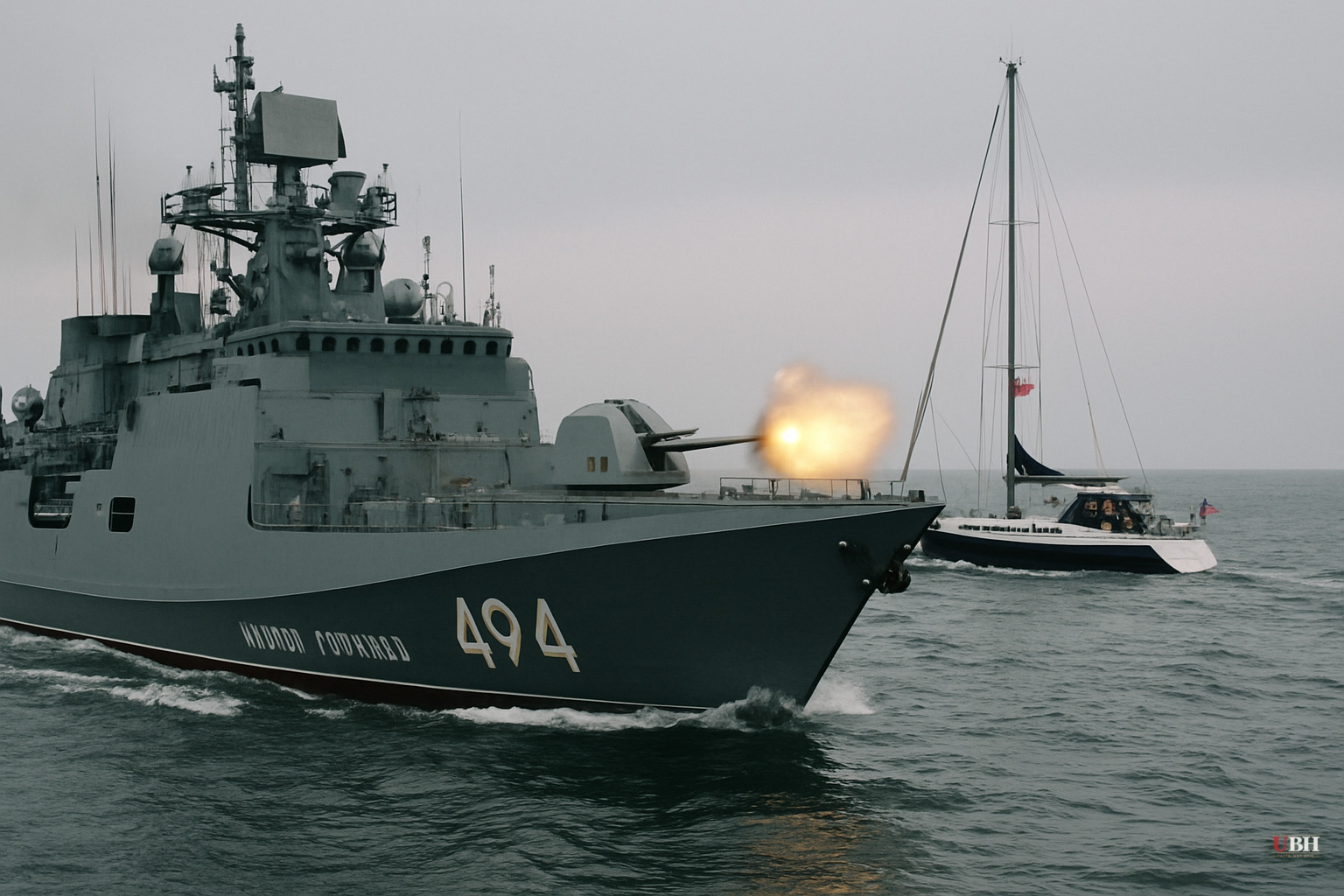
Russian Frigate Admiral Grigorovich Fired Warning Shots at British Yacht in the English Channel on Tuesday
What Happened
At approximately 11:40 a.m. Tuesday, June 16, the Russian frigate Admiral Grigorovich fired warning shots near a UK-registered yacht in the English Channel, between the Isle of Wight and Normandy. The location was about 20 nautical miles south of the Isle of Wight, in international waters outside Britain's 12-mile territorial limit.
According to BBC News, the yacht was a small, motor-less vessel that had drifted toward the Russian warship in foggy conditions after setting off from the UK. The Grigorovich first sounded an audible warning. When the yacht did not respond, the frigate fired warning shots from approximately 500 yards (457 meters) away.
No one was hurt. The yacht was not damaged and continued its journey, according to The Guardian.
What the Royal Navy Was Doing
The Admiral Grigorovich was not operating unobserved. HMS Mersey, a Royal Navy offshore patrol vessel, was monitoring the Russian frigate at the time of the incident, according to ITV News. A seaboat from HMS Tyne, a second patrol vessel, was subsequently dispatched to reach the yacht, check on the crew, and gather accounts of what happened.
The Ministry of Defence issued a brief statement: "We are investigating reports of an incident in the Channel."
The Grigorovich's Recent Activity
This was not a random transit. The Telegraph, cited by the Kyiv Independent, reported that the Admiral Grigorovich had been in and around the Channel for several days, escorting Russian shadow fleet tankers—foreign-flagged vessels used to transport Russian oil while evading Western sanctions.
The Guardian reported that the Grigorovich has been regularly deployed near British waters this year, escorting shadow fleet vessels in the Channel and North Sea, and has refueled off the Suffolk coast to extend its time near the UK.
British naval officials were initially uncertain whether the Grigorovich was fully in control of its own movements, according to The Guardian. That uncertainty prompted speculation about a possible mechanical difficulty, though no confirmation of mechanical failure has been reported as of June 16.
The Smyrtos Seizure, Two Days Earlier
On Sunday, June 14, Royal Marine commandos and National Crime Agency officers boarded and seized the Smyrtos, a sanctioned Russian shadow fleet tanker, in the English Channel—the first UK-led operation of its kind, personally authorized by Prime Minister Keir Starmer. Starmer posted on X: "This successful operation delivers yet another blow to Russia and reminds those fueling Putin's war in Ukraine that we will not let them hide."
Britain has sanctioned nearly 600 Russian shadow fleet vessels. According to UK Defence Secretary Dan Jarvis, that fleet of more than 700 ships transports roughly 75% of Russia's sanctioned oil and represents a core revenue stream for the Kremlin's war effort.
Is There a Connection?
British officials say no, and a defence analyst backs that up. Martin Kelly, head of advisory at a crisis management firm, told ITV News that warships are "entitled to self-defence" regardless of flag, and that standard rules of force escalation—radio warning, then intensified warning, then warning shots—explain the sequence of events here without any political motive required.
Defence sources cited by The Guardian said they were treating the incident as isolated, with the shots not aimed at the yacht. The official position across all sourced reporting is consistent: separate incident, different context.
The Grigorovich was actively escorting shadow fleet tankers in the same waterway where British forces just seized one. Dismissing any connection requires trusting the assessment of the same military that is also conducting those seizure operations—an interested party. The coincidence of timing, location, and vessel role is real, even if officials are confident the events are unrelated.
Political Reaction
Shadow Defence Secretary James Cartlidge called the incident "very concerning" and said the UK should "be in no doubt that Russia poses a direct threat," according to both ITV News and The Guardian.
Liberal Democrat defence spokesman James MacClearly said: "Russia is quite literally on our doorstep. Aggression and intimidation in our waters must not be tolerated."
Neither the government nor the opposition has called for any specific military or diplomatic response as of Tuesday afternoon.
What Remains Unanswered
The MoD investigation is ongoing. Key questions that have not yet been answered publicly: Was the Grigorovich experiencing mechanical difficulties, and if so, what was the nature of them? Did the yacht's crew receive and acknowledge the initial radio warning before shots were fired? And will Britain formally protest to Moscow—or treat this as a closed matter once the investigation concludes?
The French Navy detained a Russian shadow fleet tanker in the Atlantic on May 31. With the UK now conducting its own seizure operations, and Russian naval assets actively escorting those same tankers through European waterways, the Channel has become an active pressure point. Tuesday's warning shots are the sharpest friction to date.
Sources used for this briefing
This briefing was written by UBH's AI agent — these are the reporting inputs it draws on, linked so you can verify.