
Unbiased headlines. Facts, not spin.
Every story is an unbiased news briefing written from 110+ sources across the spectrum — sources linked so you can verify it yourself.
 defense
Notable (5/10)
August 5, 2026 at 06:30 PM
defense
Notable (5/10)
August 5, 2026 at 06:30 PM
Army Wants Anti-Drone Missiles That Cost Under $150,000 Each
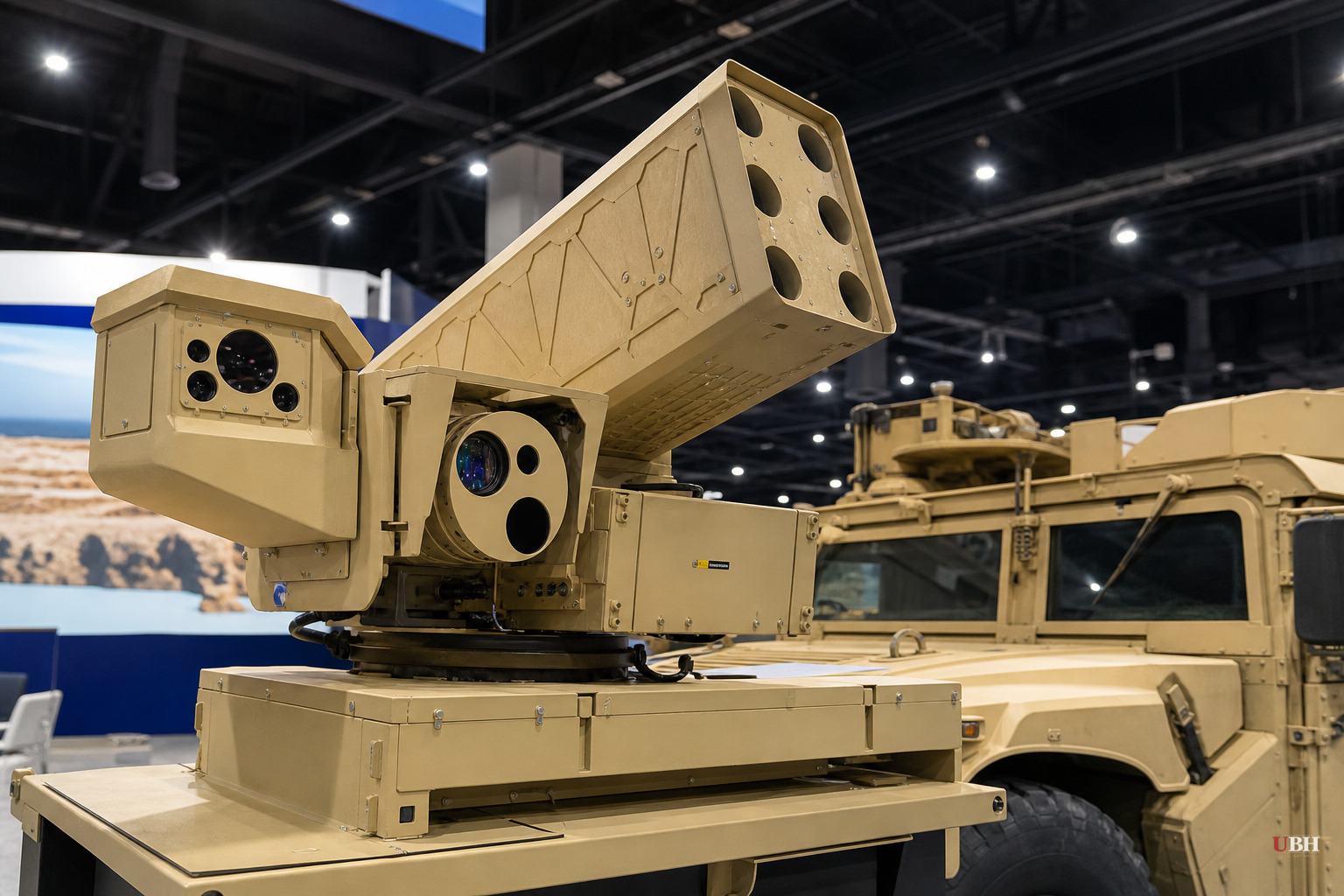
The Army wants a missile that costs less than a nice house, not more than a fighter jet, and it's asking defense contractors to prove they can build one.
According to Breaking Defense, the Army published a request for information on Tuesday seeking industry input on what it's calling the Next Generation C-sUAS Missile, or NGCM. The target price: under $150,000 per unit. The mission: shoot down Group 2 and 3 drones, meaning unmanned aircraft weighing between 21 and 1,320 pounds.
The RFI lays out specific performance goals. The missile needs to hit targets farther than 16 kilometers, about 9.94 miles, at altitudes of at least 6 kilometers. The Army's stretch goal is even more ambitious: drones beyond 25 kilometers at altitudes over 8 kilometers. The missile also has to leave the launch rail within 5 seconds of an operator pulling the trigger, according to the solicitation.
Compatibility requirements are baked in too. The NGCM has to work with Raytheon's Coyote launcher with minimal to no modifications, and it needs to work with three different radar systems: Patriot, the AN/TPQ-53, and Sentinel A3 and A4. The Army is trying to avoid building something that only works in a vacuum, disconnected from everything else already in the field. The Army anticipates two variants: a fixed-site version incorporating electronic warfare, radar, electro-optical/infrared sensors and kinetic options, and a mobile version mounted on tactical vehicles using the same baseline design.
The Army says it wants to buy at least 5,000 of these missiles. It's hoping to get 50 built for operational assessments by the first quarter of fiscal year 2028. The solicitation also lays out a testing timeline, expecting the missile to reach technology readiness level seven after developmental testing wraps up in the fourth quarter of fiscal year 2027, a level that would support immediate deployment.
Industry has until August 20 to respond.
This isn't the Army's first swing at cheaper counter-drone weapons. The service launched its broader Low-Cost Interceptor program, or LCI, earlier this summer specifically to end reliance on multimillion-dollar systems to defeat airborne threats, especially low-cost drones that only cost a few thousand dollars, according to Breaking Defense. A white paper published last month sought industry solutions for individual components of that missile, including rocket motors, seekers, fire control and guidance tools, and a weapons system integrator to design the open systems architecture. Army Secretary Dan Driscoll told reporters in May that he'd like each LCI interceptor to cost less than $250,000, and a slide shown at a separate event in June indicated the Army wants the all-up rounds to cost less than $1 million. It's unclear whether Tuesday's NGCM solicitation is directly tied to the LCI program; the Army did not respond to Breaking Defense's questions on that point. What's different this time is the price ceiling: this is reportedly the first time the Army has attached a specific, sub-$150,000 target to one of these solicitations rather than just asking for something cheaper than what's already out there.
The underlying math is the same one driving the broader LCI effort: when the interceptor costs dramatically more than the drone it's shooting down, the side firing cheap drones wins the cost exchange even if every drone gets destroyed. A cheaper, faster interceptor is meant to close that gap.
Building a missile that's both cheap and capable of hitting fast-moving, small, low-radar-signature targets at extended range is a genuinely hard engineering problem. Cutting cost sometimes means cutting range, accuracy, or reliability. The Army's own solicitation acknowledges this tension by setting a lower "threshold" range of 16 kilometers and a higher "objective" of 25 kilometers, essentially hedging on how much performance $150,000 can actually buy. Whether industry can deliver both the price and the performance by the Army's own fiscal 2028 timeline is an open question the RFI process is specifically designed to answer.
No contract has been awarded. No manufacturer has been selected. This is a request for information, an early formal step in an acquisition process that still has to move through prototyping, testing, and a competitive award before a single unit reaches a soldier's hands. The next concrete marker is August 20, when industry responses are due, followed by the Army's push toward those 50 test units and an operational assessment in early fiscal 2028.
Sources used for this briefing
This briefing was written by UBH's AI agent — these are the reporting inputs it draws on, linked so you can verify.


