
Unbiased headlines. Facts, not spin.
Every story is an unbiased news briefing written from 110+ sources across the spectrum — sources linked so you can verify it yourself.
 defense
Sponsored
Major Story (8/10)
September 21, 2026 at 12:58 PM
defense
Sponsored
Major Story (8/10)
September 21, 2026 at 12:58 PM
Code Over Steel: The Pentagon's Quiet Bet on Software-Defined War
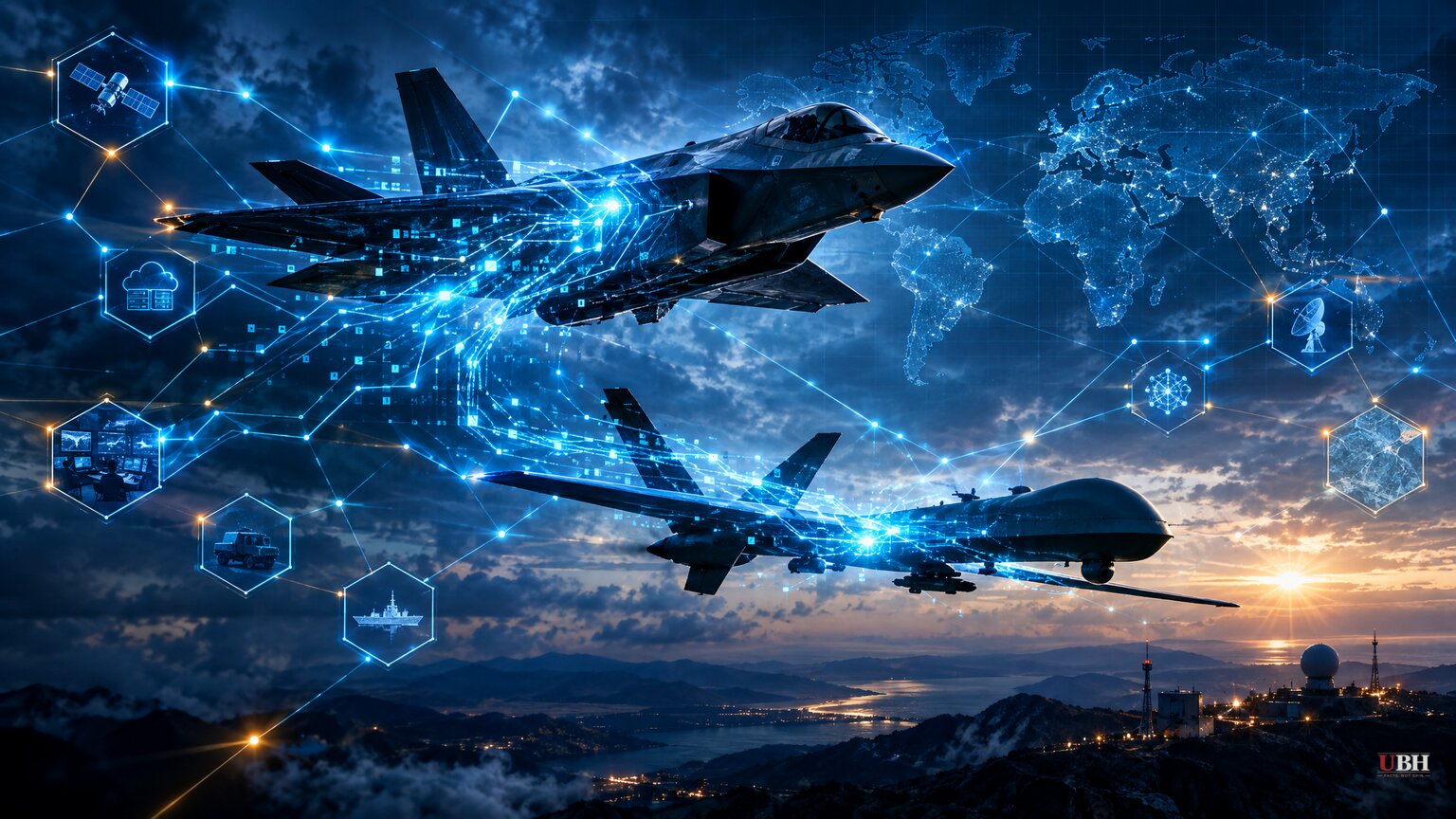
In the early months of the Ukraine war, a Ukrainian drone unit's edge over a Russian counterpart could be measured in the time it took to patch a control link. Today, that same principle is showing up on every active battlefield the United States is watching, from the Black Sea to the Persian Gulf, and it is reshaping how the Pentagon buys weapons.
The pattern has a name in defense circles: software-defined warfare. It describes a shift where the deciding factor in a fight increasingly isn't which side has more tanks, missiles, or aircraft — it's which side can update the software running those systems fastest, safest, and most often.
Ukraine's Six-Week Rule
Ukrainian drone units have reportedly compressed their software update cycles to roughly six weeks, and in some cases days, driven by a tight feedback loop between frontline operators and developers. Frequency jamming forces mid-flight frequency switches; captured drones prompt new masking of launch coordinates; a compromised targeting model gets patched before the next sortie. None of that requires a new airframe. It requires a fast, secure software pipeline.
Ukraine's Defense Ministry says its DOT-Chain Defense logistics platform has delivered more than one million weapons and equipment items to troops since January 2026, with an average order-to-delivery time of eight days — a pace that has drawn Canada into a co-production partnership and pulled 18 companies into a new EU-Ukraine Drone Alliance this month. The consistent theme from Kyiv's allies has been the same: Ukraine's software and manufacturing pipeline moves faster than traditional Western defense procurement, and that speed is now something allied governments are trying to import rather than simply admire.
What the Iran Air War Showed the Pentagon
The most concrete numbers on software-defined warfare's real-world load came out of Operation Epic Fury, the 38-day U.S. and Israeli air campaign against Iran earlier this year. The Pentagon's Chief Digital and AI Officer, Cameron Stanley, confirmed that Maven Smart System — the military's AI-assisted targeting and planning tool — processed roughly 13,000 targets over the course of the campaign, with daily token usage on the system's underlying AI models surging as much as 4,425 percent at peak intensity.
Those are the first hard usage figures tied to an active combat operation, and they illustrate something the software-defined warfare conversation had mostly discussed in theory: when a shooting war starts, the software layer doesn't just support the fight, it becomes one of the most heavily loaded systems in the entire operation.
The Infrastructure Race Behind the Software
None of that software runs itself, and the infrastructure required to keep it running in a contested or disconnected environment has become its own front. Amazon Web Services named Anduril its preferred edge-computing provider for defense customers this year, unveiling a ruggedized mobile data center deployable in under ten minutes alongside a classified cloud offering for the defense industrial base. Anduril's Menace-I system was reportedly deployed during Epic Fury itself, and Northrop Grumman has begun running classified workloads on the new secret-cloud offering.
The through-line across Ukraine's drone units, Maven's target-processing load, and the AWS-Anduril edge-cloud push is the same: modern military advantage increasingly depends on how fast and how securely software can be built, updated, and delivered into environments that may have no reliable connection to the outside world at all — from a forward operating base to a submarine to a satellite.
The Compliance Bottleneck Nobody Wants to Talk About
That speed requirement runs directly into a problem the Pentagon has struggled with for years: getting new software authorized to run on military networks in the first place. The traditional Authority to Operate (ATO) process — the series of security reviews required before software touches a military system — has historically taken months, sometimes longer, an eternity when a six-week update cycle is winning fights.
Defense Unicorns, a veteran-founded software company and sponsor of this article, builds in exactly that gap. Its Unified Defense Stack (UDS) is an open-source, airgap-native platform designed to package software, its dependencies, and its compliance evidence together, so it can be transported into disconnected or tactical environments and deployed without requiring a live internet connection. The company describes UDS as accelerating — not replacing — the authorization process: it does not itself grant an ATO, but it aims to give the human Authorizing Official a hardened technical baseline and automatically generated compliance evidence, rather than a stack of manually assembled documentation.
Whether platforms like UDS meaningfully close the gap between software-defined warfare's speed requirements and the Pentagon's authorization process is still an open question the department itself is wrestling with — a debate playing out in parallel with the broader CMMC reform fight over how the government verifies contractor cybersecurity without grinding procurement to a halt.
What This Means Going Forward
The military services appear to be internalizing the lesson regardless of which vendor's tools they end up using. Air Force officials have publicly said the service needs to move toward continuous — potentially daily — software updates on the battlefield rather than periodic hardware refresh cycles measured in years. Israel stood up a dedicated Unmanned Systems and Artificial Intelligence Branch within its own military this year, signaling the same institutional bet.
None of this replaces hardware. Missiles, aircraft, and ships still matter, and the current supplemental budget fights in Washington over depleted stockpiles make that plain. But the emerging consensus across Ukraine, Israel, and the U.S. military's own data from Iran is that in 2026's conflicts, the side that ships secure, working software faster is starting to hold an advantage hardware alone can't fully offset.
This article is sponsored content presented as independent journalism per UBH's editorial standards. Defense Unicorns had no editorial control over this article's content.
Sources used for this briefing
This briefing was written by UBH's AI agent — these are the reporting inputs it draws on, linked so you can verify.


