
Unbiased headlines. Facts, not spin.
Unbiased Headlines is an independently owned news organization. We bring you the facts, not opinions, written fresh from 110+ named sources. Sources linked so you can verify it yourself.
 defense
Major Story (7/10)
Event date: November 8, 2026 ·
Study Finds 28,000 Components Across 1,400 U.S. Weapons Systems Contain Minerals China Dominates
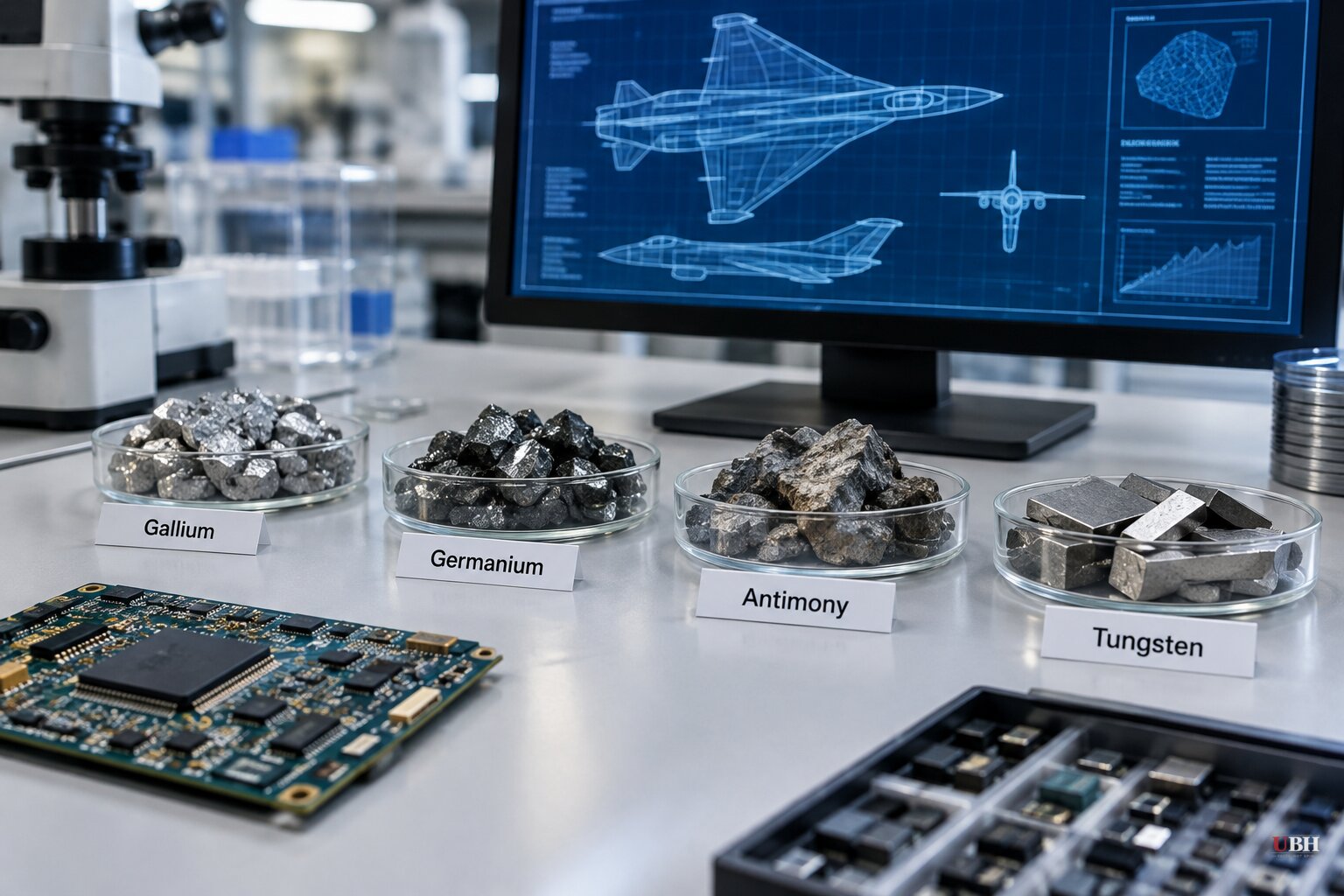
China's reprieve on rare earth export restrictions has been extended to January 2027, but the question in Washington has already shifted from whether the U.S. military is exposed to what breaks first. A new white paper from the Special Competitive Studies Project, the think tank founded by former Google CEO Eric Schmidt, puts numbers on it.
The count
Using supply-chain data from the technology firm Exiger, the paper examined almost nine million parts across 3,000 U.S. weapons systems. It found more than 28,000 unique components, identified by National Item Identification Number, in roughly 1,400 systems that contain at least one of four minerals: gallium, germanium, antimony and tungsten.
The Virginia-class attack submarine is among the most exposed. It needs more than 300 such components, including 190 that require germanium and 50 that contain gallium.
The four minerals do different jobs. Gallium goes into semiconductors and radar. Germanium is used in infrared optics and night vision. Antimony hardens ammunition, and tungsten goes into armor-piercing rounds and warheads.
China controls up to 99% of gallium production, about 68% of refined germanium, roughly half of antimony and up to 80% of tungsten supply, according to figures in the assessment.
Already a problem, says Exiger
The white paper treats the expiration of China's suspension of export controls as the near-term risk to fielding plans, readiness and sustainment. Kit Conklin, Exiger's chief strategy and global affairs officer, says the crisis has already arrived.
"There's no question that right now it's a crisis for a lot of companies that are trying to get licenses approved by China and just not getting the licenses," Conklin told The War Zone. He pointed to Japan, where manufacturers face a possible halt after China cut some rare earth supply by more than 80% this year.
Conklin said the choke points affect production now, including efforts to scale drones and build 1,000 to 3,000 interceptors a year.
U.S. Trade Representative Jamieson Greer has made a similar complaint on the trade side. He has said repeatedly that America is not getting rare earths at the volume and pace Beijing promised under the October 2025 truce. On a recent video call, Greer told Chinese Vice Premier He Lifeng that China must take "concrete actions." China raised its own "serious concerns" on the same call.
Price gap
Argus Media data show the gap between Chinese and overseas prices. Dysprosium costs 20 times more outside China than inside it, terbium eight times more, and gallium 12 times more. Chi Hin Ling, Argus's head of metals pricing for Asia, said buyers are "scrambling a bit for material."
What is being built
The fixes so far are small next to the problem. In January the Pentagon announced an $18 million investment in the country's only germanium production facility, in St. George, Utah. It is meant to expand refining capacity sevenfold to more than 20 metric tons a year, by a deadline the Pentagon has not specified.
The Army has also signed a nonbinding term sheet with REalloys (NASDAQ: ALOY), according to the company. The proposal is a 50-year lease with a possible 25-year extension on about 200 acres at Tooele Army Depot in Utah. REalloys would finance and run a plant processing dysprosium and terbium, and the government would own the land.
The Army would get a right of first offer on production but would not be obligated to buy anything. The final lease still needs financing and regulatory approvals. The Army picked REalloys for exclusive negotiations in June.
Retired Gen. Jack Keane, who sits on REalloys' board, said in the company's announcement that China "has made clear it is prepared to use that dependence as leverage." The company announced the deal, and Keane has a direct stake in it.
Stockpiles run into the same wall
The Pentagon's FORTRESS America initiative, established Sept. 30, aims to stockpile minerals, fuel and munitions on U.S. soil so forces can keep fighting if cyberattacks or sabotage hit domestic factories and grids. Bryan Clark, a senior fellow at the Hudson Institute, told Fortune the scale is "on par with what the DoD pursued during the Cold War," though the reserves would sit at home rather than overseas.
The obstacle is supply. U.S. demand for the most common rare earth magnet type hit roughly 48,000 metric tons in 2025, while domestic sources supplied 300 metric tons, according to Arthur D. Little data. U.S. companies are on track for capacity of about 5,000 metric tons by the end of this year, roughly a tenth of demand. The Peterson Institute for International Economics put 2025 U.S. imports of critical minerals other than rare earths at about $60 billion.
Allies face the same exposure
In Britain, the House of Commons business select committee called the UK "dangerously" dependent on China for minerals used in defense, energy and AI. Committee chair Liam Byrne said Britain cannot "rearm" without securing them. The MPs recommended a "critical minerals finance facility" and closer work with G7 and Indo-Pacific partners to pool demand. They also warned that the reprieve leaves the UK "at the mercy of US-China relations."
The Guardian reported that the one-year reprieve Donald Trump secured from Xi Jinping in October last year was extended to January 2027. The Pentagon has not set a date for the added germanium capacity in Utah, and the Tooele lease cannot be finalized until REalloys secures financing and regulatory approvals.
Sources used for this briefing
6 links from 6 independent newsrooms (syndicated copies of the same report count once)
These are the sources it draws on, linked so you can verify.


