
Unbiased headlines. Facts, not spin.
Every story is an unbiased news briefing written from 110+ sources across the spectrum — sources linked so you can verify it yourself.
 defense
Major Story (7/10)
August 5, 2026 at 07:19 PM
defense
Major Story (7/10)
August 5, 2026 at 07:19 PM
Germany to Join France's Nuclear Exercise as Europe Rethinks Deterrence
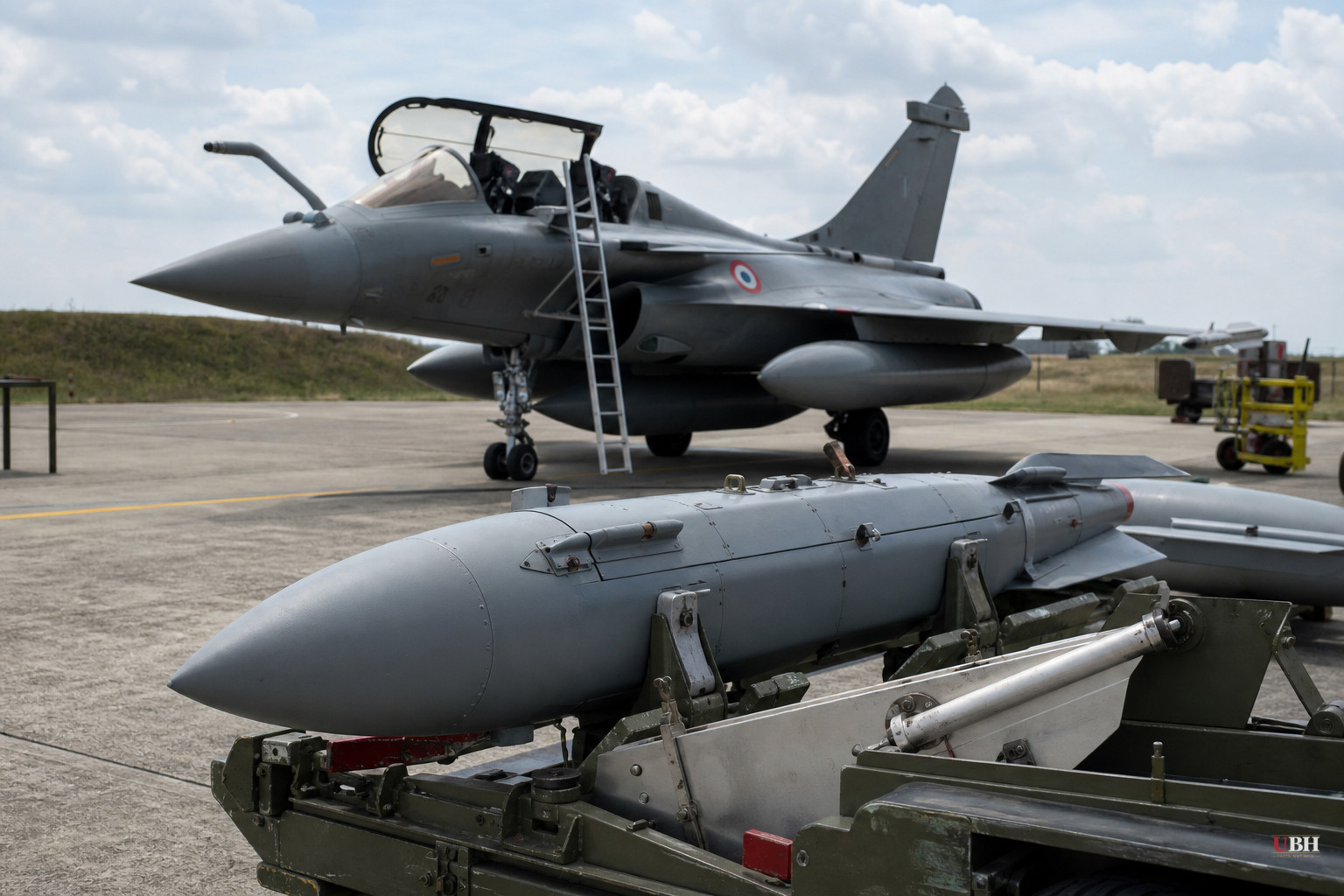
France and Germany announced on July 17 at the Franco-German Defense and Security Council, held at Germany's Nörvenich Air Base, that German forces will participate this year in Poker, France's recurring full-scale rehearsal of its airborne nuclear capabilities.
The announcement came after recent discussions between France and Germany about deploying France's nuclear arsenal outside French territory. It marks what the Daily Signal, which covered the announcement, described as a doctrinal shift for both countries on the use of nuclear weapons.
France is one of only three countries in NATO, along with the United States and the United Kingdom, that has a nuclear arsenal. According to the Daily Signal, the rise of a more assertive Russia appears to be encouraging some in Europe, notably Germany, to rethink nuclear deterrence strategies.
Macron's "Forward Deterrence" Doctrine
The exercise follows a speech earlier this year by French President Emmanuel Macron, delivered in front of a Le Triomphant-class nuclear submarine, in which he laid out a new nuclear strategy for France. Macron spoke of the need for "France's [nuclear] deterrent to remain a constant" and argued that a strategy he called "forward deterrence" must be pursued to protect the sovereignty of France and the security of the European continent.
The strategy aims to expand and strengthen France's nuclear capabilities by increasing the number of warheads in its arsenal, allowing the forward basing of nuclear weapons outside French territory, while maintaining strategic ambiguity by keeping the size of the stockpile private.
Paris Still Holds the Button
Even with this shift toward forward deterrence, the sole decision-making authority and control of France's nuclear arsenal remain in Paris with the president of France, as they always have. In his speech, Macron did not mention integrating France's nuclear arsenal with NATO's. The independence of France's nuclear arsenal has been a consistent aspect of French nuclear doctrine, even as France expands its capabilities and other countries seek collaboration.
Why Germany Is Interested
Shortly after Macron's speech, German Chancellor Friedrich Merz announced that France and Germany would form a nuclear steering group to discuss increased collaboration on nuclear deterrence. Like France, Germany has recognized the shifting security landscape in Europe, and Merz has put Germany on a path of increased cooperation with regional nuclear powers that have signaled openness to expanding their nuclear umbrella to protect Germany.
According to the Daily Signal, this increased collaboration is a welcome sign for those in the Trump administration, consistent with President Donald Trump's push for more self-reliance on security matters from European nations. However, the Daily Signal cautions that the French nuclear deterrent is not a replacement for the American nuclear umbrella, nor can it be, since only the United States has the variety of systems and delivery mechanisms needed to deter the Russian nuclear arsenal. Franco-German cooperation, in this view, is meant to complement the American security presence in Europe rather than substitute for it.
What Happens Next
Poker is expected to run later this year, according to the joint French-German announcement, with Germany's participation marking a new step in cooperation between Berlin and Paris on nuclear matters. What remains unresolved is how far forward-basing goes if France follows through, and how this new steering group's work will unfold. None of that is settled by the July 17 announcement. It is the opening move, not the outcome.
Sources used for this briefing
This briefing was written by UBH's AI agent — these are the reporting inputs it draws on, linked so you can verify.


