
Unbiased headlines. Facts, not spin.
Every story is an unbiased news briefing written from 110+ sources across the spectrum — sources linked so you can verify it yourself.
 defense
Major Story (7/10)
August 5, 2026 at 02:50 PM
defense
Major Story (7/10)
August 5, 2026 at 02:50 PM
Taiwan Kicks Off 10-Day War Games, Slows Internet and Mobilizes 20,000 Reservists
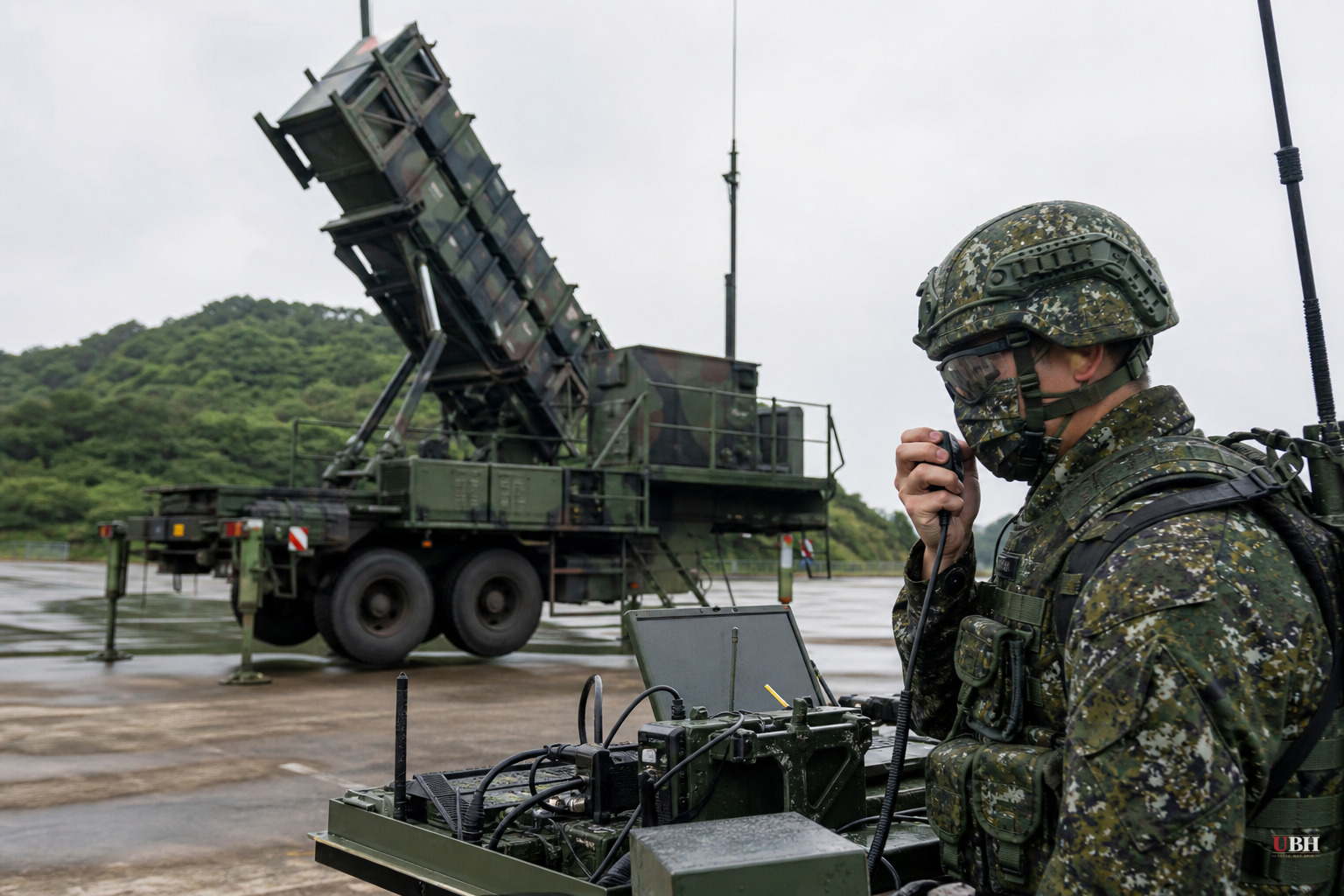
Taiwan started its biggest annual war game on Wednesday, and this one is built to feel less like a rehearsal and more like the real thing.
The Han Kuang 42 exercise kicked off with an order issued from an underground command center in Taipei, according to Reuters. Fighter jets scrambled to disperse. Naval units moved into emergency positions. More than 20,000 reservists were called up, one of Taiwan's largest reserve mobilizations in recent memory.
The drills run through August 14.
Testing Commanders, Not Just Weapons
What makes this year different isn't just scale. It's the assumption baked into the whole exercise: China won't attack the way anyone expects.
Two senior Taiwan officials, speaking to Reuters on condition of anonymity given the sensitivity of the matter, said commanders will face "unexpected scenarios" that deliberately don't match the original enemy playbook. The point is to see if field officers can reassess and issue new orders on the fly instead of freezing when the script breaks.
Taiwan is also borrowing a U.S. military practice called the "backbrief," where junior officers have to restate their mission back to commanders before acting. This is a coordination check meant to catch miscommunication before it gets someone killed.
Major General Lu Wen-yuan, head of Taiwan's Joint Operations Division, told a news conference reported by the Taipei Times that the exercise runs through four phases: prepositioning forces, protecting them, countering an amphibious assault, and sustaining a defense over time. The opening phase assumes China masks a real invasion buildup behind what looks like a routine PLA exercise, forcing Taiwan to mobilize fast without a clean warning.
China ran live-fire drills in the Taiwan Strait less than two weeks before Han Kuang began, drills Taipei publicly condemned as provocation, according to Pop Smoke Media. Taiwan has said openly it worries Beijing could use "routine" drills as cover for the real thing. Nobody outside Chinese military leadership knows for certain whether that's true. But the concern is the stated planning assumption of Taiwan's entire defense ministry.
Slower Internet, Scattered Factories
For the first time, Taiwan is deliberately throttling mobile internet speeds in parts of the island to simulate what happens if bandwidth gets crushed in wartime, according to Reuters. Civilians have to figure out how to communicate with degraded service.
The military is also rehearsing something more industrial: relocating weapons production if China destroys existing defense plants. Lu said the drills mobilize civilian factories directly, testing whether Taiwan could keep making munitions if its main facilities got hit early.
Ports, airports and road hubs are part of the scenario too. Officials say infrastructure that can't be defended will be hardened or, if that fails, destroyed rather than left for Beijing's use, per the Taipei Times.
New Hardware, Old Lessons
Pop Smoke Media reported the drills mark a major public debut for the M1A2T Abrams tanks the U.S. has recently delivered to Taiwan, alongside drone and counter-drone exercises. Taiwan's Defense Minister Wellington Koo said cooperation with the U.S. military is "closer than many people imagine," a notable public comment given how carefully Taipei usually talks about American ties to avoid provoking Beijing.
Officials say lessons from Ukraine and recent Middle East conflicts shaped this year's design, particularly around drone warfare and protecting supply convoys under fire.
What's Actually Unresolved
China's defense ministry did not respond to Reuters' request for comment on the drills. Beijing has never renounced using force against Taiwan and continues to call the island part of its territory. Taipei rejects that outright and says only Taiwan's people get to decide its future.
None of this proves an invasion is imminent. Taiwan's military leadership believes the odds are high enough to run its most realistic drills in the exercise's history, including a first-ever bandwidth throttle and mass reservist callup. Whether that assessment reflects genuine deteriorating risk or standard deterrence signaling is something outside analysts still disagree on. The next marker to watch: whether China responds to Han Kuang with its own show of force before the drills wrap on August 14.
Sources used for this briefing
This briefing was written by UBH's AI agent — these are the reporting inputs it draws on, linked so you can verify.


