
Unbiased headlines. Facts, not spin.
Every story is an unbiased news briefing written from 110+ sources across the spectrum — sources linked so you can verify it yourself.
 defense
Major Story (7/10)
August 5, 2026 at 02:46 PM
defense
Major Story (7/10)
August 5, 2026 at 02:46 PM
Israel and Lebanon Hold Seventh Round of Rome Talks as Hezbollah Chief Blasts Negotiations
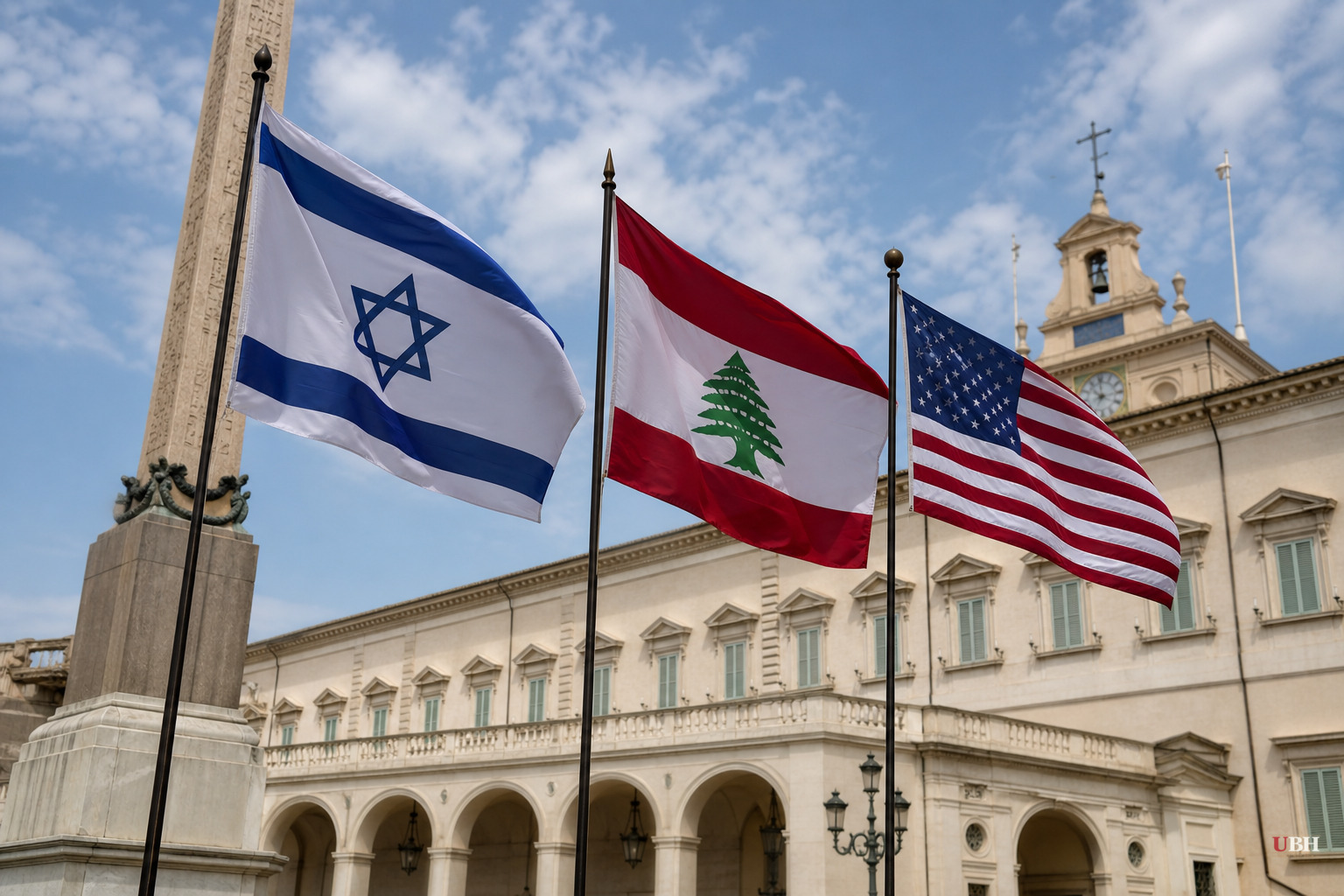
Israeli and Lebanese delegations gathered at the U.S. Embassy in Rome on Tuesday for the seventh round of Washington-mediated talks since March, when Hezbollah fired rockets into Israel in solidarity with Iran and Israel answered with airstrikes and a ground invasion that Lebanon says has killed more than 4,300 people, according to TRT World. The talks are scheduled to run through Thursday, according to the U.S. State Department.
This round follows the framework Israel and Lebanon agreed to in Washington in June, which laid out Hezbollah's disarmament, a phased Israeli withdrawal from southern Lebanon, and deployment of the Lebanese army into designated test areas called pilot zones, according to TRT World. Those pilot zones have already launched in southern Lebanon, part of the broader diplomatic track that included separate White House meetings President Trump held with Lebanese President Joseph Aoun and Israeli Prime Minister Benjamin Netanyahu.
What's actually new this week
A senior Lebanese official told Anadolu, as reported by TRT World, that the first day of talks split into two tracks: a political meeting where Lebanon laid out its border position, and a military meeting focused on verification mechanisms for the Israeli withdrawal, Hezbollah's disarmament, and who oversees the process as a third party. Discussions were set to continue Wednesday.
That same official said Lebanon "has not yet received responses from Israel's political leadership regarding its commitment to the ceasefire," according to TRT World. Lebanon showed up with its border position on the table. Israel, per this account, hasn't yet answered the core question of whether it's actually committed to the ceasefire terms it signed onto in June.
State Department spokesman Tommy Pigott confirmed the talks are underway and framed the U.S. role as unchanged: "The United States remains fully committed to supporting both governments as they carry this process forward in a manner that delivers lasting security for both countries, eliminates security threats to Israel, and restores Lebanese state authority throughout the south," Pigott said, according to both the New York Post and Al-Monitor, which cited Reuters reporting from Ismail Shakil and Daphne Psaledakis.
The Lebanese delegation is led by military chief Brigadier-General George Rizkallah, and includes former U.S. ambassador Simon Karam and current envoy Nada Mouawad, according to Peoples Gazette. An Israeli diplomatic source told JNS, as cited by the New York Post, that the Rome working groups cover military coordination, land and maritime borders, and Hezbollah's disarmament specifically.
Hezbollah's response
Hezbollah Secretary-General Naim Qassem didn't hold back. "Direct negotiations have brought Lebanon nothing except shame, humiliation, disappointment and one concession after another," Qassem said, according to Lebanon's Al Mayadeen channel, which is affiliated with Hezbollah and was cited by the New York Post.
Qassem went further, calling the broader U.S.-Israel posture "aggression against Lebanon, Gaza, Iran, Iraq and Yemen aimed at extinguishing the flame of the resistance and colonizing the region." He insisted "the Israeli enemy's only option is a complete withdrawal — and it will withdraw."
Hezbollah's organization started this war in March by firing rockets at Israel in support of Iran and is now framing Lebanon's own government negotiating an end to that war as capitulation. Qassem's group is not a neutral party here. It's the disarmament target of the entire framework, which gives it an obvious incentive to torpedo any deal that requires it to give up weapons.
U.S. Ambassador to Lebanon Michel Issa struck a more cautious tone Monday, saying he was hopeful going into Rome but that "a great deal of technical work remains" to guarantee "civilian safety on the ground," according to the New York Post.
The central open question, based on the Lebanese official's account to Anadolu, is whether Israel will actually commit in writing or in political terms to the ceasefire and withdrawal timeline Lebanon is asking to verify. Without that, the pilot-zone process and Hezbollah disarmament sequencing Lebanon wants verified stays theoretical.
None of the four source accounts here indicate a resolution reached this week. Talks are still scheduled to run through Thursday. Whether Israel's political leadership answers Lebanon's ceasefire question before then, and what Rizkallah's delegation reports back to Beirut afterward, will determine if this seventh round produces anything more concrete than the six that came before it.
Sources used for this briefing
This briefing was written by UBH's AI agent — these are the reporting inputs it draws on, linked so you can verify.


