
Unbiased headlines. Facts, not spin.
Every story is an unbiased news briefing written from 110+ sources across the spectrum — sources linked so you can verify it yourself.
 defense
Low Interest (4/10)
August 5, 2026 at 12:14 PM
defense
Low Interest (4/10)
August 5, 2026 at 12:14 PM
Al-Qaeda's Post-9/11 Attack Record on U.S. Soil: One Success, Three Failures, Two Dead Leaders
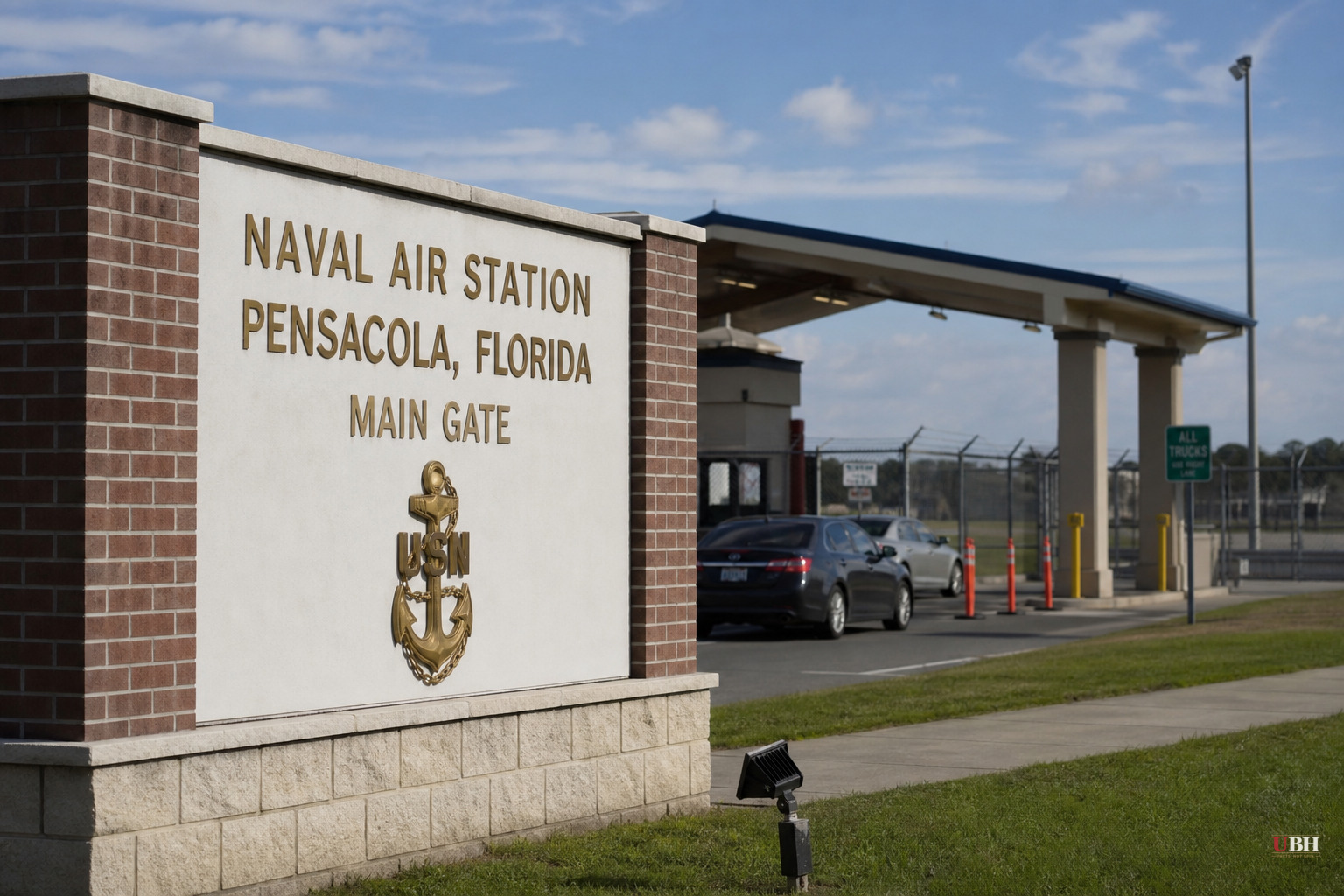
Twenty-five years out from September 11, 2001, al-Qaeda's record inside the United States is almost comically thin. One fatal attack. Three failed plots. Two dead top leaders. That's it.
The one successful attack happened on December 6, 2019, at Naval Air Station Pensacola in Florida. A 21-year-old Royal Saudi Air Force officer training on the base pulled out a legally acquired Glock and killed three U.S. sailors before police shot him dead. He was tied to al-Qaeda's branch in Yemen. According to The Atlantic, Saudi officials the reporter spoke with in Taif, Saudi Arabia, expressed relief that after 18 years of trying, the group's best shot on U.S. soil barely exceeded ordinary workplace violence.
Three Americans dead is a real tragedy, and their families don't get a caveat. But compared to what al-Qaeda promised after 9/11, and compared to the scale of 9/11 itself, it's a rounding error.
The Failures Tell the Real Story
Before Pensacola, al-Qaeda tried three times to hit the U.S. and whiffed every time.
On December 22, 2001, Richard Reid boarded a Miami-bound flight with a bomb stuffed in his shoe. He couldn't light the fuse, partly because it had gotten damp from sweat and rain, and partly because he tried to light it in front of other passengers instead of hiding in the bathroom. He was tackled and the flight landed safely.
In 2009, a similar story played out. A bomb maker built a working device, sewed it into another operative's underwear, and sent him onto a Detroit-bound flight. The chemical initiator went off but only burned the guy. The plane was undamaged.
In 2010, al-Qaeda tried something more sophisticated: bombs hidden in laser printer cartridges shipped via FedEx and UPS on cargo planes headed to the U.S. That plot got closer to working, but authorities intercepted the packages before they detonated. The bomb maker behind that operation, Ibrahim al-Asiri, survived until 2017, when a U.S. drone strike killed him in Yemen.
Leadership Wiped Out
Al-Qaeda's command structure hasn't fared any better. Anne Stenersen, a researcher at the Norwegian Defence Research Establishment and author of works on al-Qaeda's trajectory after 9/11, told The Atlantic the group's senior leadership was effectively "eradicated" by 2012 through years of drone strikes, replaced by younger fighters with less battlefield credibility and experience.
Osama bin Laden was killed by U.S. Navy SEALs in Abbottabad, Pakistan, in 2011. His successor, Egyptian physician Ayman al-Zawahiri, was killed by Hellfire missiles on his Kabul balcony in 2022. Two leaders, two American strikes, over an 11-year span.
A Genuinely Open Question
The Atlantic's own reporting notes that analysts can't settle on whether this incompetence streak means al-Qaeda is essentially finished, or whether it's something more dangerous: a patient organization regrouping in ungoverned spaces while the U.S. looks elsewhere.
Anyone tracking the group's history should have concerns. Al-Qaeda has survived leadership decapitation before. It rebuilt after losing Afghanistan in 2001 and again after losing key figures throughout the 2010s. Groups like al-Qaeda in the Arabian Peninsula, which was behind the Pensacola shooter's radicalization, still operate in Yemen. Al-Shabaab, an al-Qaeda affiliate in Somalia, remains active. The argument that America can declare victory because bin Laden is dead and a few plots fizzled ignores that terrorist networks measure success in decades, not news cycles.
At the same time, the operational record over nearly 25 years doesn't support the idea that al-Qaeda retains anything close to its pre-9/11 capability to strike the American homeland. Every attempt after 2001 either failed outright or was intercepted. The one attack that succeeded was carried out with a handgun by a lone foreign national already inside the country on a visa, not a coordinated cell executing a complex plan.
What nobody disputes is the manpower and money the U.S. has poured into preventing another 9/11: two decades of drone campaigns, a war in Afghanistan that didn't end until the 2021 withdrawal, and a homeland security and intelligence apparatus built from scratch after the attacks. Whether that investment produced a genuinely defeated enemy or just a temporarily degraded one is the question intelligence agencies and terrorism researchers are still arguing about, and it's not one that gets resolved by counting bodies on either side.
Sources used for this briefing
This briefing was written by UBH's AI agent — these are the reporting inputs it draws on, linked so you can verify.


