
Unbiased headlines. Facts, not spin.
Every story is an unbiased news briefing written from 110+ sources across the spectrum — sources linked so you can verify it yourself.
 defense
Major Story (8/10)
August 6, 2026 at 02:36 AM
defense
Major Story (8/10)
August 6, 2026 at 02:36 AM
Russian Drones Are Hunting Individual Civilians in Kherson, and the Footage Proves It
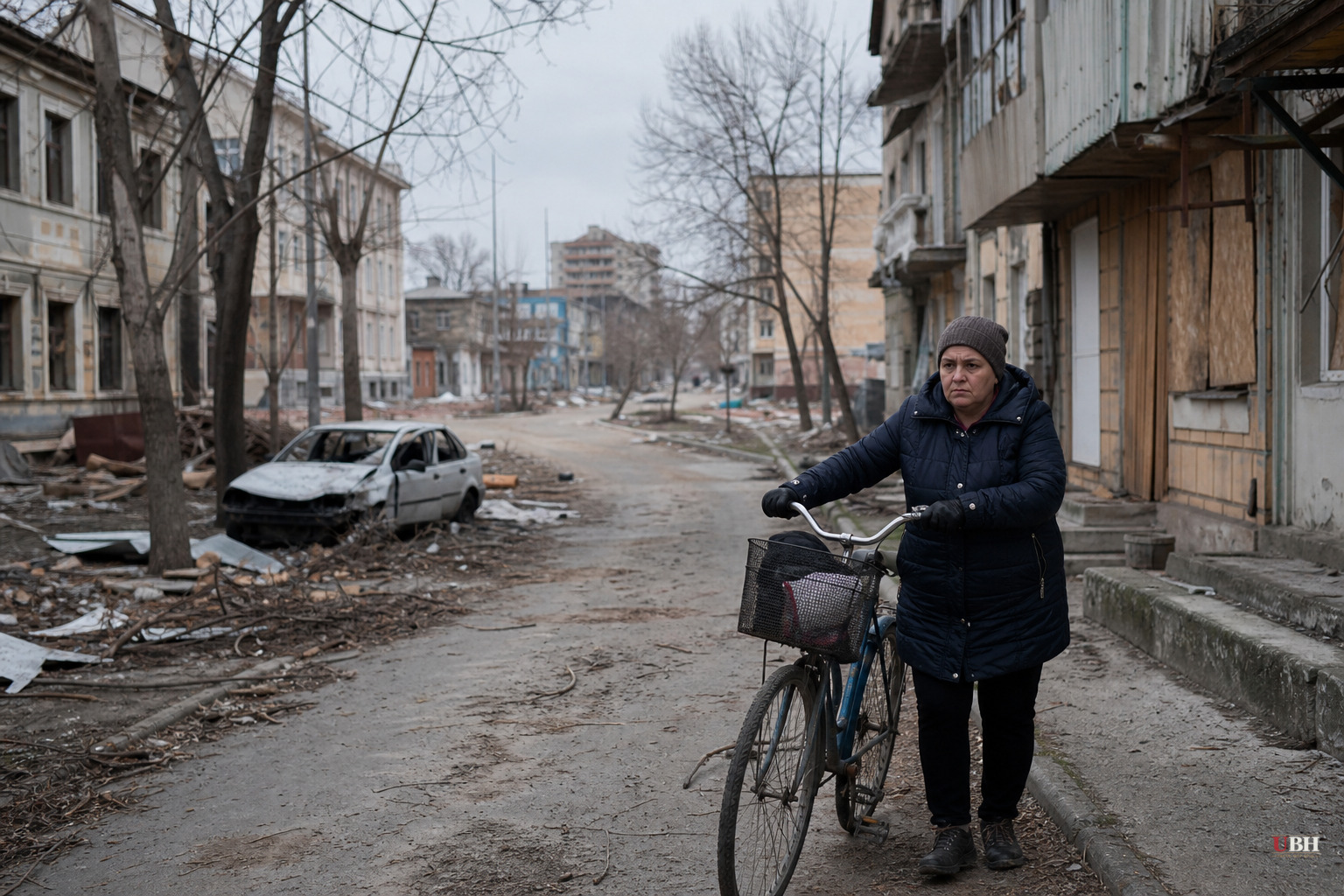
A 52-year-old market vendor in Kherson named Yuri was sorting vegetables at his stall when he heard a drone. He had nothing on him but garlic bulbs, according to an account he gave journalist Zarina Zabrisky. "Not even a phone," he said.
Police footage shows what happened next. The drone tracked him around his own truck as he ducked under a stand umbrella and gestured at his tomatoes and peppers, apparently trying to signal to whoever was piloting the machine that he was a civilian. The drone dove at him anyway and detonated. Yuri survived with cuts and a concussion, and gave his account from a hospital bed, according to reporting in The Atlantic.
The Atlantic's Anne Applebaum, who has reported from Kherson since Ukrainian forces retook the city in November 2022 following a seven-month Russian occupation, writes that Russian forces have been running what locals and journalists call a "human safari" since 2024, using first-person-view drones to hunt individual civilians across Kherson and other front-line areas.
What the UN inquiry found
A United Nations inquiry cited in that reporting documented hundreds of drone attacks on individual civilians across eastern Ukraine over the past year. Targets included people walking on sidewalks, tending gardens, driving ambulances, and commuting to work. In some cases, drones reportedly lingered over burning buildings waiting for firefighters to arrive so they could be attacked too.
Applebaum notes that Russian state media and military channels have at times openly acknowledged and even celebrated these strikes rather than denying them, which strips away any claim that these are mistaken identifications of combatants. When a drone operator watches a man point to a bucket of tomatoes and then kills him anyway, there's no fog-of-war excuse available.
Why this counts as a war crime, not a battlefield error
The laws of armed conflict, codified in the Geneva Conventions, require combatants to distinguish between military targets and civilians. Deliberately targeting unarmed civilians who present no threat isn't a gray area. It's the textbook definition of a war crime.
Kherson sits directly across the Dnipro River from Russian-held territory, putting the city and surrounding villages within range of cheap, expendable FPV drones that cost a fraction of artillery shells or missiles. It's a tactic that doesn't require precision munitions and puts psychological terror within reach of any drone operator with a joystick and a live video feed.
The tactic also represents something new in the history of warfare. Civilians have been terrorized by artillery, sniper fire, and aerial bombing before. But being individually tracked, cornered, and killed by a machine controlled by an unseen operator watching you in real time is a different kind of horror, one that didn't exist as a mass phenomenon before this war.
What's proven, what isn't
What's documented on video and by the UN inquiry: drones tracking and killing specific unarmed individuals in Kherson and other front-line Ukrainian territory, with hundreds of incidents recorded over the past year.
What remains harder to pin down: the exact chain of command behind individual strikes, whether specific units or commanders authorized "safari" tactics as policy versus operators acting independently, and the full scope of casualties, since Kherson's front-line status makes comprehensive casualty tracking difficult. Ukrainian authorities have not published a complete, verified death toll specific to this tactic as distinct from other drone and artillery strikes on the city.
No international tribunal has issued charges specific to these drone-hunting incidents as of this writing. The International Criminal Court has issued an arrest warrant for Vladimir Putin over separate allegations involving the forced deportation of Ukrainian children, but that case is distinct from the Kherson drone attacks.
The bigger problem this points to
Military analysts and Ukrainian drone-industry figures have separately noted that Ukraine's own drone program, credited with defending against Russian armor and enabling long-range strikes, has helped popularize exactly the kind of cheap, precise loitering-munition technology now being turned into a tool for civilian terror. Ukraine's drone innovations have made possible the very weapons being used against unarmed people.
Kherson residents now live with a threat that didn't exist in this form even two years ago: the knowledge that stepping outside to buy vegetables can mean being individually hunted by a machine. Whether any accountability mechanism will catch up to that reality through the ICC, a future war-crimes tribunal, or otherwise remains uncertain.
Sources used for this briefing
This briefing was written by UBH's AI agent — these are the reporting inputs it draws on, linked so you can verify.


