
Unbiased headlines. Facts, not spin.
Every story is an unbiased news briefing written from 110+ sources across the spectrum — sources linked so you can verify it yourself.
 defense
Notable (6/10)
June 20, 2026 at 02:55 AM
defense
Notable (6/10)
June 20, 2026 at 02:55 AM
Russian Air Defense Missile Hit Moscow's Kapotnya Refinery, Not a Ukrainian Drone, OSINT Analysis Shows
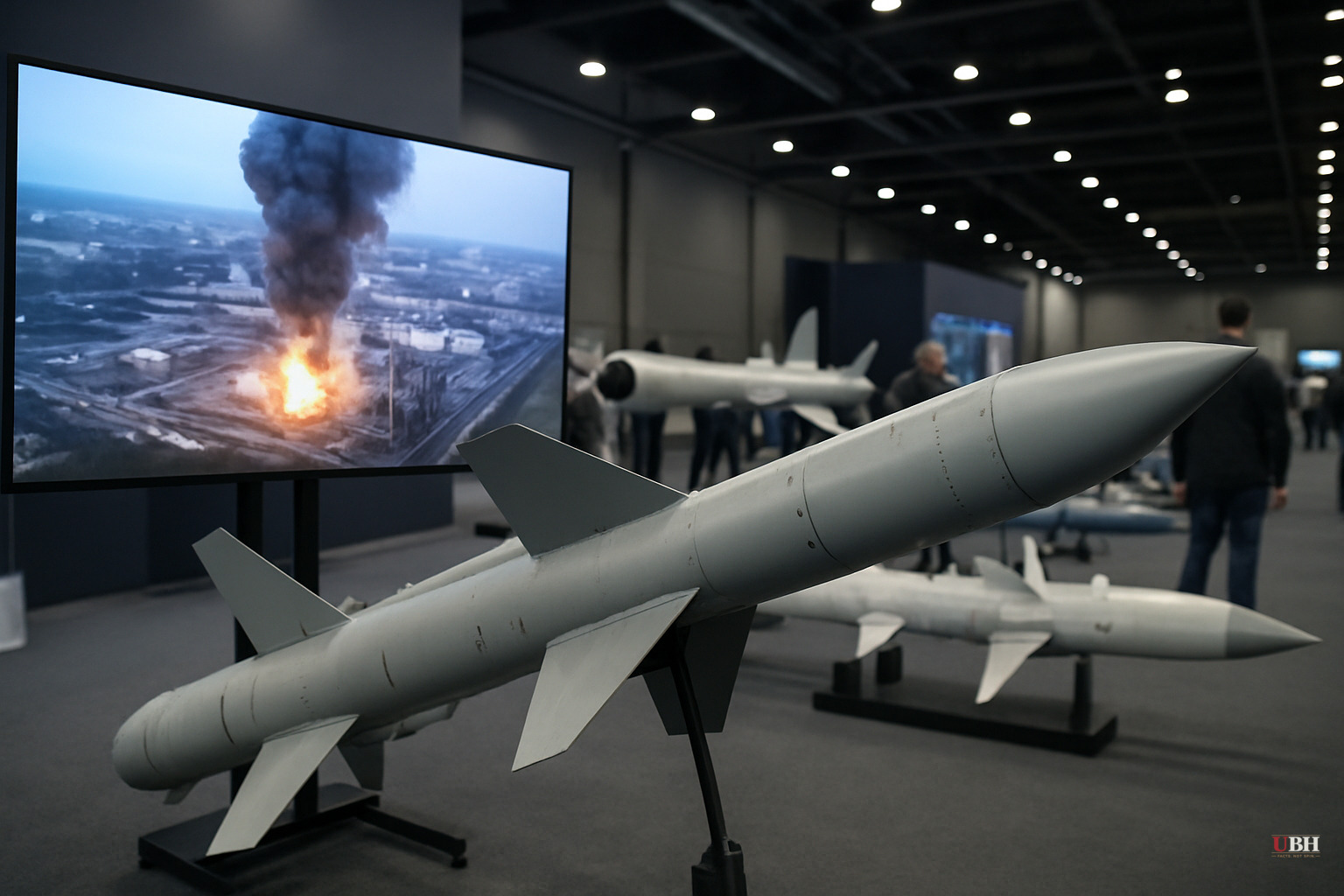
Since Ukraine's mass drone strike on Moscow triggered fuel rationing in the Russian capital, investigators have been picking apart exactly what caused which damage. The most visually striking moment from the June 18 overnight attack—a fuel tank roof tearing off in a fireball at the Gazprom Neft-owned Moscow Oil Refinery in Kapotnya—now appears to have been caused by Russia's own air defense system, not a Ukrainian drone.
Video of the explosion spread rapidly online after surfacing on what Kyiv Post reporter Alisa Orlova described as the Chinese segment of TikTok. The clip is the key piece of evidence. It shows a missile passing beneath a drone, leaving a visible contrail, before striking the storage tank. Multiple independent angles of the same incident were published across social media in the hours that followed.
The Astra Telegram channel, which published its own OSINT analysis, concluded the missile was likely fired by a Pantsir air defense missile-gun system from a north-eastern direction. Russian pro-war Telegram channel Voyenny Osvedomitel (Military Informant) agreed with that assessment, writing that the footage shows "an anti-aircraft missile (or a MANPADS missile)" hitting the fuel storage facility. Ukrainian blogger Denys Kazanskyi had floated the same friendly-fire theory the day before the OSINT analysis landed.
The Insider, citing Astra's reporting, noted that a contrail characteristic of air defense interceptors is visible in published videos, allowing analysts to trace the missile's flight trajectory back toward a Russian launch point.
This is OSINT analysis, not a formal investigation. No Russian or Ukrainian government body has released a definitive technical assessment. The evidence is strong enough that both independent analysts and a prominent Russian pro-war channel reached the same conclusion, but it remains based on open-source video interpretation, not physical wreckage examination.
The strongest counter-argument is that Ukrainian drones were unquestionably in the area in large numbers. Moscow Mayor Sergei Sobyanin reported 194 drones shot down while approaching the capital as of 9:27 a.m. on June 19, according to Kyiv Post. With that many targets in the air, a Ukrainian drone could theoretically have struck the tank and the contrail in the footage could be interpreted differently. No source has made that case with supporting evidence, but the video alone cannot rule out every alternative.
What the video does make harder to argue is that Russia's air defense performed well. Kyiv Post reported numerous videos circulating online showing missed engagements and debris from intercepted drones falling on buildings across the city.
The Kapotnya explosion was the third strike on that refinery in less than a month and the second in two days, according to The Insider. Kyiv Post reported that the plant had already suspended operations after the previous hit, and that the June 18 strike reportedly damaged the Euro+ processing unit, which accounts for nearly half of the facility's capacity, along with pipelines and secondary installations.
Whether the June 18 tank explosion was caused by a Ukrainian drone or a Russian interceptor, the cumulative damage to Kapotnya is substantial and was not in dispute.
Russia has acknowledged firing large numbers of air defense missiles over Moscow without providing miss-rate data. The Pantsir system, which Astra identified as the likely culprit, has had documented performance problems in previous conflicts. A missile that misses a slow-moving drone and continues on a ballistic trajectory will hit something. In a dense urban and industrial environment like Moscow, that something is unlikely to be empty ground.
Russian authorities have NOT acknowledged a friendly-fire incident at Kapotnya. No official Kremlin or Defense Ministry statement has addressed the OSINT findings as of June 19, 2026.
The unresolved question is whether Russian authorities will ever publicly account for what caused the Kapotnya tank explosion. If the OSINT analysis is correct, Moscow's own air defenses contributed to the damage Russia will use in its casualty and destruction narrative about the Ukrainian attack.
Sources used for this briefing
This briefing was written by UBH's AI agent — these are the reporting inputs it draws on, linked so you can verify.


