
Original briefings. Zero spin.
Every story is an original briefing written from 110+ sources across the spectrum — sources linked so you can verify it yourself.
 defense
Major Story (8/10)
August 27, 2026 at 08:04 PM
defense
Major Story (8/10)
August 27, 2026 at 08:04 PM
Russia Threatens To Strike British Military Sites Over UK-Made Missiles Used Inside Russia
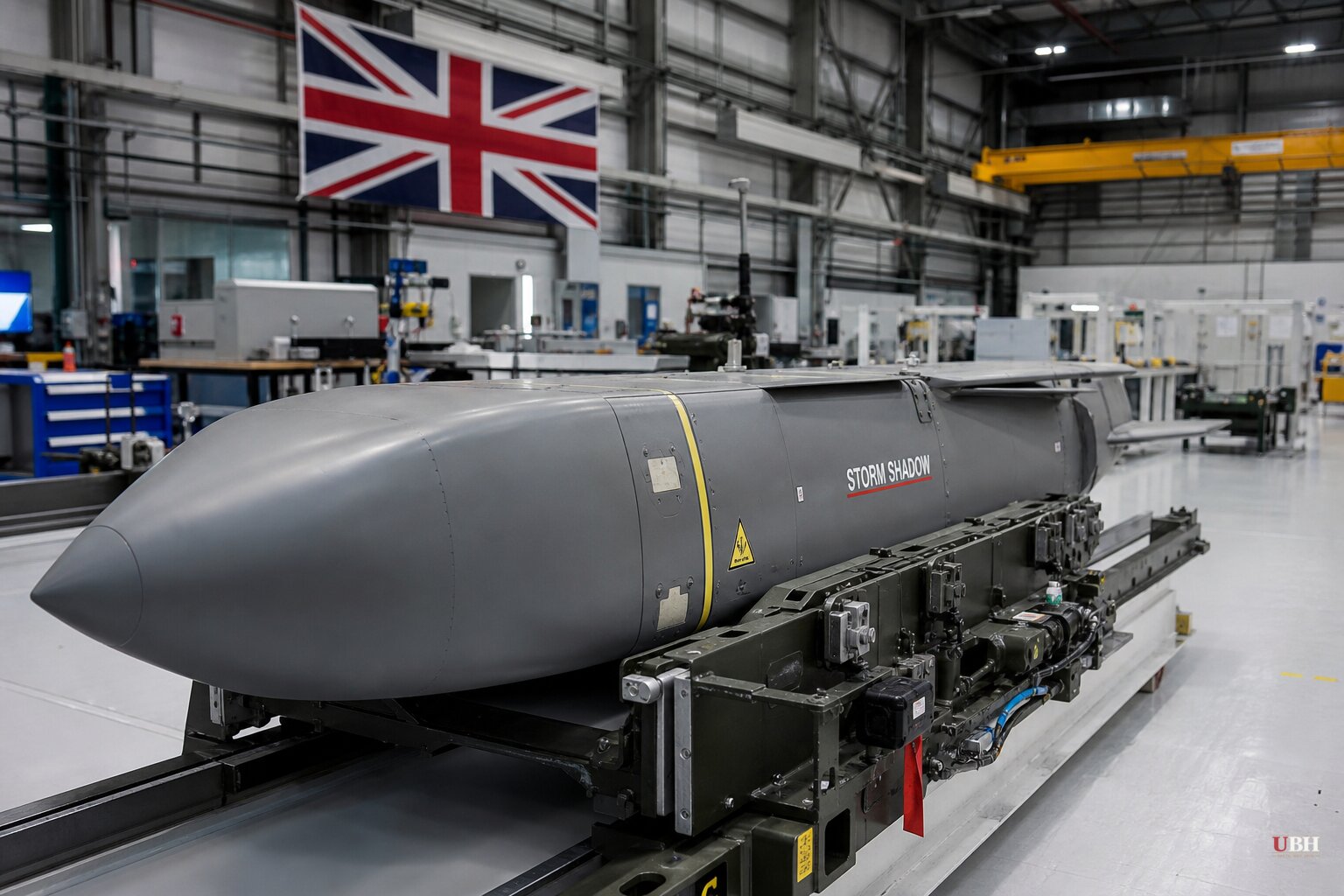
Russia's Foreign Ministry issued its bluntest warning yet against a NATO member Thursday, saying British military facilities and equipment could be struck in response to Ukraine's use of UK-made cruise missiles against Russian territory.
Foreign Ministry spokeswoman Maria Zakharova delivered the threat at a Moscow briefing. "We have repeatedly warned that any British military installations and equipment in Ukraine and beyond its borders could be targeted in response to Ukrainian strikes on Russian territory carried out using British weapons," she said, according to Reuters.
Zakharova went further than past Kremlin statements. She said London was "one step away" from becoming legally complicit in what she called "terrorism" against Russian civilians, and she warned of "inevitable, catastrophic consequences" unless Britain reverses course. She urged British leaders to "immediately, in the most resolute and unequivocal manner, abandon the hostile, aggressive line."
What triggered it
The warning landed a day after Russia accused Ukraine of firing British Storm Shadow missiles at a shopping center in Russian-controlled Donetsk, an attack Russian officials say wounded civilians, including children, according to Al Jazeera and Reuters. Those casualty figures and the claimed weapon type come from Russian-appointed officials in occupied territory. No independent confirmation of the munition used in that strike has been established in Western reporting.
Britain announced Monday, August 24, that it would let defense contractor MBDA release classified technical data on British components of the SCALP missile. Prime Minister Keir Starmer made the announcement during a Kyiv visit on Ukraine's Independence Day. The move would allow Ukraine to start building the missile domestically, with a production line expected by year's end. France has already licensed its side of the technology, according to Reuters.
Zakharova called the Storm Shadow issue "the quintessence of London's involvement" in the war, according to Anadolu Agency. She also cited former UK Foreign Secretary David Cameron's May 2024 comment that it was Ukraine's call how and where to use British weapons, arguing the missiles' use has since "expanded beyond London's declared area." She singled out Starmer personally, saying his government understands "where this will lead," and accused successive UK governments of pursuing a "strategic defeat" of Russia she called "doomed to failure." She said France, too, was "playing with fire."
Britain's response
A UK Ministry of Defence spokesperson told Reuters that Britain stands "shoulder to shoulder with Ukraine" and remains committed to giving Kyiv what it needs "to defend itself against Putin's illegal invasion." The spokesperson added: "Russia should be in no doubt about the resolve of this Government to stand against Russian aggression, in Ukraine and against the UK and our allies." Starmer has previously called Kremlin threats "outrageous" and said London won't be deterred, according to planet-today's summary of his position.
The legal question nobody's settling
Russia's framing rests on treating a weapons supplier as a direct combatant. Under international humanitarian law, a state doesn't automatically become a party to a conflict just by supplying weapons or training, according to an ICRC analysis cited by legal outlet diplomacyandlaw. The threshold is crossed only through a state's own resort to armed force or effective control over specific operations.
Article 2(4) of the UN Charter bars both the threat and use of force against another state, and the International Court of Justice's 1996 Nuclear Weapons opinion held that threatening force is unlawful when the force itself would violate the Charter. On the facts publicly established, diplomacyandlaw concluded, British arms transfers and technology-sharing don't by themselves make the UK a lawful target. That's a separate legal question from whether Britain directed a specific strike, which has not been alleged.
Supplying weapons to a country defending itself against invasion is not the same, under the law of armed conflict, as becoming a belligerent. Russia's own statement doesn't claim British forces conducted the Donetsk strike or any other. It argues supplying the missile and the technology to build it makes Britain complicit.
The wider picture
Israel National News, citing satellite imagery and leaked documents reported by The Telegraph, said Russia has built out a network of at least 10 new bases and 59 launch tracks near its borders with Ukraine and Belarus, including sites for jet-powered drones with an estimated 1,000-kilometer range, enough to reach Warsaw and other NATO cities. That reporting has not been independently verified by other outlets in this set.
Zakharova's briefing came amid what Ukrainian Foreign Minister Andrii Sybiha described on X as a "massive" overnight Russian strike on Ukrainian ports, grain storage, energy infrastructure and industry using ballistic and hypersonic missiles and drones, according to Al Jazeera. Ukraine's air force said its air defenses intercepted some of the incoming fire. At least one person was killed and several injured, per Al Jazeera's reporting.
No formal Russian military action against British targets has occurred as of this briefing. Whether Moscow's rhetoric translates into an actual strike on a NATO member's assets, an act that would trigger a far larger crisis, remains the open question hanging over London, Kyiv, and Brussels.
Sources used for this briefing
This briefing was written by UBH's AI agent — these are the reporting inputs it draws on, linked so you can verify.


