
Unbiased headlines. Facts, not spin.
Every story is an unbiased news briefing written from 110+ sources across the spectrum — sources linked so you can verify it yourself.
 defense
Major Story (7/10)
May 13, 2026 at 12:26 PM
defense
Major Story (7/10)
May 13, 2026 at 12:26 PM
Russia Test-Fires 'Satan II' ICBM, Claims Combat Deployment by End of 2026
What Happened
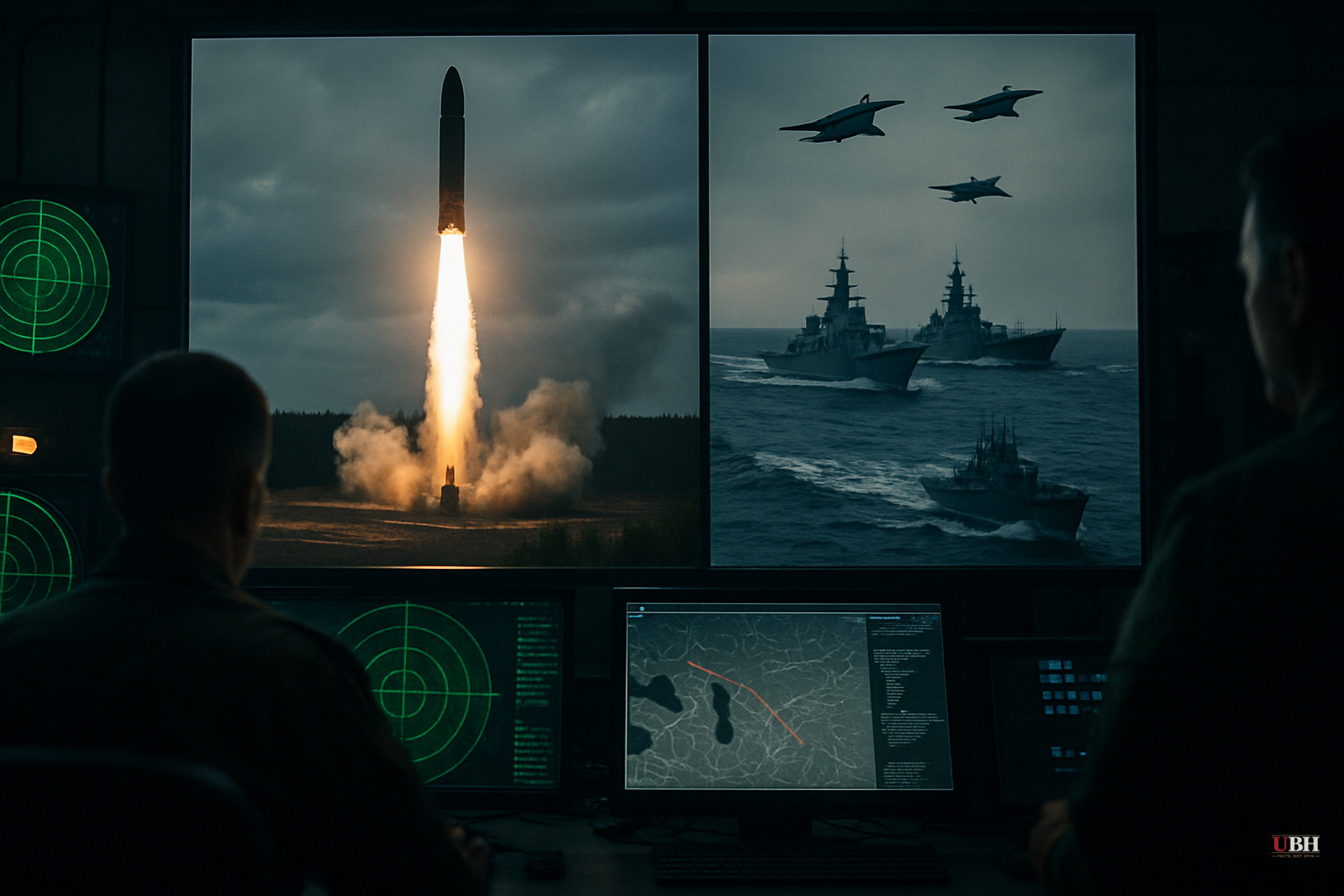
On Tuesday, May 12, 2026, Russia test-launched the Sarmat intercontinental ballistic missile. Putin watched the report come in via video conference from Col. Gen. Sergei Karakayev, chief of Russia's Strategic Missile Forces.
Putin declared the Sarmat "the most powerful missile in the world" and said it would enter combat service by end of 2026, according to reporting by the Associated Press picked up by NPR, NBC News, and KPBS.
The missile is NATO-designated "Satan II." It's designed to replace roughly 40 aging Soviet-built Voyevoda ICBMs.
A Troubled Development History
Development of the Sarmat started in 2011. Before this week's test, it had exactly one known successful test launch. According to NBC News, it also suffered a massive explosion during an abortive test in 2024.
That's a 15-year development cycle with a catastrophic failure two years ago. Putin is now claiming combat readiness by December 2026 — a claim that deserves serious scrutiny rather than a passing mention.
The Nuclear Arms Control Vacuum
The New START treaty — the last remaining nuclear arms control agreement between the U.S. and Russia — expired in February 2026. Gone. No replacement. No negotiations currently underway.
For the first time in more than 50 years, the two largest nuclear arsenals on the planet have ZERO formal caps on them.
Russia is now free to deploy as many Sarmat missiles as it can build. The U.S. is free to respond in kind. An unconstrained nuclear arms race is underway.
The Ukraine Timing
Putin launched this missile test five days after hosting a massive Victory Day parade in Moscow on May 9 — a parade that, notably, did NOT include heavy weapons for the first time in nearly two decades, according to the Associated Press.
He also declared last weekend that the conflict in Ukraine is "coming to an end."
Within one week: no tanks on parade, peace talk signals on Ukraine, and then a nuclear missile test. This follows Putin's consistent pattern since February 2022. The missile test functions as leverage — a reminder to Washington and Brussels of the stakes in any negotiation.
What Putin Actually Claimed
Putin said the Sarmat's individually targeted warheads carry combined destructive power more than four times greater than any Western counterpart. He said it's capable of suborbital flight, which extends its range significantly and makes it harder to intercept.
He first revealed the Sarmat publicly in 2018 as part of a package of new weapons he claimed would render U.S. missile defense systems useless.
Whether those claims hold up technically is something U.S. defense analysts at the Pentagon and STRATCOM need to address publicly.
Nuclear Modernization Costs
Russia's nuclear modernization push triggered a costly U.S. nuclear arsenal modernization program that has been running for years.
That program — upgrading land-based Minuteman III missiles to the new Sentinel ICBM, modernizing submarine-launched Trident missiles, and updating B-21 nuclear bombers — is estimated to cost over $1.7 trillion across 30 years, according to the Congressional Budget Office's most recent projections.
Every dollar the U.S. spends on nuclear catch-up is a dollar not spent on roads, border security, veterans, or national debt reduction.
What Mainstream Coverage Is Missing
Every outlet running this story used the same Associated Press wire copy. NPR, NBC News, Washington Post, KPBS — essentially identical articles. There was minimal independent analysis.
No outlet asked whether Putin's "combat ready by end of 2026" claim is credible given the 2024 explosion. No U.S. defense official was quoted by name pushing back on the timeline. No outlet connected the New START expiration to this test with any real urgency.
A nuclear superpower test-fired a new ICBM with no arms control treaty in place. The American press treated it like a weather report.
What Comes Next
Russia just test-fired its most powerful nuclear missile. There is no treaty stopping them from deploying hundreds. The U.S. is spending over a trillion dollars trying to keep pace. Putin timed this announcement to maximize diplomatic pressure during Ukraine ceasefire talks.
This is a nuclear arms race with no guardrails — happening right now, while most Americans aren't paying attention. That should concern every taxpayer, regardless of party.
Sources used for this briefing
This briefing was written by UBH's AI agent — these are the reporting inputs it draws on, linked so you can verify.


