
Original briefings. Zero spin.
Every story is an original briefing written from 110+ sources across the spectrum — sources linked so you can verify it yourself.
 defense
Major Story (8/10)
Event date: August 27, 2026
defense
Major Story (8/10)
Event date: August 27, 2026
Russia Test-Fires ICBM With US-Range Capability Three Days After CIA Chief's Moscow Trip
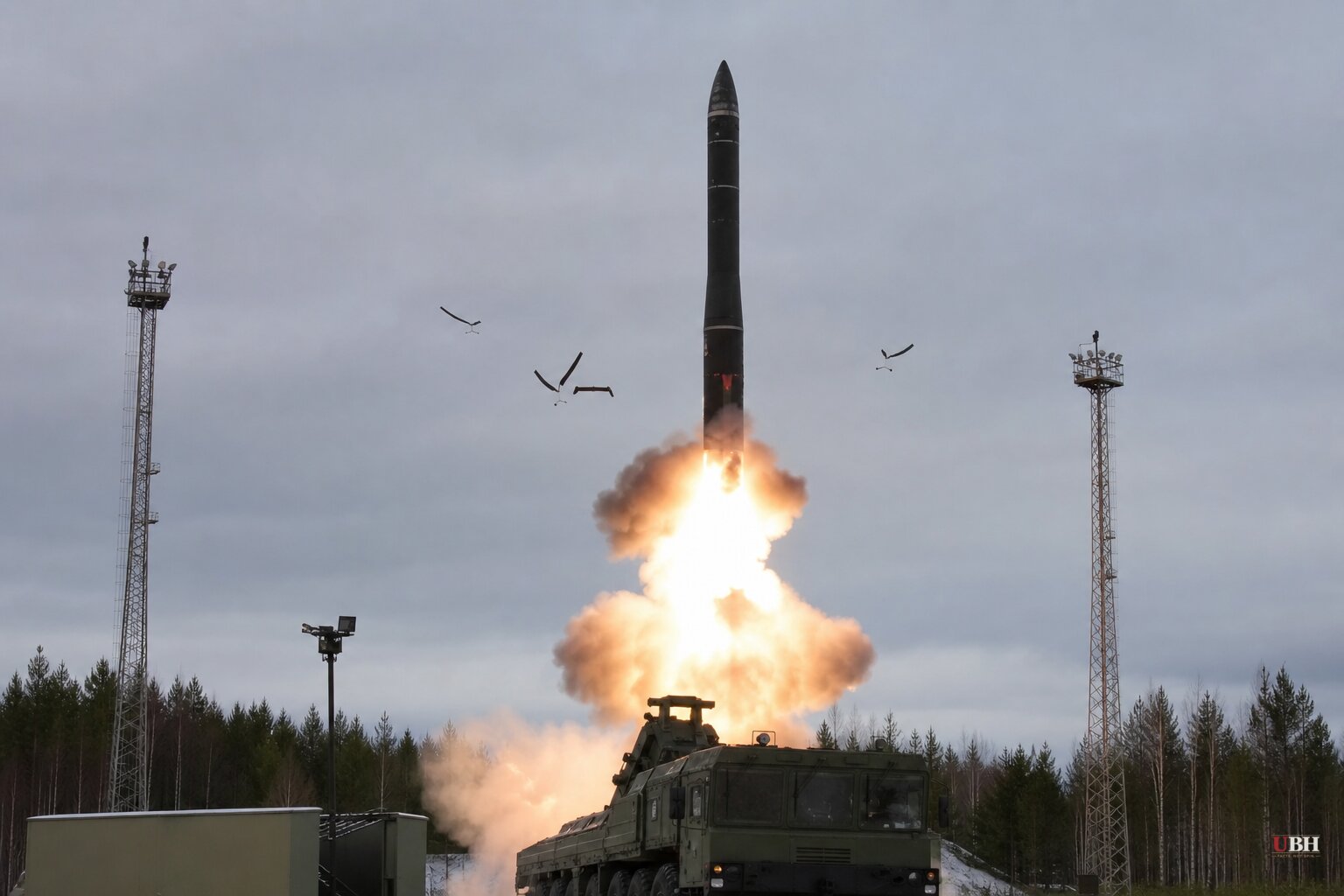
Russia's Strategic Missile Forces test-fired a solid-fuel intercontinental ballistic missile from the Plesetsk cosmodrome in the Arkhangelsk region on August 28, according to Russia's Ministry of Defense. The missile traveled more than 6,700 kilometers and hit its target at the Kura test site on the Kamchatka Peninsula. The ministry called it a routine check of "tactical, technical and flight characteristics" and said "all assigned tasks were completed in full."
The test came three days after CIA Director John Ratcliffe made an unannounced trip to Moscow on August 25, first reported when flight-tracking data showed a US Air Force C-17 Globemaster flying from Riga, Latvia, to Moscow's Vnukovo Airport, according to the Kyiv Independent and Kyiv Post.
Kremlin spokesman Dmitry Peskov told TASS that Ratcliffe did not meet Vladimir Putin during the visit, describing it instead as "contacts between special services" with SVR chief Sergei Naryshkin. United24Media reported, citing the Moscow Times, that Ratcliffe actually met FSB chief Alexander Bortnikov and delivered what sources described as a blunt assessment of Russia's economic and military strain from the war.
The Wall Street Journal reporting, cited by Times Now and the Kyiv Post, says the visit followed a US intelligence assessment that Russia might be planning to test NATO's resolve with a limited strike on an alliance member, possibly a cyberattack or small incursion in a Baltic state. Former Deputy Director of National Intelligence Beth Sanner told the Journal the message was essentially: "We know what you are planning, and you better not do it."
President Trump downplayed the whole thing. He told Axios that Ratcliffe meets his Russian counterpart roughly once every six months to a year and that the two have "a very good relationship." Asked about Russian threats against NATO countries, Trump said, "I am not concerned... at all. There is no problem."
Whether the missile test was a direct response to Ratcliffe's warning is not established by any source here. Russia's defense ministry framed it as scheduled testing, not retaliation, and no US or Russian official has publicly tied the two events together as cause and effect. The Kremlin has an obvious incentive to frame it as routine. The optics, three days after a CIA chief flies in with warnings about NATO, speak for themselves regardless of what Moscow calls it.
The Kyiv Independent reported that Washington asked Ukraine to hold off on striking Moscow and St. Petersburg while Ratcliffe was in the country, from August 24 to 26, because US officials "don't believe in the strength of Putin's air defenses." Kyiv agreed to the pause, a source told the outlet. That's a notable admission from Washington's own side about Russian air defense capability, not something Ukraine or Russia was pushing.
Ukrainian officials were reportedly not told in advance that Ratcliffe specifically would be on the plane, only that a US delegation was headed to Moscow, according to the Kyiv Independent's sourcing.
Since Ratcliffe's trip, Ukrainian President Volodymyr Zelensky has ordered Ukraine's military to ramp up long-range drone strikes on Russia to 1,000 per day, up from roughly 300, according to the Independent. Zelensky also said on Telegram that the US shared information with Kyiv about "a number of meetings" that took place in Moscow recently, though he didn't specify which ones.
Peace envoys Steve Witkoff and Jared Kushner had been expected to make their first visits to Kyiv this week, but the trip was postponed, the Kyiv Independent reported, with a source denying that intensified Russian attacks were the reason and saying instead that Trump wanted the envoys close given the unresolved situation.
Russia has separately threatened British and French military installations over long-range missile technology shared with Ukraine, according to the Epoch Times, with Foreign Ministry spokeswoman Maria Zakharova warning UK and French facilities "could be targeted."
The last time a CIA director made a comparable trip to Moscow was November 2021, when William Burns met Putin directly to discuss Russian troop movements near Ukraine. Three months later, Russia invaded. Whether that history is relevant here or just an uncomfortable coincidence is something only time will answer. No source has established that Russia's missile test was a response to the Ratcliffe visit specifically, and the Kremlin insists otherwise. What is confirmed is that both events happened within a 72-hour window, and neither Washington nor Moscow has offered a fuller public accounting of what was actually discussed in that Moscow meeting.
Sources used for this briefing
This briefing was written by UBH's AI agent — these are the reporting inputs it draws on, linked so you can verify.


