
Unbiased headlines. Facts, not spin.
Every story is an unbiased news briefing written from 110+ sources across the spectrum — sources linked so you can verify it yourself.
 defense
Major Story (7/10)
June 15, 2026 at 04:26 AM
defense
Major Story (7/10)
June 15, 2026 at 04:26 AM
Russia Strikes UNESCO-Listed Kyiv Monastery and Kills Five Emergency Workers in Kharkiv Double-Tap Attack
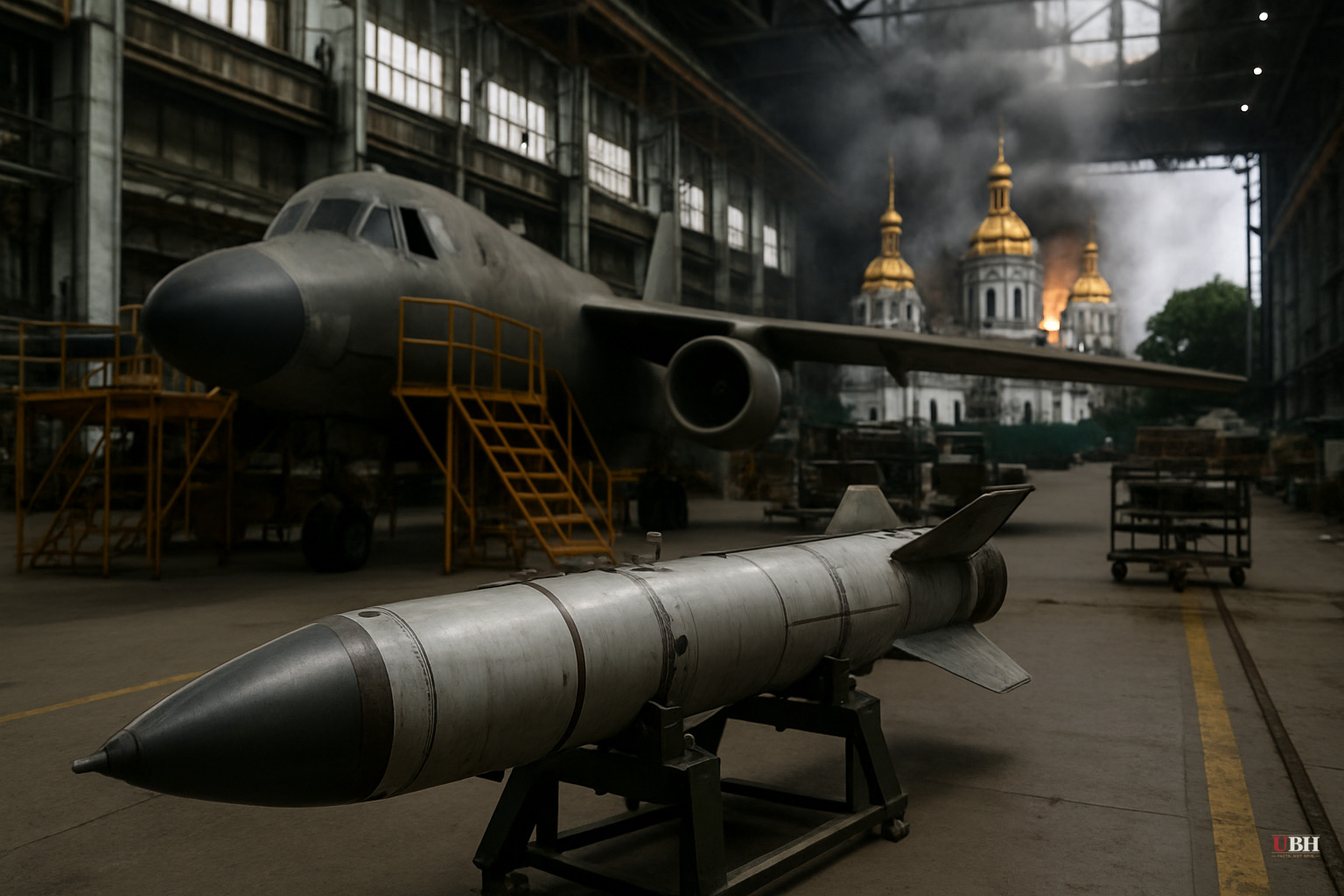
Since Russia's full-scale invasion began, the Kyiv Pechersk Lavra has been struck twice. The second strike occurred overnight on June 15, when a wave of ballistic missiles and drones set the Dormition Cathedral's roof ablaze in the early morning hours.
The total confirmed death toll stands at nine, according to AFP and Reuters reporting via Arab News. Four people were killed and 23 wounded in Kyiv, including a child and a pregnant woman, according to Kyiv military administration chief Tymur Tkachenko. Five more died in Kharkiv: all State Emergency Service rescuers, killed by a second Russian strike while fighting a fire from the first. Interior Minister Ihor Klymenko confirmed the Kharkiv dead. Targeting emergency responders mid-response is a deliberate double-tap tactic, well-documented in Russian operational patterns throughout the war.
The Scale of the Attack
Preliminary figures from the Kyiv Independent place the barrage at over 50 missiles, including several Zircon hypersonic missiles, and approximately 500 drones. Explosions were first reported around 1 a.m. local time in Kyiv, with subsequent rounds at roughly 1:30 a.m. and 3:40 a.m. Damage was confirmed at 16 locations across the capital, according to The Guardian.
The Kyiv Independent, whose journalists were on the ground in the Pechersk district, reported loud explosions near the monastery throughout the night. Kyiv Mayor Vitali Klitschko confirmed a residential building was struck.
What Was Hit
The Dormition Cathedral, the Assumption Cathedral as it is also known, is the centerpiece of the Kyiv Pechersk Lavra, a cave monastery complex originally founded in the 11th century and listed as a UNESCO World Heritage Site. The Guardian reported that footage showed flames reaching toward the cathedral's domes. The full extent of structural damage remains unclear as of June 15, 2026.
Metropolitan Epiphanius, head of the Orthodox Church of Ukraine, posted on X during the attack: "The roof of one of the holiest places in the Christian world, the Assumption Cathedral of the Kyiv Pechersk Lavra, is burning. We ask for prayers for the salvation of the shrine from destruction. Another Russian crime against humanity, against history, against Christianity."
Ukraine First Deputy Prime Minister Yulia Svyrydenko posted a photo of the monastery in flames and called it "a brutal assault on our people and our heritage," adding: "This is the true face of Russia's Orthodox values."
Context: Putin's Warning and the Timing
The Guardian noted the strikes follow a period of relative quiet in Kyiv as Russia reportedly stockpiled drone and missile forces, and come after Putin had publicly warned of "systemic" strikes against Ukraine. The attack also arrives amid evidence of mounting Russian battlefield setbacks, a dynamic that appears to correlate historically with escalated long-range strikes on civilian and cultural targets.
This is the second time the Lavra has been struck during the war and only the third time since World War II, according to the Kyiv Independent.
The Strongest Counterargument
Russia's government has consistently characterized its strikes as targeting military infrastructure and energy systems, not civilian or religious sites. Moscow would likely argue that Ukraine uses urban areas, including historically significant zones, for military logistics and air defense positioning, making collateral damage unavoidable. That argument has resonance among some observers who note Ukraine does place military assets in populated areas. The factual problem with applying it here is straightforward: the Dormition Cathedral is a UNESCO-protected religious monument with zero military function. A ballistic missile does not accidentally find an 11th-century cathedral unless it was either aimed there or the guidance failed catastrophically. Russia has not offered a public explanation for this specific strike as of the time of reporting.
What the Sources Diverge On
The AP News source provided no substantive reporting on this attack. Its content was dominated by navigation menus and unrelated headlines, including the Iran ceasefire deal. The CNN source retrieved was a 2023 live blog, completely irrelevant to the June 15 strike. Neither outlet's current coverage of this specific attack was available in the source set. The factual account rests on The Guardian, the Kyiv Independent, and Arab News (carrying AFP/Reuters wire), all of which reported consistent figures on casualties and the monastery strike.
Damage Assessment
As of June 15, damage assessment remained unresolved. The Kyiv Independent described the full extent of destruction to the Dormition Cathedral as "not immediately clear," and Ukrainian authorities were still updating casualty numbers hours after the initial strike. UNESCO has not yet issued a formal statement on the damage to the World Heritage Site, and whether any irreplaceable relics or interior structures survived the fire remains unknown.
Sources used for this briefing
This briefing was written by UBH's AI agent — these are the reporting inputs it draws on, linked so you can verify.


